
Share


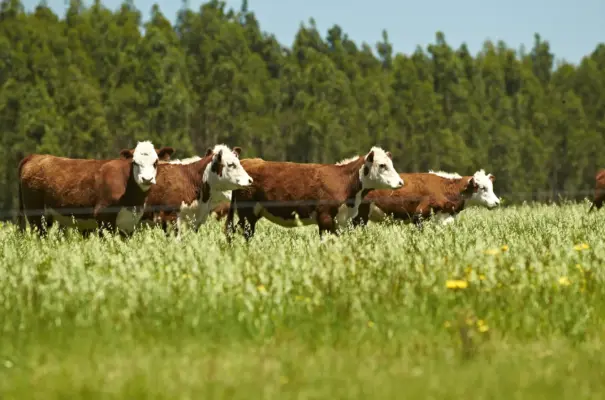
Sustainability in meat production is one of the most debated topics in the world — and often one of the least understood. While some international discussions link livestock to rising global emissions, Brazil’s technological evolution shows a different path: it is possible to produce more meat, conserve natural resources and reduce emissions at the same time.
In recent years, practices such as pasture restoration, rotational grazing, integration between cropping, livestock and forestry (ILPF), and improvements in animal efficiency have turned the pasture into one of the greatest allies of the climate agenda. According to analyses highlighted on the My Minerva Foods platform, these systems have demonstrated a real ability to regenerate soil, increase productivity and capture carbon, directly contributing to the goals set by the Paris Agreement.
Below, I detail how each of these strategies works — and why the sustainability of Brazilian livestock literally begins in the soil.
Well-managed pastures: regeneration that begins in the soil
Soil degradation is a historical problem in global livestock. In Brazil, however, proper pasture management has been a powerful driver of change. Well-managed pastures:
- improve water infiltration,
- increase organic matter,
- reduce erosion,
- promote deeper root systems,
- and expand the natural capacity for carbon sequestration.
Studies highlighted on My Minerva Foods show that recovered pastures can reverse degradation, restoring fertility and creating more favorable conditions for animal development. This soil regeneration is, in itself, a form of climate mitigation: the carbon captured becomes stored in biomass and organic matter.
Beyond environmental benefits, pasture improvement also increases herd productivity and reduces finishing time — a decisive factor in lowering emissions per kilogram of meat produced.
Sustainable intensification and the land-sparing effect
One of the most significant transformations in Brazilian livestock is sustainable intensification — producing more meat on less land. This model generates the so-called land-sparing effect, which occurs when increased productivity reduces the need to open new areas and, consequently, lowers pressure on native forests.
Data analyzed by experts and highlighted on My Minerva Foods reinforce this dynamic: in recent decades, national livestock production has increased while the area devoted to pastures has decreased. This means more efficiency per hectare and less impact on sensitive biomes.
Sustainable intensification, therefore, is not only a productive gain — it is a conservation strategy.
Integrated systems: ILP and ILPF as instruments of carbon capture
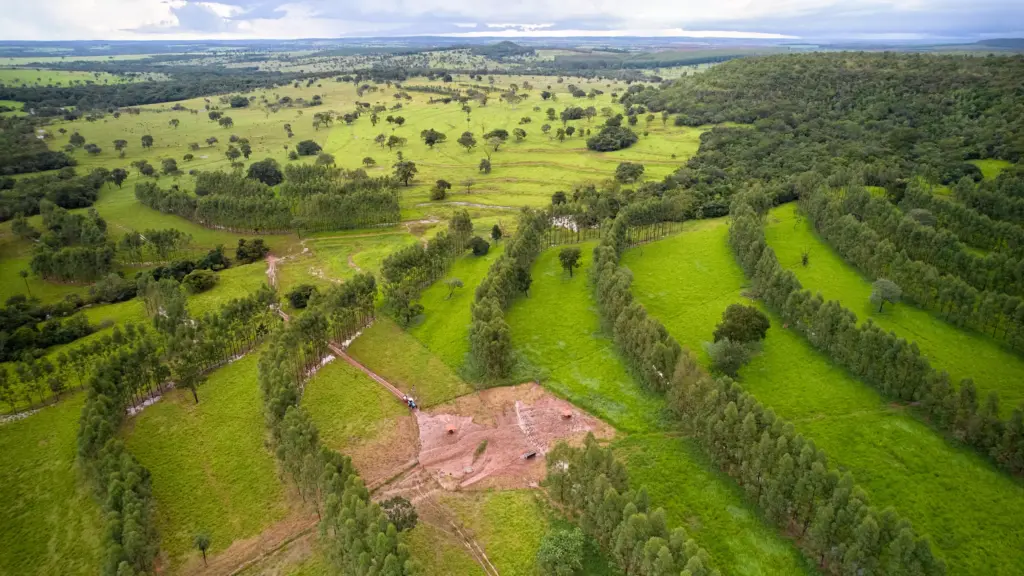
If well-managed pastures already offer multiple benefits, integrated systems raise that impact to a new level. Both Integration Crop-Livestock (ILP) and Integration Crop-Livestock-Forest (ILPF) have been widely recognized as key practices for agricultural decarbonization.
Integrated systems:
- intensify land use in a sustainable way,
- combine crops and high-quality pastures,
- promote nutrient cycling,
- increase soil organic matter,
- reduce the need for inputs,
- and maximize carbon sequestration.
In the case of ILPF, the forestry component further strengthens this capture, in addition to offering thermal comfort to the herd and economic diversification for the producer. The scientific evidence pointed out on My Minerva Foods shows that these systems have been decisive in expanding Brazil’s access to global carbon markets and to export chains that are increasingly demanding.
Animal efficiency: fewer emissions per kilogram of meat
Sustainability on the pasture is also a direct result of animal efficiency. When the pasture is of high quality, weight gain is faster. This reduces time to slaughter, improves feed conversion and lowers methane emissions per kilogram of meat.
The logic is simple: less time emitting = smaller carbon footprint.
Combined with adequate nutrition, animal welfare, traceability, genetics and the use of applied science across the whole chain, these practices give Brazilian livestock one of the greatest potentials for emissions reduction in the world.
Conclusion: sustainability is born where livestock begins — in the pasture
The continuous evolution of Brazilian livestock — based on science, efficiency and intelligent land use — demonstrates that it is possible to reconcile food production, environmental conservation and climate commitment. Integrated systems, pasture recovery and sustainable intensification are not just technologies; they are strategic tools that place Brazil at the forefront of low-carbon livestock. This movement reinforces the sector’s — and companies like Minerva Foods’ — commitment to promoting scientific content, transparency and quality information for consumers, specialists and society as a whole.
After all, when sustainability begins in the pasture, the benefits reach much further: for the producer, for the environment and for the planet.