Around 645 million people still face hunger, and 2.7 billion cannot afford a healthy diet. On World Food Day, the figures show why production, access, nutrition, sustainability, and innovation must be treated as parts of the same equation.
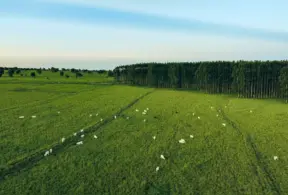
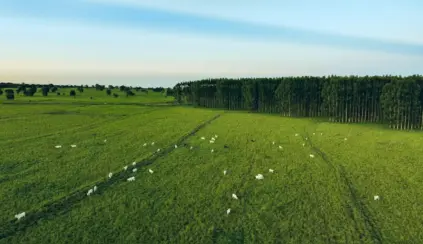
Regenerative beef: nourishing our bodies, our soil, and our future.
Calculating emissions per kilogram of food ignores an essential question: a kilogram of what, exactly? When nutritional density is included in the analysis, the debate gains another dimension.
Cattle ranching is often placed in the spotlight of environmental debates. But the real impact of the activity depends, above all, on how it is carried out — and there are already concrete transition pathways underway in Brazil.
How can we feed a population of nearly 10 billion people with fewer emissions and without expanding into new areas? Understand why sustainability in cattle ranching is at the center of this global debate and how the sector can also be part of the solution.
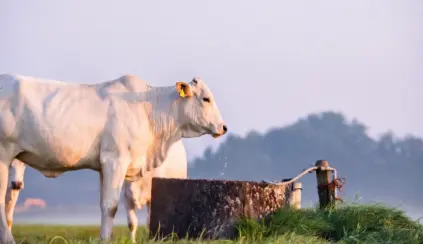
Parameters such as pH, salinity, temperature, and microbiological quality directly influence water intake, herd health, animal welfare, and the safety of beef products.
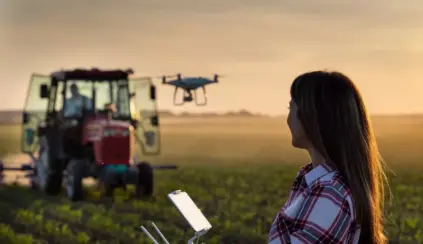
AI systems already achieve up to 76.5% accuracy in meat evaluation, while initiatives such as CCD-AD/SemeAr aim to bring these technologies to small-scale producers, enhancing efficiency from farm to industry.
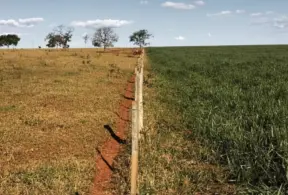
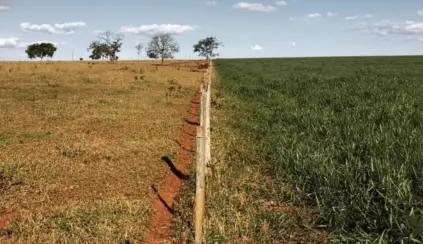
Learn how technical diagnostics, financing, and public policies aim to enable pasture restoration in Brazil and help the country advance its global commitments, as well as the challenges to be addressed.
Companies and research institutions are joining forces to adapt cattle ranching to practices that preserve cultivated areas. These efforts also help improve productivity and expand economic opportunities.