The neighboring country is focusing on smallholder producers to help align their processes with international requirements.
The livestock industry has adopted technologies that monitor and filter the water consumed in pastures with much greater precision. This not only improves animal welfare but also helps maintain vegetation.
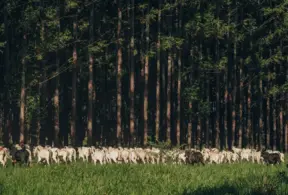
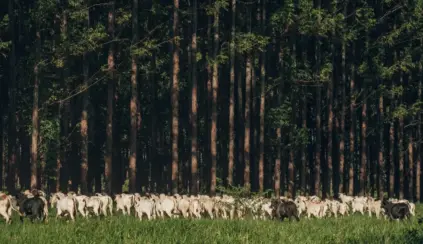
Integrated systems, pasture management, and sustainable intensification are placing Brazil at the forefront of low-carbon cattle ranching worldwide.
A psychologist and retired professor, she broke the cycle of the “secondary figure” to lead a productive and sustainable revolution at Fazenda São José, in Goiás.
How the restoration of degraded pastures makes it possible to increase productivity and profitability in cattle ranching, reducing costs without territorial expansion.
Studies indicate gains in productivity, climate resilience, and pasture restoration through integrated systems.
An international study shows that animal welfare practices directly contribute to the advancement of several Sustainable Development Goals of the 2030 Agenda, integrating socio-environmental and economic impacts.
Learn how the labels that certify products with a neutral greenhouse gas emissions balance work and how they contribute to climate change mitigation.
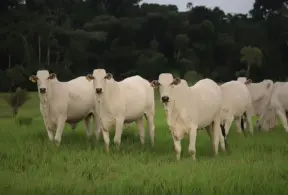
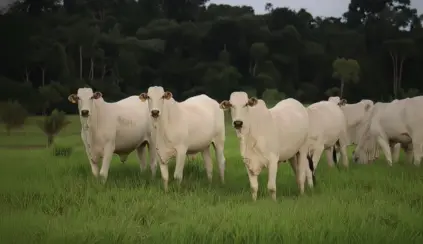
The methane gas emitted through cattle burping is absorbed by the pasture that feeds them. The cycle is balanced and does not represent new impacts on the climate. Learn more!
Since the global input crisis, the agricultural sector has intensified the search for viable and sustainable alternatives. Manure has gained increasing relevance due to its multiple positive impacts.
Europe is accelerating the decarbonization of livestock farming, and Sino-Brazilian cooperation proposes a two-way partnership to help adapt production to premium markets.
How science has evolved from the Five Freedoms to a model that guides best practices in livestock farming and the industry.