Share


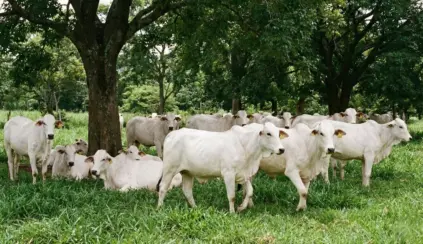
The adoption of well-managed pastures — rotational, fertilized and with high-nutrient forage — is one of the most efficient strategies to increase beef cattle productivity per hectare and to reduce pressure to clear new areas.
In a scenario where 28 million hectares of pasture are at intermediate or severe levels of degradation, as Embrapa’s data reveal about Brazil, it becomes even more relevant. The situation stands out in states such as Mato Grosso, Goiás, Mato Grosso do Sul, Minas Gerais and Pará, which are intensive in agricultural activities.
Beyond the environmental impacts, the other side of this reality is its negative effect on productivity. Inadequate soil management compromises the carrying capacity of pastures, that is, the number of animals an area can sustain healthily and continuously. With the loss of this capacity, many producers begin to see opening new areas as a solution to maintain or feed the herd, even though there are more efficient and sustainable alternatives, such as recovering degraded areas through techniques like integrated systems (such as Crop-Livestock-Forest), which restore soil health and, consequently, accelerate cattle finishing.
Aegro specialists point out that production can jump from 2 arrobas (in a degraded pasture) to up to 12 arrobas per hectare/year (in a recovered and well-managed pasture). That represents a 500% increase in cattle fattening, without the need to expand land. This leap occurs thanks to practices such as:
- Pasture rotation, which allows rest and proper regrowth of cover plants;
- Fertilization and soil correction, which replenish essential nutrients;
- Control of invasive plant species and adjustment of stocking rates, avoiding overcrowding;
- Direct or indirect recovery, using agricultural crops to restore fertility and accelerate the generation of organic matter.
ILPF: integration that transforms rural land
Among the most promising strategies is ILPF (Crop-Livestock-Forest Integration), which combines different production systems on the same land throughout the year. This model improves soil fertility, increases nutrient cycling, reduces soil erosion and expands biodiversity, in addition to providing greater thermal comfort for animals and, in some cases, new sources of income.
According to the Ministry of Agriculture and Livestock, ILPF enables the restoration of degraded areas and reduces the need for agrochemicals. This set of actions, if well executed, also brings financial benefits to producers, as it allows greater predictability in financial returns throughout the year. In addition, the system contributes to the positive carbon balance, since trees and soil capture CO₂ (carbon dioxide) that would otherwise be emitted into the atmosphere.
Management protocols across Brazil
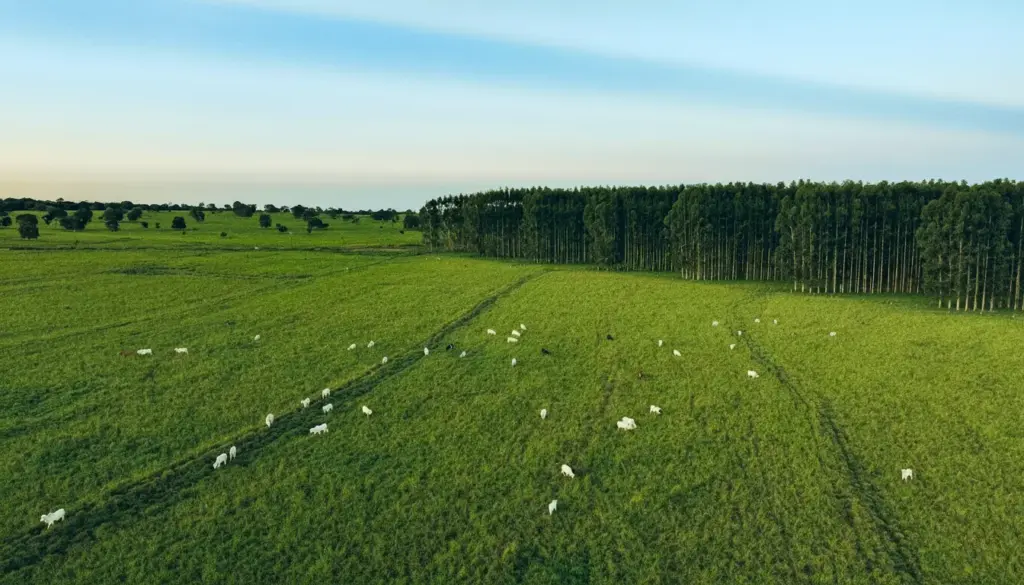
Due to the great climatic and soil diversity, there is a need to adapt production systems according to the region. Companies and research institutions, such as Embrapa and the ILPF Network, have developed cultivars of adapted forage species – direct seeding techniques in pastures, in addition to integrating recovery models that incorporate temporary agriculture in pasture formation. The Santa Fé system is one example of techniques incorporated in the Cerrado, as this article shows.
In the northern region, to intensify livestock without deforestation in the Amazon, as addressed by the Amazônia 2030 project, systems such as rotational grazing (dividing pasture into smaller areas), crossbreeding to improve genetics, artificial insemination and finishing in pens (paddocks) on a part-time basis (semi-confinement) or full-time (confinement), with grain feeding and other supplements after animals spend most of their life on pasture, are used. In these cases of confinement and semi-confinement, the finishing phase was between 11 and 23 times more productive than on traditional low-productivity farms.
In the Southeast, maximizing green mass production (total forage naturally produced in the pasture) often relies on nitrogen fertilization, a good practice that also improves pasture quality, although it requires water availability and higher temperatures. In the state of São Paulo, Embrapa Pecuária Sudeste recommends doing it between March and October, when the climate is warmer and there is a higher incidence of rain. “Nitrogen is one of the essential nutrients for plant development, along with phosphorus (P) and potassium (K). N increases pasture production and, consequently, makes it possible to raise the number of animals per hectare,” the publication says.
In the semi-arid Northeast, management conditions are also specific. Thus, rainwater capture systems, such as underground dams, are among the recommended practices to create the water infrastructure necessary for sustainable management, which includes agroecological practices such as crop rotation, intercropping (the practice of cultivating two or more plant species in the same area simultaneously or with overlapping cycles) and organic fertilization using manure or other components, according to the document Technologies for Coexistence with the Brazilian Semi-arid.
Adapted grass cultivars, direct seeding in pastures, indirect recovery with agriculture and Crop-Livestock-Forest Integration are strategies that, when properly applied by producers, can provide more productive, sustainable livestock farming aligned with international environmental conservation standards.
References
- Is livestock the great villain of the greenhouse effect? Understand the bovine methane cycle
- Underground dam
- Efficiency of nitrogen fertilization of pasture depends on climatic conditions
- ILP and ILPF in Pasture Recovery: Complete Guide [2025]
- ILPF is a strategy to reduce emissions in agriculture and expand access to the carbon market
- ILPF transforms degraded pastures into productive areas
- Crop-Livestock-Forest Integration – ILPF
- Policies to develop cattle ranching in the Amazon without deforestation
- Technologies for Coexistence with the Brazilian Semi-arid