Share


The way people perceive meat has changed a lot. While for much of the 20th century the debate about food focused on access to food, in subsequent decades new concerns emerged related to health, the environment and food systems. In this process, different scientific studies and public interpretations about nutrition helped shape narratives about meat consumption — some grounded in evidence, others resulting from the simplification of more complex scientific issues.
1950s–1970s: the diet-heart hypothesis
The modern debate about diet and cardiovascular health began to gain momentum in the 1950s, when researchers started investigating the relationship between diet and heart disease. One of the most influential studies of that period was the Seven Countries Study, launched in 1958 by epidemiologist Ancel Keys. The research analyzed dietary patterns and cardiovascular mortality in different countries, starting from the hypothesis that “the differences in the frequency of coronary heart disease between populations would occur in some ordered relation with physical characteristics and lifestyle, particularly diet composition, especially in fat (fatty acids), and with serum cholesterol levels… The initial premise was to measure individual and population differences in relation to risk, health-related behavior and biological factors.” This study helped consolidate the so-called diet-heart hypothesis, which influenced nutritional recommendations in several countries in the following decades.
1980s–1990s: expansion of observational studies in nutrition

Between the 1980s and 1990s, nutritional epidemiology began to investigate more deeply the relationship between dietary patterns and chronic diseases. Much of this research used observational studies, which follow populations over time to identify associations between eating habits and health problems. These studies helped broaden the debate about the role of different foods — including meat — in cardiovascular health.
More recent scientific reviews, however, point out that interpreting these studies requires caution. A systematic review conducted by the international NutriRECS consortium and published in the Annals of Internal Medicine concluded that the evidence linking red meat to cardiovascular risks is of low or very low certainty.
These results illustrate the complexity of nutritional science, in which multiple dietary and behavioral factors influence health outcomes.
2000s: the environmental debate enters the food discussion
From the 2000s onward, the debate about food also began to incorporate sustainability concerns. In 2006, the Food and Agriculture Organization of the United Nations (FAO) published the report “Livestock’s Long Shadow,” which analyzed the environmental impacts of livestock production and helped expand the global debate about the relationship between food systems and climate change.
That report marked an important moment in the discussion about food production, placing food systems at the center of debates about natural resource use and sustainability.
2015: WHO’s classification on meat and cancer
Another relevant milestone occurred in 2015, when the International Agency for Research on Cancer (IARC), affiliated with the World Health Organization (WHO), published an assessment on meat consumption and cancer risk. The agency classified:
- processed meat as carcinogenic to humans (Group 1)
- red meat as probably carcinogenic (Group 2A)
However, the WHO itself clarifies that this classification refers to the degree of scientific confidence in the observed association, not to the magnitude of the risk involved. In other words, IARC groups indicate how consistent the evidence is that a factor can cause cancer, but they do not measure how much that factor, in practice, increases the likelihood of developing the disease.
Cooking methods and new research on meat
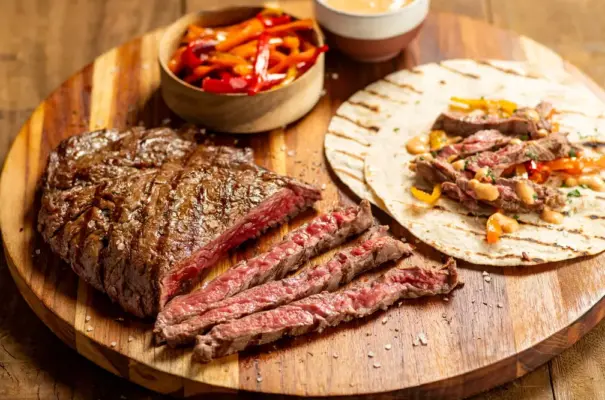
Scientific research has also investigated how different cooking methods can influence the formation of chemical compounds in meat. According to the United States National Cancer Institute (NCI), cooking meats at very high temperatures — such as grilling or frying — can form compounds called heterocyclic amines (HCAs) and polycyclic aromatic hydrocarbons (PAHs).
2010s–2020s: amplification of the debate on social media

In recent years, the debate about food has circulated intensely on social media. The Digital News Report, produced by the Reuters Institute at the University of Oxford, shows that digital platforms and social networks have become one of the main ways people access information in many countries.
In this environment, scientific results, often complex, can be condensed into simplified messages or interpreted out of context, contributing to the spread of distorted perceptions about different foods.
A space to separate myths from evidence
In a context of large volumes of information about food, distinguishing scientific evidence from simplified interpretations has become a challenge for many consumers.
This special brings together a series of content pieces dedicated to clarifying some of the most common doubts related to meat consumption. In upcoming articles, topics frequently present in the public debate will be discussed, such as cardiovascular health, cholesterol, cancer, nutrition and sustainability.
The aim is to offer context and qualified information to help readers better understand a debate that involves science, culture and food choices, in a multifactorial and multidisciplinary context, always grounded in scientific evidence.
Read more: Does red meat cause cancer?