Share


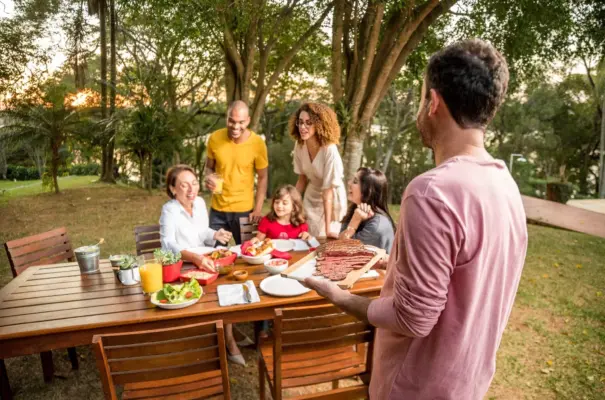
Taking a home grill to the level of the most seasoned cooks is a dream for many Brazilians. It is a meticulous process that requires properly controlling the fire, knowing how to select and cut the meat, and finishing the food with excellence.
It may seem very difficult, but it isn’t. Check below the five fundamental steps for a barbecue worthy of a chef. By following these procedures and repeating them a few times, the difference will be felt not only by the cook but by all the guests.
- Fire preparation: organizing heat zones
To reach the ideal doneness, you need to control the grill’s heat—not just light the coals. Use charcoal or wood to create at least two distinct heat zones: one for direct heat to sear, and another for indirect heat to cook slowly.
Certain cuts are best started on direct heat, such as picanha, sirloin cap (contrafilé), ribeye (bife ancho), top sirloin (alcatra) and flank steak (fraldinha). On the other hand, beef rib, hump (cupim) and large pieces (like pork leg, pork shoulder or beef brisket) usually roast better when positioned farther from the heat source, typically on the sides of the grill or in a separate area. Minerva Foods offers its customers everywhere in the world high-quality products under internationally recognized brands.
To that end, you can arrange the charcoal in a ‘canoe’ or ‘snake’ layout to facilitate temperature control; this way, the most concentrated lit coals on one side allow you to move the meat as needed.
The ‘hand test’ (table below) is a classic but useful way to gauge the heat of the coals. It involves holding the open palm above the grate, generally at the height where the meat will be cooked. The tolerated time is directly related to the intensity of the coals:
| Time tolerated | Heat level | Estimated temperature | Recommended use |
| 0 to 2 seconds | Too hot | Above 290°C | Unsuitable – It will burn the exterior before cooking the interior. You should wait for the coals to subside or spread the charcoal. |
| 3 to 4 seconds | High heat (direct) | 230°C to 290°C | Ideal for searing steaks and thin- to medium-thickness cuts. Very quick cooking time. |
| 5 to 7 seconds | Medium heat | 175°C to 230°C | Ideal for most cuts (picanha, sirloin cap, sausages) and for balanced direct-fire grilling. |
| 8 to 10 seconds | Low heat | 120°C to 175°C | Ideal for indirect roasting (large pieces like ribs and hump) or for keeping ready foods warm. |
Source: Parrilla Rock
Using a grill thermometer provides better precision if you have one available during the barbecue.
- Choice and preparation of cuts
This step defines technique and timing. Cuts like picanha, flank and top sirloin require direct heat to form a crust without drying the interior, while ribs demand slow, indirect cooking until tender.
There is a basic principle in almost all cases: cut against the grain. The grain appears as fine, parallel lines running through the piece. Cutting across them makes pieces more tender and reduces the loss of juiciness. Just observe the direction of the muscle fibers and make cuts perpendicular to them.
Even cuts considered ‘less noble’ become much more tender when handled correctly. The channel TV Churrasco released a video explaining in detail how it works.
It’s worth investing in a quality set of knives as well as proper sharpeners for each blade type. Cheap knives tend not to hold an edge well and deteriorate faster. Other equipment can also help raise the level of your home barbecue.
- Marinades, injections and use of aromatics
Lean meats and poultry can become more flavorful when marinated: a balanced base that includes an acid (wine or apple cider vinegar, citrus juices, etc.), fat (olive oil, sesame oil, among others) and various seasonings such as garlic, onion, fresh herbs (rosemary, thyme and oregano). Spices like paprika, black pepper, soy sauce and honey are also welcome for certain cuts.
A report from Band explains three distinct techniques that are compatible with most of Brazilians’ favorite cuts. It is worth mentioning that there are two types of marinade: dry and wet. Thinner cuts can benefit from dry marinades—although this is not the main option in most cases.
- Cooking techniques used by professionals
Certain practices can optimize the cooking process and make meats juicier and more flavorful. Note that some of them require specific equipment:
- Reverse sear: cook the piece over indirect heat until about 10°C to 15°C below the desired doneness, then sear over direct heat to form a crust. Result: an even interior and a well-defined crust.
- Sous vide + grill: vacuum cooking with controlled temperature ensures juiciness; finish quickly on the grill for texture and smoky flavor.
- Dry charcoal: use dry, moisture-free charcoal for hotter and more stable coals; this makes it easier to maintain consistent heat zones. In this technique, the charcoal stays in a separate compartment, without direct contact with fat or liquids from the meat.
- Searing, resting and slicing
Cutting into pieces and serving immediately after cooking is not a good idea. After cooking, let the piece rest for a few minutes: this allows the juices to redistribute and reduces liquid loss when slicing.
Turning a barbecue into a gastronomic experience worthy of a chef requires focus on a few points, but it is not a very difficult task. With proper care in choosing the right cuts, temperatures, searing techniques and resting, even traditionally tougher pieces can become flavorful.
Reference sources:
PERFECT BARBECUE: How to know the COAL TEMPERATURE using your hands | Parrilla Rock
How to Cut: With or Against the Grain? – TvChurrasco – Barbecue Manual – Part 14
Barbecue marinades: specialist teaches three preparations (with secret seasoning!)
Reverse Sear – Clube da Carne TV
How long do I leave meat in the Sous Vide?! #sousvide #sousvidebasics #barbecue