
Share


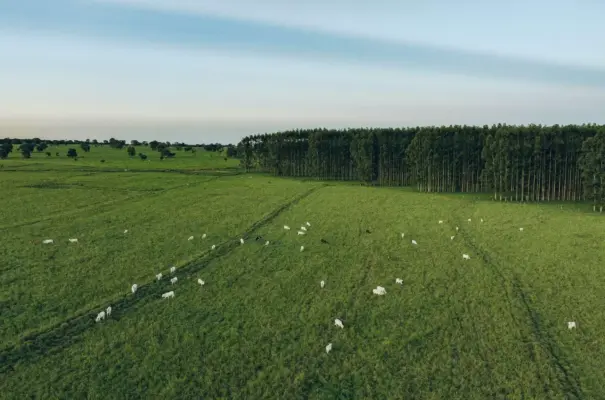
In a context marked by price volatility, extreme weather events and rising production costs, Brazilian farmers have sought systems capable of providing greater economic security and predictability in the field. In this context, Integrated Crop-Livestock-Forest systems (ILPF) gain relevance as a productive strategy that reorganizes land use, combines complementary activities and expands opportunities to generate income throughout the year. By integrating different production systems on the same land, it is possible to secure productivity gains, greater efficiency in the use of natural resources and a reduction of productive and financial risks, creating firmer foundations for the economic autonomy of the rural producer, as technical studies indicate.
ILPF: positive impact on the environment and the economy
In a study conducted by researchers from different Embrapa units, six rural establishments used as Technological Reference Units (URTs) were evaluated, distributed across Brazil’s five regions and representative of different modalities of Integrated Crop-Livestock-Forest (ILPF). The analysis covered operations ranging from large rural enterprises to family farms, as well as varied integration arrangements, from more complex systems to simpler crop-livestock integration models aimed at pasture recovery. The Ambitec-Agro method was employed for the assessment, based on integrated modules of environmental indicators applicable to crop agriculture, animal production and agroindustry.
The results pointed to significant productivity gains and greater efficiency in the use of natural resources, generally accompanied by increased use of inputs and energy, reflecting advances in technological performance. Nevertheless, the evaluations indicated positive effects on the economic and social dimensions of sustainability, evidencing ILPF’s contribution to the overall performance of the establishments analyzed.
Among the main outcomes, improvement in soil quality stood out, observed consistently across all indicators and in every system assessed. Increased biomass in grazing areas and greater ground cover helped reduce compaction caused by animal trampling and machinery traffic. This set of factors also contributed, albeit marginally, to water quality by reducing turbidity associated with erosion control. In addition, local conditions and the good management practices adopted explain the absence of significant pollution sources or evidence of improper waste disposal.
From an economic perspective, ILPF expands the production of grains, fibers, meat, milk and forest products, both timber and non-timber, which is reflected in the generation of direct and indirect employment and in increased income for rural producers, especially through activity diversification and the dilution of economic risks.
According to WRI Brazil, Integrated Crop-Livestock-Forest (ILPF) also stands out as an effective tool to increase the resilience of rural producers in the face of extreme weather events. The publication highlights the Role of the ABC Plan and Planaveg in the Adaptation of Agriculture and Livestock to Climate Change, which evaluated the impacts of different agricultural technologies foreseen in the Sectoral Plan for Mitigation and Adaptation to Climate Change, including integrated systems. The results indicate that ILPF contributes to improving the local microclimate and soil quality, helps reduce vulnerability to extreme climate events and pest incidence, and is associated with productivity gains in the field.
ILPF: a lever for strengthening the rural economy

Cattle ranching plays a central role in the Brazilian economy, and increasing its efficiency without intensifying pressure on natural resources (Poupa-Terra Effect) is one of the sector’s main challenges. In this context, the recovery of degraded pastures emerges as a decisive strategy to expand production sustainably, especially when associated with integrated systems like ILPF, which allow increased productivity without the need to open new areas, according to Embrapa.
Pasture recovery is one of the pillars for an economic recovery aligned with the green agenda. As the bulletin from the FGV Agro Economics Observatory explains, the ABC+ Plan, a Brazilian government initiative aimed at reaffirming and updating the country’s commitments to reduce carbon emissions in agriculture and livestock for the period 2020–2030, has the objective of restoring 30 million hectares of degraded pastures. “To implement this target in the current period, approximately R$ 42.51 billion (US$ 8.58 billion) would be needed, with this investment carried out in 23 Brazilian states (including the Federal District),” the study reports, noting, however, that these values vary greatly depending on several factors.
Pasture recovery and the expansion of ILPF move forward in a complementary way. Although cattle ranching is already highly productive in several regions of the country, the predominance of extensive systems and low technological adoption still limits the full exploitation of its potential. By integrating crop production, animal husbandry and the cultivation of tree species, models such as ILPF promote sustainable intensification, maintain or increase productivity and help reconcile economic growth, food security and environmental conservation.
Sources:
- Costs of recovering degraded pastures in Brazilian states and biomes
- ILPF system promotes sustainability on rural establishments across diverse production contexts
- Role of the ABC Plan and Planaveg in the Adaptation of Agriculture and Livestock to Climate Change
- Economic evaluation of Integrated Crop-Livestock-Forest systems: Embrapa’s experiences
- A New Economy for a New Era: Elements for Building a More Efficient and Resilient Economy for Brazil