Share


Since the International Agency for Research on Cancer (IARC), part of the World Health Organization (WHO), classified processed meats as carcinogenic and red meat as probably carcinogenic in 2015, the debate about that relationship has taken on global and decontextualized proportions, leaving room for simplistic and misleading generalizations. But what does that classification actually mean? Does red meat by itself cause cancer?
The distinction between fresh meat and processed meat is central to understanding the debate.
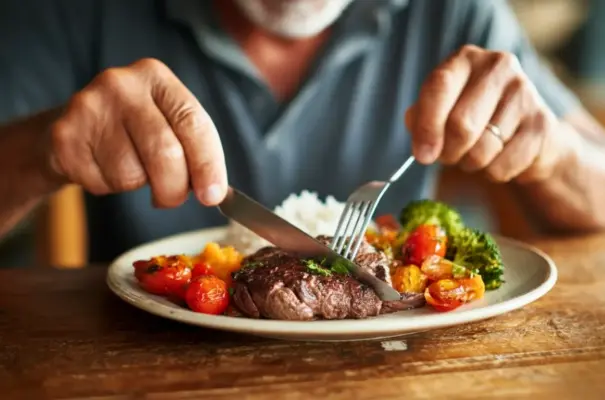
The WCRF points out that the evidence of an association with colorectal cancer is more consistent and of greater magnitude for processed meats. For fresh red meat, the evidence is classified as “probable,” relevant but less certain. The organization recommends consuming a maximum of 350 g to 500 g of cooked red meat per week.
Meanwhile, Cancer Research UK emphasizes that eating 500 g or less of red meat per week does not significantly increase bowel cancer risk. For processed meats, however, no level of consumption has been identified that is associated with the absence of risk.
This differentiation is often ignored in public communication, which leads to the mistaken generalization that “all meat causes cancer.”
What the IARC says and what the 2015 classification means
In October 2015, a working group of 22 experts from ten countries evaluated more than 800 scientific studies on the topic. The conclusions were published in Lancet Oncology and released by the IARC.
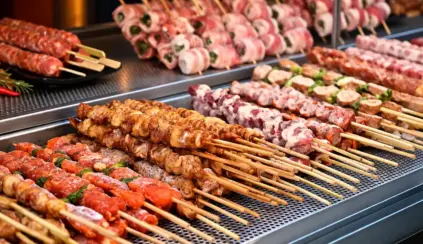
Processed meats (ham, bacon, sausages, salami and similar products) were classified in Group 1: carcinogenic to humans, based on sufficient evidence of an association with colorectal cancer. This means that different studies of human populations observed an association between consumption of these foods and colorectal cancer, but the classification does not quantify the size of the individual risk nor imply that consumption will directly or inevitably lead to the disease.
Fresh red meat (beef, pork, lamb, veal and similar) was classified in Group 2A: probably carcinogenic, based on limited evidence in humans and robust mechanistic evidence. Limited evidence indicates an association from observational analyses, without it being possible to conclusively establish causality. Robust mechanistic evidence refers to the existence of biological mechanisms capable of explaining how such an effect could occur.
The technical details of the studies make all the difference, as shown by the use of the same classification for very different elements. To give an idea, working in hair salons and beverages served above 65°C are also in Group 2A.
As the WHO’s frequently asked questions section explains: “IARC classifications describe the strength of the scientific evidence that an agent can cause cancer, and do not assess the level of risk.” In other words, the classification says there is evidence of an association, but not that all agents in the same group represent the same danger. To illustrate: working as a hairdresser and exposure to glyphosate (a herbicide used in agriculture to control weeds) are also in Group 2A, along with fresh red meat. This does not mean these exposures present equivalent risks to each other.
Relative risk vs absolute risk: the difference that changes the conversation
The figure of an 18% increased risk associated with daily consumption of 50 grams of processed meat, publicized by the International Agency for Research on Cancer (IARC), caused confusion and requires context, because it refers only to relative risk. The problem with presenting data in that format is that many people are led to the mistaken conclusion that by consuming processed meat they would have an 18% chance (or nearly one in five) of developing the disease.
According to an article published by the Union for International Cancer Control (UICC), the negative fallout and media confusion occurred because the 18% figure released by the IARC refers to a multiplier representing what’s called relative risk (the probability of an event occurring in an exposed group compared to an unexposed group). In this case, the relative risk of developing bowel cancer is 1.18 times higher for those who consume 50 g of processed meat daily compared with those who do not.
To correct this distortion and present risk more clearly to the public, the UICC suggests using absolute risk (the probability of an event occurring in a specific group over a period, without comparison to other groups). The publication illustrates this difference well by citing the Australian scenario: there, the real lifetime probability of a person developing bowel cancer by age 85 is 8.2%. Considering that indicator, the lifetime risk for those who consume processed meat would be 9.3% (or about 1 in 11), while for those who do not it would be 7.9% (or about 1 in 13). In other words, disregarding other elements (such as smoking, lack of regular exercise, among others), the increase in risk is small.
For fresh red meat, the numbers are even more modest. According to a meta-analysis published in PLOS ONE, the relative risk of developing the disease was 1.17 (that is, a 17% increase in risk) for each 100 g per day increase in consumption. In other words, only half the amount of processed meat (50 g) is needed to reach a risk increase similar to that caused by twice the amount of fresh meat.
The scientific debate: what studies reveal
The NutriRECS consortium, in a review published in the Annals of Internal Medicine, concluded that the evidence of a possible relationship between red meat consumption and cancer mortality or incidence is of low to very low certainty, and that the estimated absolute effects are very small. The review recommended that most people would not need to reduce red meat intake. That statement generated immediate reaction from organizations such as the World Cancer Research Fund (WCRF), which argued that the available evidence supports recommending limiting red meat intake and avoiding processed meats to reduce colorectal cancer risk.
The debate reveals something important: nutrition science, which is based predominantly on observational studies, deals with inherent limitations. These studies identify correlations but do not establish direct causality. Confounding factors—variables that can impact the outcome, such as smoking, physical inactivity, alcohol consumption and overall dietary pattern—make it difficult to isolate the effect of a single food.
The variables, called confounding factors in the scientific field, make it difficult to isolate the effect of a single food. In the context of the relationship between meat and cancer, aspects such as smoking, level of physical inactivity, alcohol consumption and overall dietary pattern are relevant confounding factors because they can influence observed results and the interpretation of associations.
Cancer is a multifactorial disease
Cancer results from complex interactions between genetic, environmental and behavioral factors. Reducing the cause of cancer to a single food is a simplification that science does not support.
According to the American Association for Cancer Research (AACR), modifiable factors such as tobacco use, poor diet, physical inactivity, excessive sun exposure, alcohol consumption, pathogenic infections and obesity contribute to about 40% of all cancers. Tobacco alone accounts for nearly 20% of all cancer cases and for 30% of cancer-related deaths in the United States, according to the Mayo Clinic.
A study published in BMC (2024), which followed nearly 200,000 Finnish participants, identified that combinations of smoking with obesity, smoking with alcohol consumption and smoking with physical inactivity were the pairs of risk factors with the greatest impact on cancer incidence. Overall dietary pattern, rather than a single food, is the most relevant dietary factor in cancer prevention.
The 2024 publication in Nutrients on modifiable risk factors for cancer reinforces that colorectal cancer is multifactorial, influenced by genetic factors, family history, chronic inflammation, as well as diet and lifestyle, and that excess weight and obesity are also independent and relevant risk factors for this type of cancer.
Degree of processing and cooking methods

The degree of meat processing and the cooking method are factors that can influence risk, as detailed in a National Library of Medicine publication.
In the case of processed meats, the use of additives (nitrites and nitrates) employed to preserve the food, inhibit microbial growth and maintain characteristics such as color and flavor can give rise to so-called N-nitroso compounds (NOCs), which are associated with potential carcinogenicity.
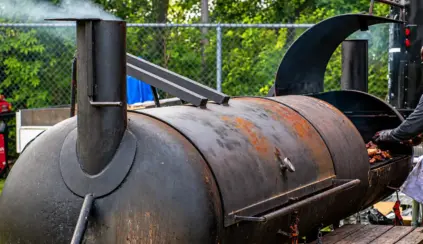
Very high temperatures for long periods or direct contact with an open flame, such as in intense barbecuing, can form heterocyclic amines (HAAs) and polycyclic aromatic hydrocarbons (PAHs), substances that can interact with DNA and contribute to cellular changes.
Heme iron, present at higher concentrations in red meat, can participate in chemical reactions in the gastrointestinal tract that lead to the formation of reactive molecules capable of damaging cells and DNA. On the other hand, this same heme iron is an important nutritional advantage of meat, as it has high bioavailability and is more easily absorbed by the body compared with other iron sources, contributing to the prevention of nutritional deficiencies such as anemia.
What the main international recommendations say
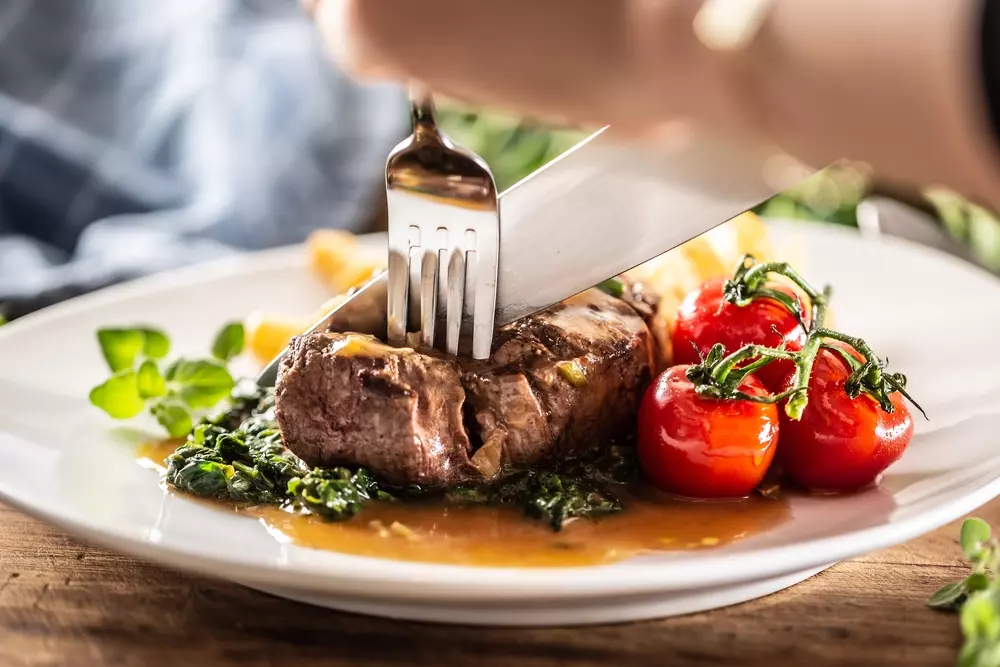
The IARC assessment itself lists the nutritional benefits of red meat, which is an important source of high-quality protein, bioavailable (heme) iron, zinc, selenium and vitamin B12. To maximize these benefits, the WCRF recommends a balanced diet that includes 350 g to 500 g of cooked red meat per week.
In the Brazilian context, as already discussed in the first article in this series, average per capita beef consumption is approximately 37.5 kg per inhabitant per year, according to the CiCarne Yearbook 2024-2025. That equates to about 100 grams of fresh meat per day — a level that, accounting for bone and cooking losses, translates into an average steak of 70 g to 75 g. In other words, the Brazilian average consumption of fresh meat is within the limits recommended by the WCRF.
So, does red meat cause cancer?
Science does not support the simplified claim that “meat causes cancer.” As noted earlier, cancer is a multifactorial disease, and the overall dietary pattern combined with physical activity, weight control, avoidance of smoking and moderate alcohol consumption is far more determinant than any single food. In addition, other factors such as the type of meat, degree of processing and cooking method are also relevant.
Therefore, consuming fresh red meat prepared properly and in amounts recommended for each person, avoiding processed meats and adopting a healthy lifestyle remain the most sensible choices.
Learn more: What is the origin of the myths about meat?
Reference Links
IARC Monographs: Red Meat and Processed Meat (2018)
IARC Press Release No. 240 — Carcinogenicity of Red and Processed Meat
WHO Q&A: Cancer — Carcinogenicity of the consumption of red meat and processed meat
WCRF: Limit consumption of red and processed meat
WCRF: Red meat and bowel cancer risk — how strong is the evidence?
WCRF: Red and processed meat still pose cancer risk, warn global health experts
Mechanistic evidence for red meat and processed meat intake and cancer risk (PMC, 2018)
UICC: How to interpret IARC findings on red and processed meat as cancer risk factors
AACR Cancer Progress Report 2024 — Reducing Cancer Risk
Healthy Lifestyle and Cancer Risk: Modifiable Risk Factors to Prevent Cancer (MDPI, 2024)
Pairwise association of key lifestyle factors and risk of solid cancers (PMC, 2024)