Share


In 2024, during a meeting between regulatory authorities in China, a pilot beef traceability project developed in partnership with Brazil was announced. The central objective of the initiative is to reduce livestock emissions, contributing to a more sustainable production model.
The Ministry of Agriculture and Livestock (MAPA) and Chinese representatives took part in forums on green finance and non-predatory agriculture. At the same time, negotiations are progressing on a joint protocol for meat certification and soy, focusing on aligning emission measurement methodologies and mutual recognition of sustainability labels.
According to the Agência Brasil China, livestock in Brazil accounts for 10% of global greenhouse gas (GHG) emissions and 24% of annual tropical deforestation. Areas deforested in the Amazon and the adjacent Cerrado are often initially occupied by illegal activities associated with land grabbing and the opening of pastures.
Technical scope of the project

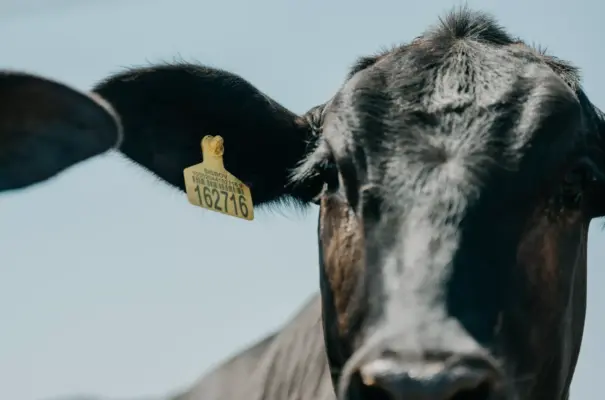
A cross-border platform will be created to allow tracking of the origin, health history and environmental indicators of beef. This will allow low-carbon cuts to receive labels recognized by Chinese buyers, according to the newspaper O Tempo.
Data standards, exchange formats (APIs/QR Codes) and methodological criteria for calculating the carbon footprint will be developed and standardized, meeting the needs of both countries and making them internationally recognized practices. The number of farms, integrated slaughterhouses, chain coverage (percentage of volume traced), GHG reduction per certified ton and the time for mutual recognition of labels are among the main points of attention.
Issues such as the technical definition of requirements, regional testing, cross-border integration, auditing and scaling will depend on formal agreements between the authorities, as well as private sector adherence, with technical support from Embrapa and supervision by MAPA.
Beef traceability and global convergence
International markets, especially in the European Union, are discussing regulations for the import of deforestation-free products. The Brazil-China pilot project seeks to anticipate this movement, ensuring interoperability in tracking mechanisms.
Brazil already has programs such as the Plano ABC+ and SISBOV (Brazilian System for the Individual Identification of Cattle and Buffaloes), which follow methodologies recognized by the FAO (Food and Agriculture Organization) and the IPCC (Intergovernmental Panel on Climate Change).
Like SISBOV, all these systems meet the requirements of premium markets, such as exporters used as references, including Australia (NLIS) and New Zealand (NAIT).
Reference sources:
China and Brazil create pilot beef traceability scheme – Agência Brasil China
Brazil and China negotiate certification protocol for meat and soy
eur-lex.europa.eu/legal-content/PT/TXT/PDF/?uri=CELEX:32023R1115
Plano ABC and ABC+ — Ministry of Agriculture and Livestock
MAPA – Ministry of Agriculture, Livestock and Supply
NLIS | Australia’s system for identification and traceability of livestock