Share


Talking about meat doneness is almost an invitation to an endless debate: some people prefer the center nearly raw, others only eat it well done, and some swear that “medium” is the only acceptable option. But behind these preferences there is technical consensus: doneness is a combination of internal temperature, color and texture, not just opinion.
International culinary guides and food-safety institutions organize cooking levels into ranges of temperature, appearance and texture. USDA (United States Department of Agriculture) publishes charts of minimum safe temperatures for meats, widely adopted by professional kitchens and the food industry. In the culinary field, culinary schools and specialty publications use those same temperature references to define the different stages of cooking.
In Brazil, culinary portals like Tudo Gostoso help translate that technical knowledge for everyday use, explaining how to identify each doneness level in home cooking and offering practical tips for the grill and the skillet. From these references, it is possible to organize the main doneness stages for grilled beef, from seared to well done, and understand what each one delivers on the plate.
Selada / Blue
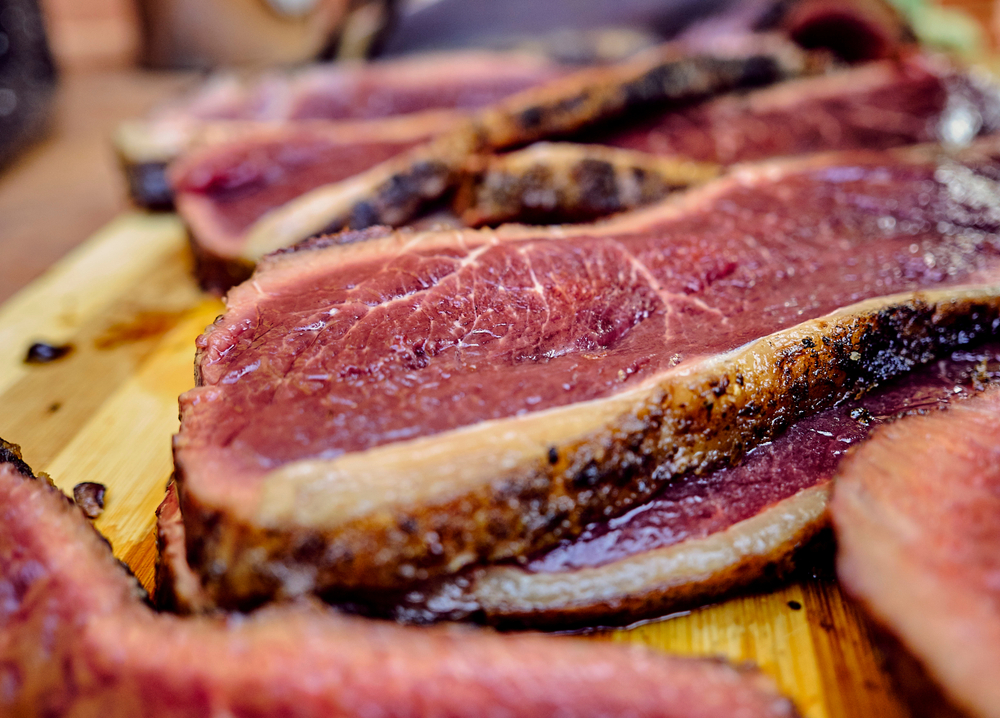
With an internal temperature up to 46 °C, this is the doneness for those who like the meat almost raw inside. The piece passes very quickly over a strong heat source: it forms a thin golden crust outside, but the center remains deep red, cold or only slightly warm. In international doneness charts, this stage appears as extra-rare or blue.
This temperature and texture profile is typical of preparations like carpaccio and steak tartare, which do not go to the grill but share the same principle of consumption: very fresh meat, of controlled origin, thinly sliced or minced, highlighting natural flavor and tenderness. When it goes on the grill, the seared/blue stage appears in thick cuts only “marked” on the outside, more common in specialized kitchens.
From a food-safety standpoint, the USDA warns that very low temperatures increase the risk of microorganism survival, especially when the meat’s origin is not clear.
Rare
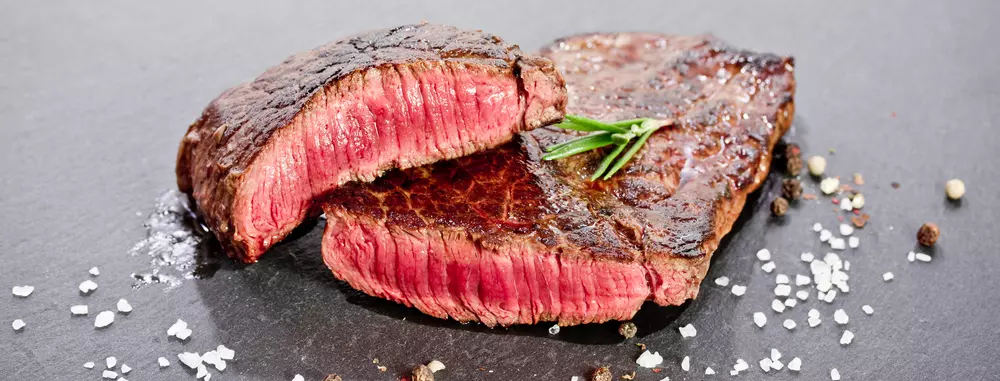
In rare doneness, the meat already has a vivid, warm red center but remains very tender and juicy. The surface is well browned, and there is a transition between the crust and the core: a pink ring gives way to red in the center.
International guides and home-cooking materials place this range around 50–60 °C internal temperature, varying according to thickness and resting time. The Doneness entry describes rare and medium-rare with a red or red-pink center, associated with lower cooking temperatures.
In an interview with G1, Cinthia Cazarin, associate professor at the School of Food Engineering at Unicamp, emphasizes that eating rare or raw meat of unknown origin greatly increases health risk. She therefore highlights the importance of consuming only products of certified origin, which helps reduce the chance of contamination such as salmonella.
Medium
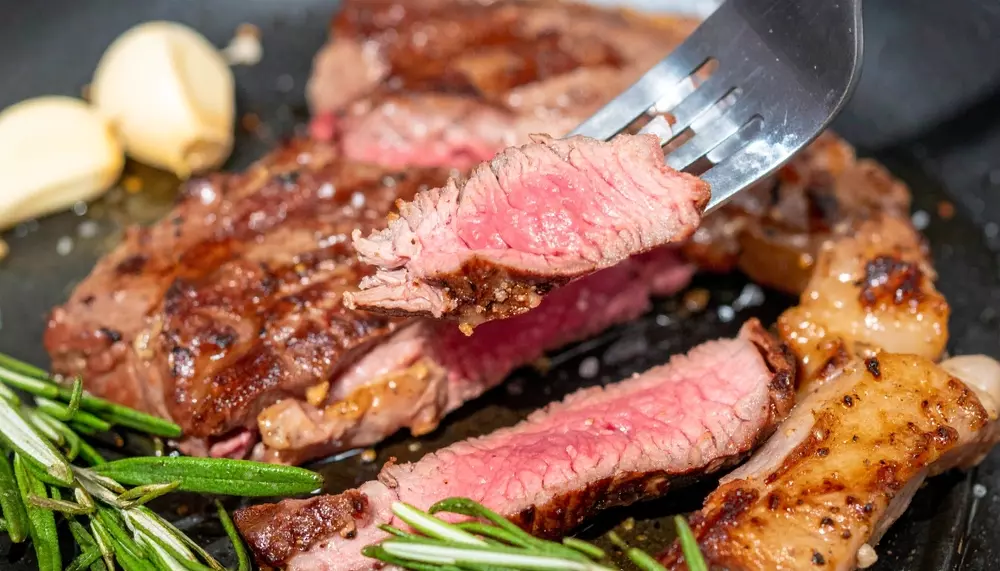
Medium is the “diplomatic middle ground”: the center is pink rather than red, the meat offers some resistance to the cut but still retains moisture and good tenderness.
In international references, this doneness appears as medium, with a pink interior, and an internal temperature intermediate between the rare and well-done ranges, from 57 °C to 63 °C.
Cinthia Cazarin, in the G1 report, also stresses the importance of choosing cooking methods that preserve the meat’s moisture. According to her, preparations where heat is moist, such as in a pressure cooker, do not favor the formation of toxic compounds.
She also reminds that care starts before the heat: in addition to knowing the meat’s origin, the use of seasonings and condiments is fundamental. Beyond enhancing flavor, these ingredients help reduce the formation of potentially harmful substances during cooking.
Medium-well
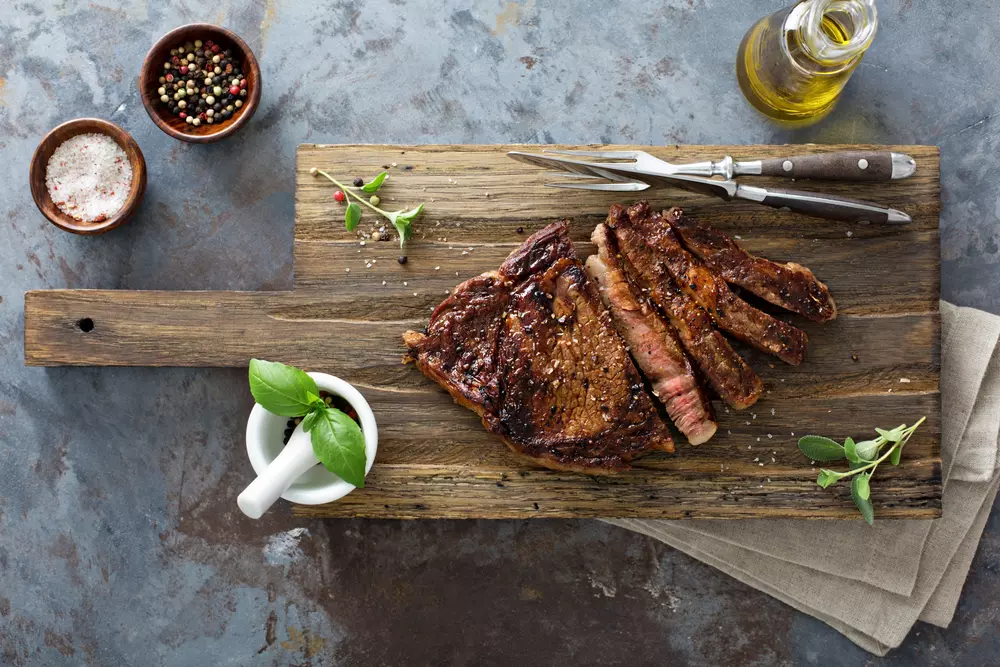
At medium-well (or “medium to well”), the core practically loses the intense pink: it becomes lightly pink or beige-pink, and the texture is firmer. There may still be juiciness, especially in cuts with more marbling, but the sensation is of a more “chewy” meat — that is, less tender, with fibers more contracted due to greater moisture loss.
In practice, this stage occupies the upper range of medium temperatures and approaches the medium-well values described in doneness charts, where little pink is visible in the center, around 64 °C to 68 °C. It’s the “one step further” many restaurants use when a customer asks for “well done, but not dried out”: an interior nearly fully cooked but still short of completely gray meat.
Well done
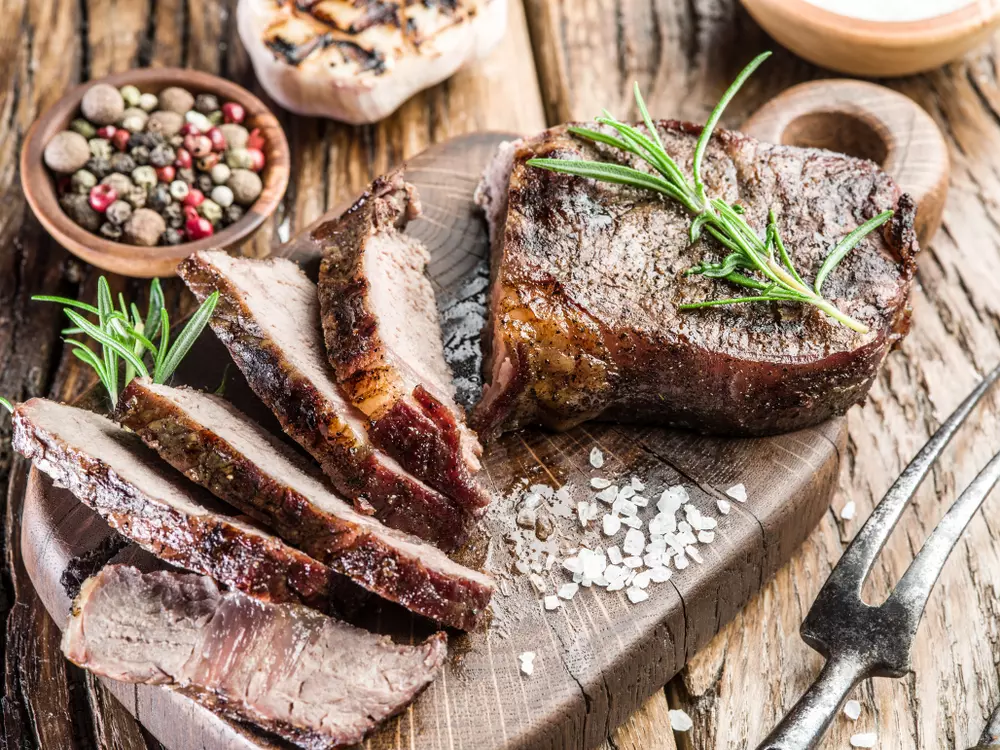
Well done meat is entirely brown or grayish inside, with no pink parts. The texture is firm, the amount of juice that runs out when cutting is small, and if the heat goes too far, darkened or almost blackened areas can appear on the surface.
Culinary charts place this range from 70 °C internal temperature onward, with a completely cooked interior. The USDA safety chart recommends, for example, that ground beef reach at least 71 °C (160 °F) in the center, precisely because it has a higher contamination risk distributed throughout the mass.
On the other hand, studies and positions from organizations such as the World Cancer Research Fund (WCRF) and the U.S. National Cancer Institute point out that when meat spends too long at very high temperatures and becomes charred or burned, chemical substances may form that could increase the risk of certain types of cancer.
How to reach the right doneness (whichever you prefer)
In professional kitchens, a meat thermometer is the most reliable ally: measure the internal temperature at the thickest part of the cut and compare it with the ranges in doneness charts or safety tables.
At home, culinary portals and barbecue blogs teach practical tricks that work as “sensory shortcuts.” The Agron site describes the touch test (or hand test): the firmness of the meat is compared to the fleshy area below the thumb in different positions. With the hand relaxed, that area resembles the texture of rare meat; as the thumb touches each finger, it becomes firmer, helping gauge when the meat is at more advanced stages. Another method is the knife test: insert a thin knife into the center of the meat and leave it there for a few seconds. Then remove it and carefully touch the blade to your lips. If it is cold, the meat tends to be rare; if it is warm, it is usually medium; if it is hot, it is a sign it is approaching well done. Another suggestion is to let the meat rest for a few minutes off the heat before cutting. This pause allows juices to redistribute through the fibers and results in a more pleasant texture.
Overall, the discussion about meat doneness mixes food science, sanitary safety and personal taste. Thermometers, temperature charts and touch tests help move the conversation beyond guesswork and turn it into an informed choice: understanding what each doneness delivers, from seared to well done, is what allows you to decide how your next steak will reach your table.