Share


For decades, livestock expansion in Brazil was associated with the opening of new land. Today, that paradigm is being replaced by a more efficient and sustainable strategy: recovering degraded pastures to produce more on the same land. The adoption of agronomic techniques, integrated systems and appropriate management has shown that it is possible to increase productivity and profitability without expanding agricultural frontiers.
According to Embrapa, pasture degradation occurs when there is a loss of vigor in forage plants, a reduction in ground cover and a decrease in the land’s carrying capacity — a scenario generally associated with inadequate management, lack of soil correction and the absence of nutrient replenishment.
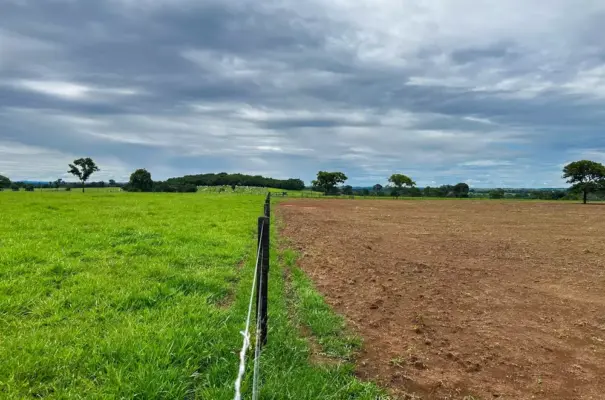
The reduction in soil cover is not only a productivity problem. When soil remains bare it is more exposed to sun, rain and wind, which accelerates the decomposition of organic matter and favors the release of carbon as carbon dioxide (CO₂). In addition, changes in soil biological processes can increase emissions of nitrous oxide (N₂O), a greenhouse gas with a high global warming potential.
Soil is also a living ecosystem, home to microorganisms, fungi, insects and other organisms essential for nutrient cycling and fertility maintenance. Without vegetative cover, temperature and moisture loss increase, reducing biological activity and, consequently, soil biodiversity.
The result is a less resilient system, environmentally more vulnerable and economically inefficient, with lower productivity per area and greater pressure to open new land.
What it means to recover a degraded pasture
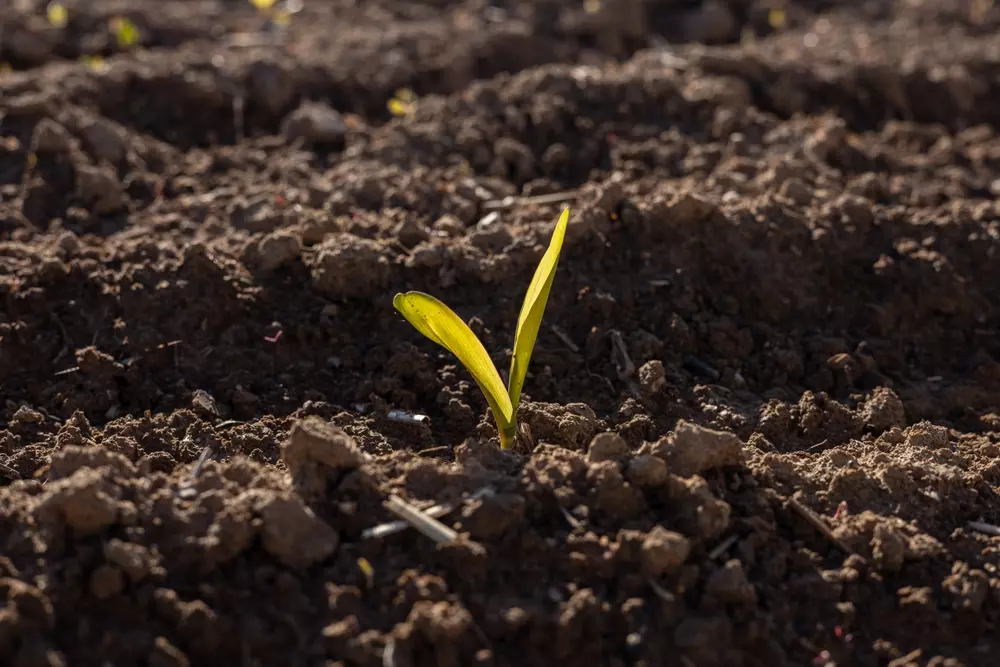
Pasture recovery is not limited to the simple regrowth of grass and other cover plants. It involves a set of technical practices defined according to the degree of degradation of the area. Among the main actions are:
- soil diagnosis and assessment of the level of degradation;
- correction of soil acidity and fertility;
- maintenance or renovation fertilization;
- reestablishment or intercropping of adapted forage species;
- adjustment of stocking rate and grazing management.
These measures make it possible to restore the productive capacity of the soil and the pasture, directly reflecting on animal performance.
Crop-livestock integration as a recovery tool
One of the most effective strategies is Crop-Livestock Integration (CLI). In this system, agricultural crops and pastures alternate or coexist on the same land, promoting the physical, chemical and biological recovery of the soil.
A study conducted by the Public Policy Group (GPP) at USP, within the scope of the TEEB Agriculture & Food (TEEB AgriFood) Project, shows that CLI contributes to increased organic matter, improved fertility and greater efficiency in the use of inputs, and also allows the area to generate income from agricultural production during the recovery process.
Producing more without opening new areas
The recovery of degraded pastures plays a central role in the sustainable intensification of livestock. A study published in Royal Society Open Science indicates that improving the productivity of Brazilian pastures would allow livestock production to expand without the need to convert natural areas, reducing pressure on forests and native biomes. It also shows that recovering millions of hectares of degraded pasture in the country could significantly increase the number of animals supported per hectare, solely through gains in productive efficiency.
Direct impacts on producer profitability
From an economic point of view, pasture recovery is associated with consistent gains in productivity per hectare, which improves indicators such as arrobas produced, dilution of fixed costs and return on investment.
A survey by FGV Agro estimates that average pasture recovery costs vary according to the level of degradation and the biome, ranging from approximately R$ 979 to R$ 1,541 per hectare for moderately degraded areas and from R$ 1,563 to R$ 2,100 per hectare for severely degraded areas.
In the aggregated scenario analyzed by the study, recovering 15 million hectares would require about R$ 21.17 billion in investment. The estimated potential revenue, however, reaches R$ 36.77 billion, generating a surplus of approximately R$ 15.6 billion — about 74% above the invested value.
Even in a more conservative scenario, with projected revenue of R$ 21.75 billion, the result still exceeds the initial investment, indicating economic balance.
Moreover, by avoiding the opening of new land, the producer reduces costs associated with environmental regularization and basic infrastructure, focusing resources on improving the existing production system.
Pasture recovery and public policies
In Brazil, the recovery of degraded pastures is one of the pillars of low-carbon agriculture policies. Initiatives such as the ABC Program and the National Program for the Conversion of Degraded Pastures into Sustainable Systems financially and technically encourage the adoption of these practices.
According to the Ministry of Agriculture and Livestock, the recovery of these areas is seen as strategic to increase national agricultural and livestock production while reducing emissions and environmental impacts.
Productive efficiency as a way forward
The recovery of degraded pastures is consolidating as one of the main responses to contemporary livestock challenges: producing more with lower impact and greater economic efficiency. By transforming underutilized areas into more balanced productive systems, the strategy strengthens the sector’s competitiveness and reduces the need for territorial expansion.
More than an environmental solution, it is a productive and economic opportunity that expands the role of Brazilian livestock on the global stage.
Reference links:
Economic, social, human and environmental impacts of recovering degraded pastures in Brazil
Degraded pastures in Brazil: improving livestock production and forest restoration
COSTS OF RECOVERING DEGRADED PASTURES IN THE BRAZILIAN STATES AND BIOMES
Recovery of degraded pastures is highlighted in sustainability policies