Share


Amidst growing global demand for food, there exists a little-known biological system: ruminant animals, such as cattle and buffalo, have a stomach divided into chambers, starting with the rumen. In this environment, microorganisms ferment fibers that humans cannot digest and convert them into nutrients. These, in turn, are transformed into high-quality proteins for human consumption.
A study by the Food and Agriculture Organization of the United Nations’ animal production division shows that most of what feeds the world’s livestock does not constitute human food. On average, 86% of the dry matter ingested by animals is made up of forages, crop residues, and industrial by-products that would not end up on people’s tables. Therefore, without livestock utilization, a significant portion of this would become an environmental liability.
This unique ability of ruminants to digest fiber through the rumen, which allows them to convert resources that humans do not consume into high biological value proteins, is one of the crucial points for understanding why cattle farming occupies a strategic place in food security.
Net protein contribution: measured gains
The efficiency of converting resources into food can be measured by metrics such as the net protein contribution, known by the English acronym NPC. The logic is simple: the protein edible by humans that enters the cattle’s diet is compared with the higher quality, edible protein that emerges in the form of meat.
As explained by a study published on the Translational Animal Science website, based on the evaluation of eight commercial feedlots in the United States using lot-level production data from 2006 to 2017, “beef cattle production systems produce high-value proteins for the human diet, and the sustainability of these systems depends on the ability to efficiently produce proteins capable of meeting human nutritional needs,” the article states, explaining: “NPC above 1 indicates that a system is contributing positively to meeting human protein needs, and an NPC below 1 indicates that a system is competing for human-edible protein [HeP].”
In the analysis, half of the feedlots increased their NPC during the period, driven by the substitution of grains with corn milling by-products and by greater weight gain efficiency; in 2017, the values ranged from 0.47 to 1.15. In other words, diet is fundamental in defining the contribution to protein supply or competition for edible food. Thus, the study concluded that when combining the calf and growing phases, which use non-edible forages, the bovine system as a whole presents an NPC above one, meaning it contributes to meeting human protein needs. In summary, reducing edible grains and increasing by-products makes livestock farming more of a protein “donor” than a “consumer.”
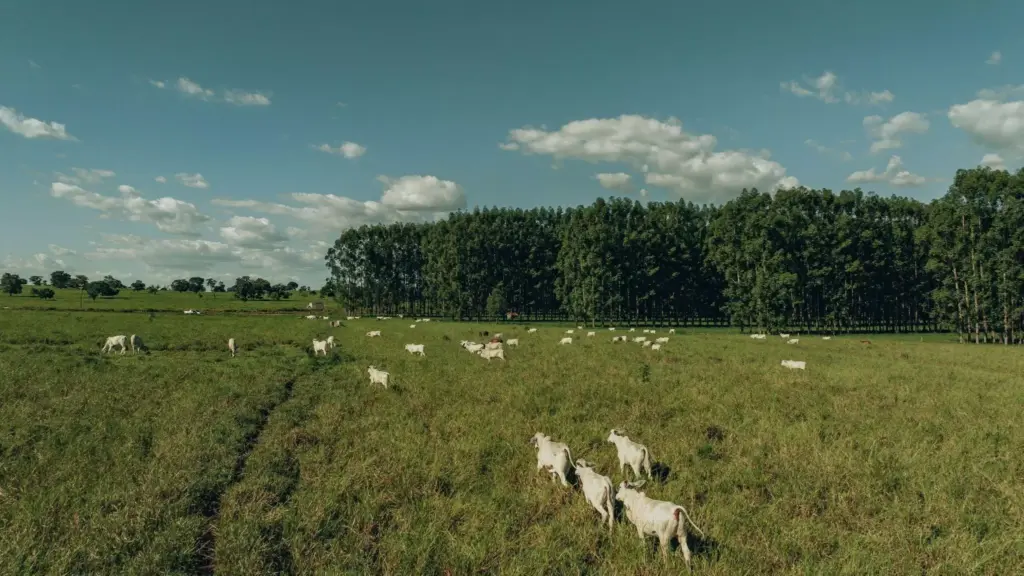
In Brazil, according to Embrapa, approximately 95% of national beef is produced on pasture systems, spread across a vast area, including a forage base composed of grasses and wild plants, unsuitable for human consumption. Once consumed by cattle, this is transformed into protein, heme iron, zinc, and B vitamins that make up a nutrient-dense food. It is as if cattle farming operates as a biological upcycling gear.
When managed with technique, pastures also increase productivity per hectare, contribute to the regularity of the food supply for cattle, and alleviate pressure on agricultural areas suitable for grains and vegetables, as explained in this other Embrapa article.
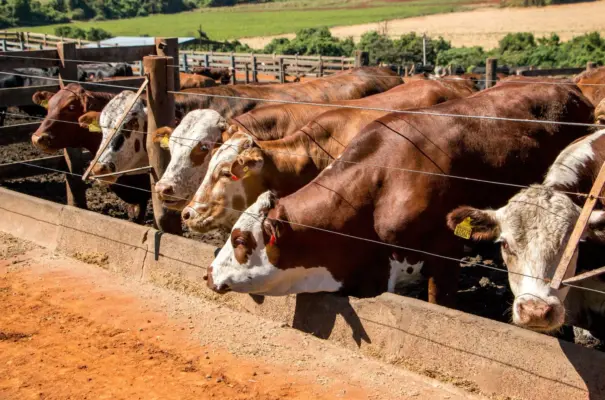
However, even in intensive finishing – a cattle fattening system that combines pasture with high concentrated supplementation provided in troughs – the final product’s protein quality often compensates for the portion of grains used, increasing the net balance for human consumption, as the American study showed.
This is the case of the IZVQ group’s farm in Barretos/SP, which includes orange and sugarcane pulp in the cattle’s diet, residues from citrus farming and the sugar-alcohol industry, respectively. The property uses this confinement finishing system, meaning the animals are kept in pens and fed balanced rations to gain weight more quickly before slaughter. The American study shows that this type of management results in greater weight gain in the final phase, which can also affect the NPC. Although this may represent higher consumption of human-edible protein, with the use of non-edible residues, the impact on the NPC is positive.
“An adult animal on pasture lives for 4 to 6 years until slaughter. In confinement, this time is between 24 and 30 months. If it takes less time to reach the slaughterhouse, it contributes less greenhouse gas (GHG) emissions to the environment,” explains Rogério Domingues, a consultant in nutrition and market strategy. This is another benefit of a strategic bovine diet for more efficient weight gain and, consequently, a shorter cattle lifespan. “All the methane and carbon going into the atmosphere demand part of the animal’s energy that could be converted into meat, into weight gain. And this is being lost, going into the atmosphere. So, our intention is to leave this energy part for the animal to convert into more meat. There are two gains: one for the animal, which will gain more weight, and the other is the reduction of emissions into the atmosphere,” Domingues adds.
The process that transforms waste into food
According to a publication by Rehagro – a specialist in agribusiness education – the rumen has physiological mechanisms that preserve an environment conducive to the growth of microorganisms important for the digestive process, such as bacteria, fungi, and protozoa.
Among the essential conditions are a stable temperature around 39°C, maintained by homeostatic mechanisms that regulate internal temperature, and an adequate pH, which usually ranges from 5.5 to 7.0. In a slightly less acidic environment, with a pH from 6.2 upwards, cellulolytic bacteria, for example, which break down plant fibers like those in grass and other types of forage, work better; and protozoa, which have a broader function of balancing and regulating the ruminal environment, in addition to aiding in the digestion of different types of nutrients. Amylolytic bacteria, which digest starch from grains like corn and soy, are more active at a pH around 5.7, slightly more acidic.
To maintain pH at safe levels, salivation plays a central role, as the high concentration of bicarbonate, phosphate, and potassium provides a buffering effect to the ruminal fluid, helping to neutralize the acids produced during fermentation and preventing sharp pH drops that could compromise the activity of microorganisms responsible for digestion.
Some foods, such as citrus pulp or fiber-rich forages, help neutralize excess acidity, acting as a kind of “chemical buffer.” This is the so-called buffering effect: it balances acidity and keeps the ruminal environment healthy, ensuring good fermentation, digestibility, and animal performance.
Upcycling and waste reduction
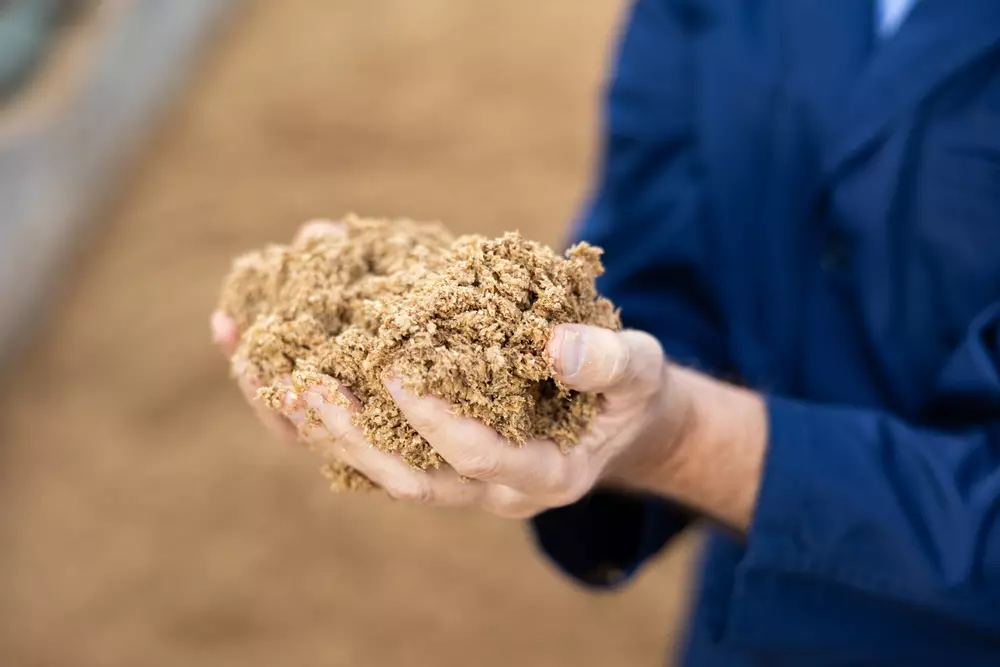
Citrus pulp, citrus peel and bagasse, bran, soybean hulls, sugarcane by-products, and other residues generated from different agricultural crops can replace part of conventional inputs, maintaining performance and reducing the environmental cost of disposal. “We use these inputs for their importance in offering an optimized diet for the animal, which favors productivity, but this also implies greater profitability for the producer, reducing costs with agricultural inputs such as corn and soybean meal, which are traditionally the main sources of energy and protein in feedlot diets,” explains Domingues. By replacing part of these grains with agro-industrial residues, the producer spends less on concentrated inputs and also reuses materials that would be discarded, transforming them into high nutritional value food.
From an environmental perspective, this practice has a direct impact on the sustainability of the livestock system. A study by Embrapa documents the potential of citrus pulp and other by-products as energy and highly digestible fiber sources in the diet of cattle, in addition to recording recent efforts to evaluate the positive environmental impacts of this reuse. In practice, livestock farming helps close cycles by transforming surplus from the food industry into meat, reducing pressure on landfills and associated emissions.
This occurs because, by reducing dependence on cultivated grains, the demand for nitrogen-rich synthetic fertilizers is also reduced. The manufacturing of these fertilizers is highly energy-intensive and emits greenhouse gases such as nitrous oxide (N₂O), a gas with a global warming potential almost 300 times greater than that of CO₂.
Furthermore, citrus pulp has good fiber digestibility and can reduce enteric methane production, contributing to lower gas emissions per kilogram of meat produced. Previous research has also classified citrus pulp as an energy ingredient with good digestibility for ruminants, with the potential to improve diet utilization without compromising animal production.
Thus, the use of these residues in the bovine diet increases the economic and environmental efficiency of the system, promoting a circular economy model, where by-products from the juice industry return to the agricultural chain as sustainable inputs.
The adoption of good pasture management practices and integrated production systems is another link in this value chain. Crop-livestock-forest integration systems increase land use efficiency, diversify income, and contribute to mitigating emissions per unit of product. Evidence presented by Embrapa indicates gains in productivity and sustainability when high-performance pastures and integrated systems are implemented correctly. With this, the herd better utilizes forage resources, maintains focus on foods not edible by humans, and delivers more quality protein per hectare.
Reference sources:
- Citrus pulp for cattle
- Com Efeito Poupa-Terra, pecuária bovina brasileira cresce sem pressionar florestas
- Effects of Replacing Extruded Maize by Dried Citrus Pulp in a Mixed Diet on Ruminal Fermentation, Methane Production, and Microbial Populations in Rusitec Fermenters
- More Fuel for the Food/Feed Debate
- Net protein contribution of beef feedlots from 2006 to 2017
- Produção de carne bovina – pastagens
- Qualidade da produção da carne bovina
- Sistema baseado em pastagens de alta performance aumenta produção pecuária
- Subprodutos da indústria na nutrição de bovinos promovem benefícios ambientais