

Share


More than 345 million people in 82 countries face acute food insecurity — a number that has doubled since the Covid-19 pandemic, driven by armed conflicts, inflation and climate disasters, according to the World Bank.
With the global population expected to reach 9.7 billion people by 2050 and extreme weather events threatening agricultural production, the situation is likely to worsen. According to the Food and Agriculture Organization of the United Nations (FAO), global food production will need to grow 60% to meet projected demand, even as natural resources become scarcer.
It is in this scenario that the financial sector becomes a central element. As a technological accelerator and risk management agent, the sector can expand access to agricultural credit, ensure stability in the food production chain and promote low-carbon, high-productivity production models. To achieve this, rural credit needs to go beyond traditional models.
Because of its importance, climate finance, energy transition and sustainable food systems are being addressed at COP30, held in Belém/PA, as highlighted by the conference’s official action agenda. These pillars recognize the role of finance and technological innovation as essential elements to support a more resilient and inclusive agriculture.
Limits of traditional financing
With the worsening of droughts, floods and market fluctuations, banks and agfintechs (companies that combine technology and financial services for agribusiness) have begun adopting technologies such as big data, geodata, predictive analytics and artificial intelligence to advance rural credit management. These tools provide greater predictability, more efficient risk management and traceability of reported information, contributing to stronger and safer governance in the credit evaluation process. Thus, according to the Estadão Summit Agro, these solutions make it possible to reduce interest rates, simplify documentation, assess climate risk in real time, improve the accuracy of collateral and even anticipate losses from extreme weather conditions.
“Many banks think financing small farmers is very risky. But with the help of geographic data, banks can see how their crops are growing and what the risk of flooding is, for example. With more information about risks, banks can better assess farmers’ creditworthiness, which makes lending to them attractive,” says Rabobank, the Dutch bank that employs integrated strategies for agricultural lending, in a publication on the World Economic Forum.
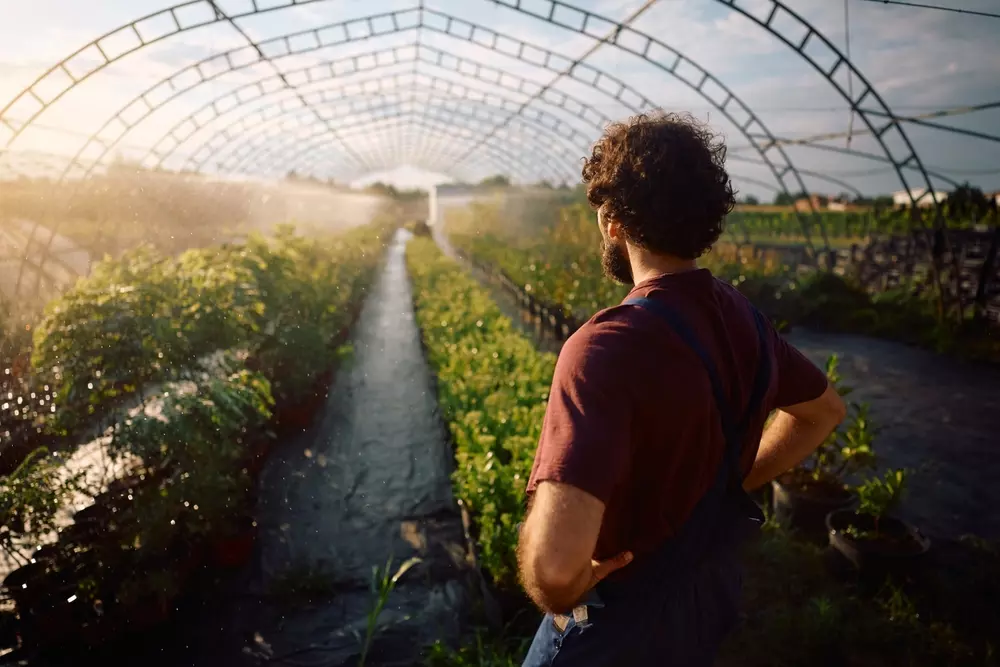
Founded as a farmers’ cooperative, Rabobank has become a global reference in financing linked to food security. Through the “Banking for Food” platform it combines credit with sector technical knowledge, trade networks and climate mitigation instruments such as blended finance funds and loans tied to sustainability targets, guided by the four dimensions of food security defined by the FAO:
1. Increase food availability;
2. Improve economic and physical access;
3. Promote balanced nutrition;
4. Ensure stability of supply.
Digitalization takes center stage
Both in the public and private spheres, innovation in financing includes digital access to credit, which has been benefiting rural activity, according to a report by the Agrishow Digital portal.
Startups like Traive and Agtrace combine finance and agriculture to expand rural credit through digital models and real-time data analysis. A report on the Estadão Summit Agro website shows that these companies work to reduce bureaucracy, analyze risk management, build networks along the production chain, and optimize logistics and product marketing.
On the public side, Banco do Brasil and BNDES have remained major drivers of the agricultural sector, including with innovation in financing. BB will allocate R$ 230 billion for financing the 2025/2026 harvest, 2% above the previous season, according to Forbes. The BNDES will invest R$ 70 billion between July 2025 and July 2026 — the largest amount the bank has ever made available to the sector, 5% above the previous Plano Safra.
These funds will be offered through initiatives such as the National Program to Support the Medium Rural Producer (Pronamp) and the Program to Promote Modernization and Technological Innovation in Agricultural Production (Inovagro).
The Plano Safra, the federal government’s rural financing initiative, recorded 607 thousand credit operations between July and September this year, an increase of 24% compared to the same period of the previous season, with contracted volume jumping to R$ 24.1 billion.
This digitalization of rural credit aligns with global discussions on climate finance and agricultural innovation, which are among the debate pillars at COP30 and international organizations such as the FAO and the United Nations Environment Programme (UNEP), within a broader context of sustainable finance, productive inclusion and climate resilience, considered priorities for the agri-food transition.
Blockchain and traceability strengthen market trust
Technologies like blockchain, in addition to facilitating production traceability and reducing fraud, have helped with the issuance and settlement of agricultural securities, such as electronic Rural Product Notes (CPR).
At the same time, other financial modalities are growing in the country:
- Private agribusiness securities (CRA, LCA, CDCA): R$ 1.38 trillion in outstanding stock (IstoÉ Dinheiro)
- Agricultural crowdfunding: from R$ 8 million in 2016 to R$ 100 million in 2020 (Embrapa)
- Venture capital and private equity: R$ 23.6 billion invested in 2020 in the Brazilian agribusiness.
- Green bonds or títulos verdes: fixed-income papers issued by companies, governments or multilateral organizations to finance projects with environmental and climate benefits. Since 2015, they have moved about US$ 11.2 billion, according to the Climate Bonds Initiative.
These innovations make up an expanding financial ecosystem that reduces dependence on subsidized credit and accelerates the adoption of technology, sustainability and traceability in the field — central pillars of a just and inclusive transition agenda.
As climatic phenomena pressure production, financial institutions — public and private — are driven to combine capital, technology and networks to support a resilient, integrated and fair food system. As Rabobank CEO Wiebe Draijer highlighted, “if we do not take care of our global food supply system, we will be facing one crisis after another. Everyone has a responsibility to raise awareness and create incentives to drive a more sustainable food system.”
Reference sources:
- What are the innovations in agribusiness finance?
- How agribusiness can face the food crisis – expert explains
- Banking for Food – Our parent company, Rabobank, has committed to be part of the solution to feed a growing population.
- Plano Safra 2025/2026 shows strong growth in the first three months
- Innovation, credit and sustainability: the future of Brazilian agribusiness
- Innovation ecosystem of Brazilian agribusiness
- Credit: agribusiness securities grow 22.5% in 12 months to R$ 1.38 trillion
- Banco do Brasil Announces R$ 230 Billion for Plano Safra 2025/26
- BNDES reaches the mark of R$ 53 billion in credit approved in Plano Safra 2025/2026
- How agribusiness can face the food crisis – expert explains
- Banks: the transition of the food system
- UN – World population in 2050