
Share


On April 7 World Health Day is celebrated, established by the World Health Organization (WHO). But what exactly is health?
The date aims to prompt that reflection, highlighting the importance of quality of life on a global scale. More than the absence of disease, the concept involves a broad set of factors that determine well-being across the lifespan. According to WHO, it is a state of complete physical, mental and social well-being. In practice, this means looking beyond diagnoses and also considering habits, lifestyle and, especially, the quality of diet, which takes a leading role in building a healthier life when combined with other factors, such as physical activity.
Health starts on the plate
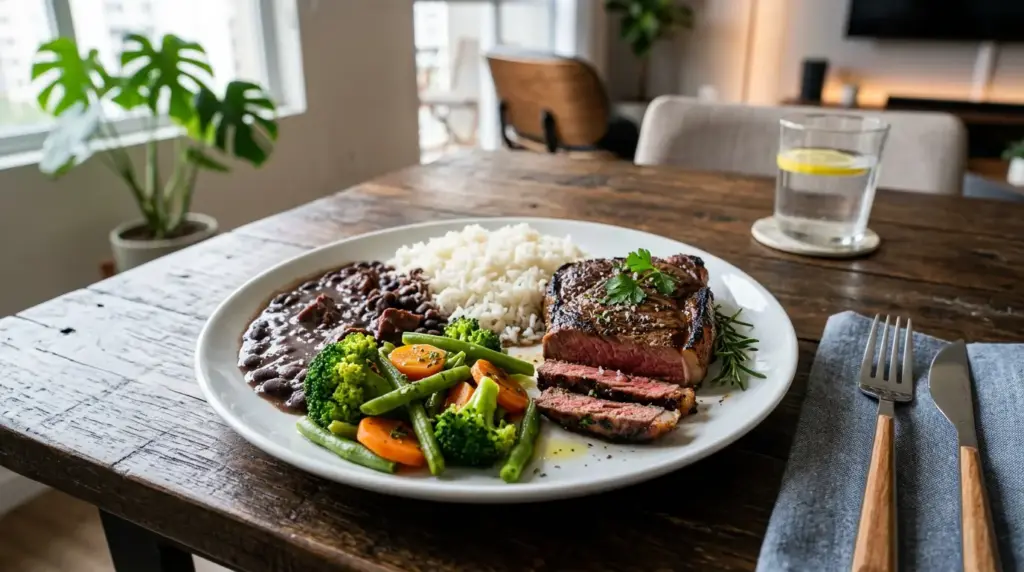
Balance is the keyword when the subject is quality of life and also a fundamental element of one of the factors that most influence human health: diet. A diverse, nutrient-rich diet matters far more in this relationship than adding or removing a single item from the plate, such as red meat.
As shown in this article on protein and aging, adequate protein intake helps preserve strength, mobility and autonomy over the years: an important factor for metabolic health, fall prevention and quality of life, far beyond aesthetic concerns.
Red meat, as nutritionist Diana Rodgers says, referring to her article “Considering the nutritional benefits and implications of red meat for health in the era of meatless initiatives”, is one of the most nutrient-dense foods on the planet, because it provides:
- Complete protein with all essential amino acids in a highly bioavailable form.
- Heme iron, much more absorbable than the non-heme iron from plants.
- Vitamin B12, found naturally only in animal-source foods, essential for neurological and cognitive health.
- Zinc, important for immunity and DNA synthesis.
- Fat-soluble vitamins such as A, D, E and K2, which are difficult to obtain in significant amounts from plants.
- Other B-complex vitamins like niacin, riboflavin (B2) and B6. Vitamin B2 (riboflavin), for example, takes part in energy processes and cellular maintenance, as explained in this article.
“Many plant-based substitutes cannot reproduce this unique nutritional profile. Fortification and supplementation try to mimic what meat naturally offers, but with lower efficiency and, often, higher environmental impact and cost,” the professional says.
Essential nutrients for the body to function
Besides proteins, beef is also a source of essential micronutrients that the body does not produce naturally — and that are fundamental for the proper functioning of the body. Another relevant point is bone health. Adequate consumption of nutrients such as proteins and B-complex vitamins can contribute to the prevention of diseases like osteoporosis.
Health across the lifespan: changing needs

Being healthy also means understanding that the body changes and that nutritional needs follow those transformations.
Groups such as pregnant people, children and older adults require special attention. Nutrients found in beef can play an important role during these times, contributing to cognitive development, immunity and the maintenance of health.
In the case of pregnancy, there is evidence linking adequate intake of certain nutrients to a reduction in important risks. In fact, consuming meat during pregnancy may be associated with decreased neonatal mortality.
Performance, recovery and quality of life

The relationship between diet and health also appears in physical performance. For people who practice sports, adequate protein intake is essential for muscle recovery and performance.
But even outside the sports context, maintaining a balanced diet can impact broader health indicators — including longevity. One example is the association between meat consumption and life expectancy.
A broader view of health
At the end of the day, talking about health is talking about balance. No single food defines well-being, but consistent dietary patterns based on quality, variety and adequacy make a difference over time.
On this World Health Day, the takeaway reflection is simple but powerful: taking care of health is not just reacting to illness, but building, every day, the conditions to live better. And that inevitably starts with the choices we make, including at the table.
Reference links:
WHO remains firmly committed to the principles set out in the Preamble of the Constitution.
Protein for what I need it for: the relationship between protein intake, strength and muscle mass
Beef consumption may help prevent osteoporosis
Vitamin B2: the body does not produce it, but beef provides it
The importance of meat, especially for women, pregnant people, children and older adults
Meat during pregnancy reduces neonatal mortality risk by up to 30%, study reveals
Research points to a relationship between meat consumption and increased longevity