
Share


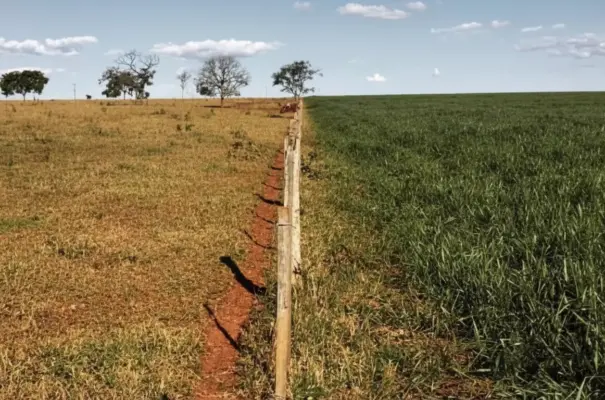
Recovering and converting up to 40 million hectares of low‑productivity pastureland over the next decade. That is the bold target Brazil has set through the National Program for the Conversion of Degraded Pastures (PNCPD), officially instituted by the Federal Government. According to the Minister of Agriculture, Carlos Fávaro, the initiative will allow the country to practically double food production without encroaching on native vegetation, ensuring food security and reducing the impact of climate change.
The proposal aligns with the country’s climate commitments, such as the Paris Agreement, by encouraging practices that help reduce greenhouse gas emissions and adapt to climate change, and by setting technical guidelines and criteria to transform low‑productivity areas into more sustainable agricultural and forestry systems.
Beyond the environmental component, the program also aims to increase productive efficiency, reducing pressure to open new land and promoting more rational use of existing resources.
However, the heterogeneity of these areas—which includes diverse factors such as biome, soil type, land‑use history and level of degradation—is one of the main challenges, as shown by MapBiomas data analyzed by Embrapa, which estimate that Brazil has about 160 million hectares of pasture, much of which shows some level of degradation, while warning that “the characteristics of degraded or degrading pastures vary according to the biome they belong to.”
Because of the country’s vast territory, the institution stresses that degradation processes must be measured by different regional metrics, assessing everything from the fraction of weed cover to biomass availability and specific soil characteristics.
Moreover, the territorial scale combined with the diversity of productive conditions requires coordination among different levels of government, research institutions and private sector actors.
Another critical point is the need for qualified technical assistance capable of translating the program’s guidelines into field‑applicable practices. Without this support, there is a risk of low uptake or inadequate adoption of the proposed strategies.
Advances
To address the lack of standardization, Embrapa announced the approval of a project funded by the São Paulo Research Foundation (Fapesp), with resources on the order of R$ 2 million. The project is coordinated by researcher Patrícia Menezes Santos, from Embrapa Pecuária Sudeste, and will operate in network with several academic institutions.
According to the researcher, improving diagnostic methods is essential to set precise targets and monitor policies. The initiative will develop software systems based on artificial intelligence and advanced remote sensing methods to map, through imagery, the actual quality of pastures in Brazil’s livestock regions.
The proposal is to create tools that allow mapping the different stages of degradation and guide more precise interventions, taking into account variables such as climate, soil and management. This kind of approach is likely to increase the efficiency of actions and reduce the risks associated with recovery investments.
Other challenges
Risk reduction responds to another challenge: access to financing, since pasture recovery requires initial investment. This equation reflects a broader transformation in Brazilian agricultural policy. Institutionalized by Law No. 4,829 of 1965, rural credit was originally structured to finance operating costs, investment and the commercialization of production. More than half a century later, it begins to incorporate sustainability as a strategic pillar, reflecting the need to align productivity, efficient land use and climate commitments.
The urgency of this transition is both economic and environmental. Research by the Brazilian Agricultural Research Corporation (Embrapa) indicates that a degraded pasture produces at most 150 kg of live weight per hectare per year. With adequate management, that productivity can double or triple, while delivering benefits such as soil and water conservation and increased carbon sequestration.
Under the public identity “Caminho Verde”, which brings together the PNCPD guidelines, the official decree and capital‑attraction initiatives, the Brazilian government’s proposal is to combine public policy and market strategy, helping to attract external resources without direct federal subsidies and shifting the focus to mobilizing private capital. In this context, Minister Carlos Fávaro has presented the program on international missions as an investment opportunity linked to sustainable production, aiming to increase the flow of foreign resources to the sector, with the National Bank for Economic and Social Development (BNDES) playing a leading role in structuring these instruments.
To that end, the decree sets criteria for accessing finance: producers must be registered in the Rural Environmental Registry (CAR) and demonstrate, over time, a reduction in emissions or an increase in greenhouse gas uptake, without expanding into new areas. In the domestic market, producers already have structured instruments. BNDES operates Renovagro, a financing program for sustainable agricultural production systems, which includes a specific line for recovering degraded pastures, with conditions that can finance everything from soil correction to improvements in the production system.
Next steps and integration
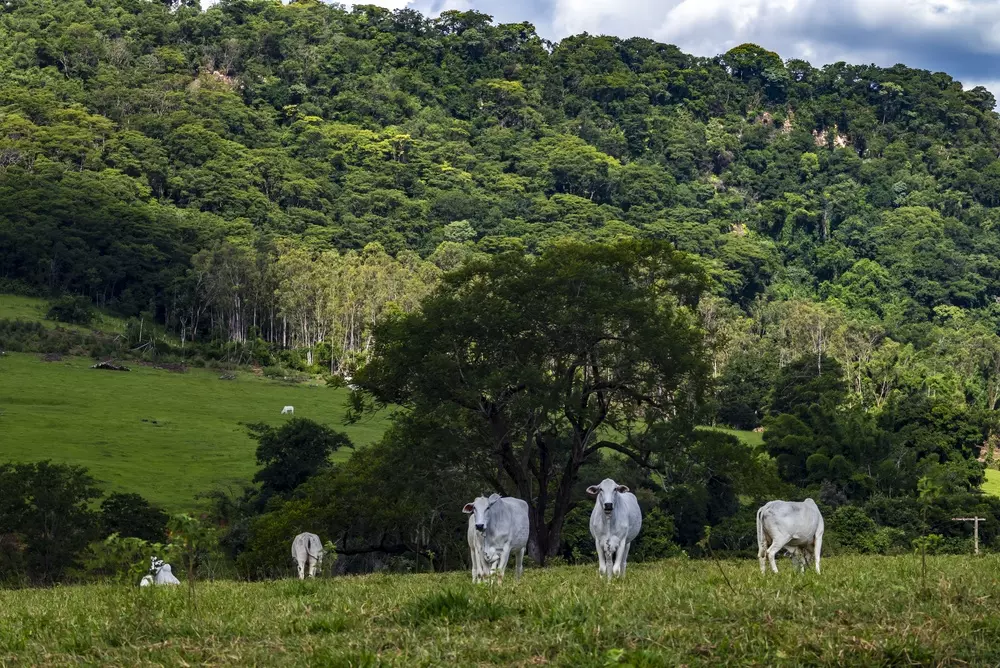
The program’s effectiveness now enters a decisive phase: its translation into concrete actions on the ground. According to records in the Ministry of Agriculture and Livestock’s institutional repository, the federal government published a series of technical reports in 2024 prioritizing areas and estimating investment. The documents outline scenarios for pasture conversion in strategic states such as São Paulo, Mato Grosso, Mato Grosso do Sul, Minas Gerais, Pará, Bahia, Goiás, Rondônia and Tocantins, indicating the program’s first operational cuts.
In this context, the PNCPD’s effectiveness over the coming years will depend on the ability to integrate public policies, technical knowledge and financial instruments. The consolidation of monitoring systems, progress in applied research and strengthening of technical assistance will be decisive for the program to move from planning to large‑scale implementation.
The coordination between Embrapa’s scientific support and the funding mechanisms structured by the Ministry of Agriculture and BNDES indicates that the country is beginning to design a solid foundation for this transition. More than recovering specific areas, however, the challenge lies in structuring a production model capable of responding, in an integrated way, to growing demands for efficiency, sustainability and competitiveness that today shape the agricultural and livestock sector.
Reference sources:
- DECREE NO. 11,815, DECEMBER 5, 2023
- FAPESP approves project for pasture diagnosis and monitoring
- Federal Government institutes National Program for the Conversion of Degraded Pastures
- Legislated Law – LAW NO. 4,829, OF NOVEMBER 5, 1965 – Publication
- Main page of the collection
- Renovagro – Program of Financing for Sustainable Agricultural Production Systems