Share


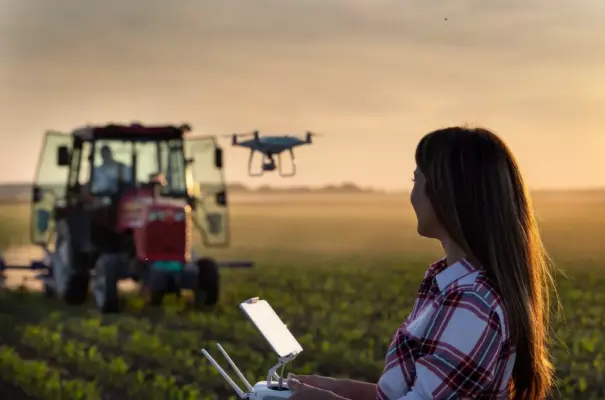
Historically, pasture management was defined by the “owner’s eye” and by analog processes that crossed generations. But it was thanks to the modernization of the sector that it became possible to produce more and better. Among technological advances, the use of Artificial Intelligence, Machine Learning and Automation has advanced significantly in recent years, contributing to raise the level of precision in agricultural management. In this way, decisions can be made based on data, enabling precise adjustments that ensure the rational and efficient use of resources, whether natural, such as the soil itself and water, or inputs, such as feed.
This shift helps broaden the sustainability of agricultural and livestock activities: on one hand, mitigating externalities on the environment; on the other, contributing to increased productivity and, consequently, profitability.
AI in industry: Minerva Foods case
In industry, technological progress has also been a growth driver and a competitive differentiator, as Minerva Foods Chief Technology Officer Roberto Stern explains in an interview with the portal Consumidor Moderno: “predicting demand and anticipating solutions is a market differentiator when working with commodities, because, given the volume of raw material purchases and the granularity of our product sales, having predictive models is essential”.
At the company, artificial intelligence is applied to handle the volume and complexity of operations, using predictive models to anticipate demand and support decisions across different fronts. In carcass grading (the process of qualifying meat based on its characteristics), cameras installed in plants capture real-time images while algorithms classify cuts with a high degree of accuracy, averaging an analysis every 0.8 seconds, allowing the identification of patterns, deviations and atypical points along the production line.
In addition, AI-based systems are used to assess marbling in premium cuts, optimize logistics by reducing travel distances and freight costs, and support production planning through tools that define plans capable of maximizing operational results, such as Choice’s Optimizer, which sets plans that optimize EBITDA (Earnings Before Interest, Taxes, Depreciation and Amortization). There is also MAIA (Minerva Artificial Intelligence Assistant), capable of interpreting contracts through LLM models (AI mechanisms optimized to handle large amounts of text). Since 2022, 41 projects supported by AI have already been implemented, using optimization models, machine learning, computer vision, neural networks and Generative AI.
AI in industry: a market case
The solution used to evaluate meat in industry follows the same logic as the system developed in international collaboration between Canada, the United States and Brazil, represented by the School of Applied Mathematics at Fundação Getulio Vargas (FGV EMAp) based on the study published in the journal Meat Science. The goal was to develop a computer vision system capable of classifying meat tenderness from images captured by smartphones and to compare the model’s performance with evaluations made visually by consumers.
To do this, researchers used a dataset composed of images of 924 beef steaks and 514 pork steaks to train neural networks to perform both classification and regression of quality attributes. The images were associated with laboratory measurements, such as the force required to cut the meat and the percentage of intramuscular fat, allowing the model to learn to estimate these characteristics based solely on visual analysis.
The system achieved 76.6% accuracy in identifying beef tenderness and 81.5% in classifying pork, and also showed the ability to quantitatively predict tenderness and fat content with consistent levels of statistical correlation. In comparative tests, the model correctly identified the most tender steak in 76.5% of cases, while consumers were correct 46.7% of the time, indicating greater precision of automated analysis compared with human visual assessment.
The results indicate that image-based systems can offer a non-invasive, objective and accessible alternative for assessing meat quality outside the industrial environment, especially at the point of purchase, while in industry similar technologies are applied for standardization, quality control and operational decision-making at scale.
AI goes to the field
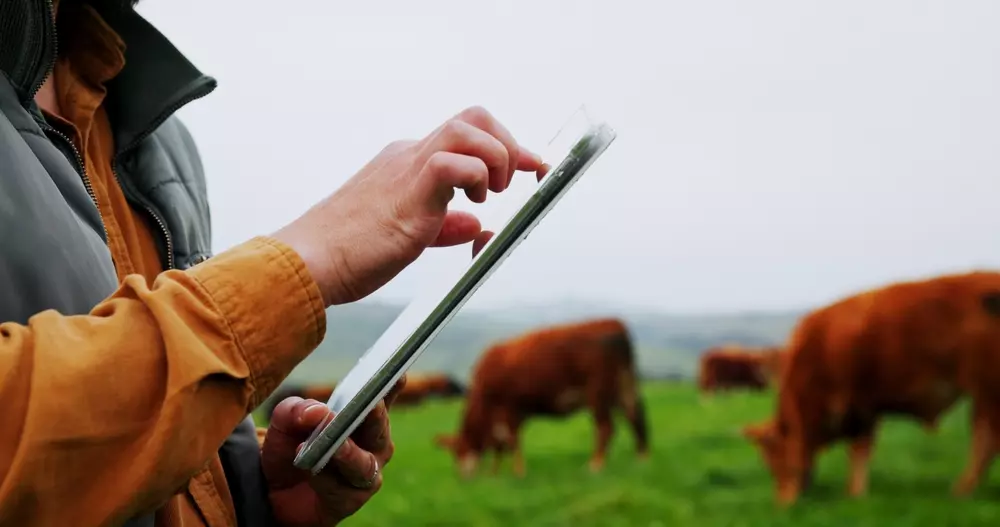
In the field, the use of digital technologies follows the same logic of data collection and processing, but focused on management and production. Sensors, smart collars and automatic weighing systems can be used in an integrated way to monitor productivity indicators, environmental conditions and animal welfare, generating data that feed AI models aimed at decision support on the farm, as listed by Embrapa.
In practice, these systems allow monitoring of variables such as weight gain, body temperature, respiratory rate and microclimate conditions, with automatic data collection directly in the pasture and processing on digital platforms.
In animal nutrition, systems monitor variables such as feed intake, water consumption, weight gain, weather conditions and input quality, allowing more precise adjustments to feeding and animal development, as shown in this article published in Canal Rural.
Flávio Longo, a member of the technical board of the Brazilian College of Animal Nutrition (CBNA), emphasized that these systems do not replace nutritionists’ work, nor do they formulate rations by themselves, but they categorize all the information necessary for qualified professionals to choose the ideal diet according to current needs. The information is organized on platforms that consolidate historical and operational data, supporting the definition of nutritional and productive strategies based on evidence, not only direct observation.
The integration of sensors, connectivity and artificial intelligence makes it possible to bring field data, processed in real time, directly to the producer, increasing visibility over herd performance and supporting decisions based on objective indicators.
Advances for all
Despite these advances, the adoption of these technologies does not occur homogeneously across the sector, due to the profile of Brazilian farmers. According to the latest Agricultural Census, 77% are family and/or small-scale farmers, who do not always have the infrastructure, connectivity or resources to incorporate digital solutions at scale.
Created in 2023 through a partnership between Embrapa, Huawei and CPQD, the Science Center for Development in Digital Agriculture (CCD-AD/SemeAr) aims to reduce this asymmetry. With an expected investment of R$25 million through 2028, the proposal is to develop and disseminate solutions based on artificial intelligence and the Internet of Things (IoT) aimed at small and medium producers, expanding access to digital tools already used in more structured operations.
This movement highlights a growing integration between production and processing, with applications that connect management, operational efficiency and evaluation of the final product’s quality.
Sources:
- AGRICULTURAL CENSUS 2017 – IBGE
- CPQD participates in a digital agriculture project launched by Embrapa and Fapesp
- With AI support, animal nutrition gains precision and reduces production costs
- AI revolutionizes Brazilian agribusiness with greater efficiency and personalization
- Internet of Things monitors productivity and animal welfare in ILPF systems
- Researchers use AI to predict meat quality from photos taken with a cellphone
- Agriculture and livestock GDP grows 11.7% and boosts the economy in 2025
- Present among the fibers, revealed in the taste. The secret of marbling in meat