

Share


Arterial hypertension, commonly known as high blood pressure, affects about 1.28 billion adults worldwide, according to the World Health Organization. It is therefore natural for someone receiving the diagnosis to want to know what they can and cannot eat. Red meat frequently appears on lists of foods to avoid. But that generic recommendation, when it does not distinguish fresh meat from processed meat, simplifies a much more complex scientific discussion.
Much of the evidence linking red meat to hypertension comes from observational studies. A meta-analysis of prospective cohorts published in the Journal of Human Hypertension, which pooled 351,819 participants across ten studies, found an association between high red meat consumption, without distinguishing fresh from processed, and a higher risk of hypertension (RR = 1.22; 95% CI: 1.11–1.35). However, as discussed in other articles in this series, observational studies identify correlations but do not establish causality: people who consume more red meat tend, on average, to consume more total sodium, engage in less physical activity, and have overall less healthy dietary patterns—factors that raise blood pressure.
A review published in Current Cardiology Reports (2025) and another in the American Heart Journal (State-of-the-Art Review, 2023) reach the same conclusion: processed meat (bacon, sausages, hot dogs, ham, salami) is consistently associated with a higher risk of hypertension, while the data for fresh meat are much more heterogeneous and often not significant. The mechanism is straightforward: processed meats contain much higher amounts of sodium and nitrates, and excess sodium is one of the dietary factors with the most well-established causal relationship to elevated blood pressure.
When attention turns to randomized clinical trials (RCTs), which are considered the most robust study design for evaluating causality, the picture changes considerably. A meta-analysis of RCTs published in Clinical Nutrition assessed the effect of red meat consumption on blood pressure compared with various alternative diets and found no meaningful differences in systolic or diastolic pressure between diets including red meat and comparator animal-protein diets. A systematic review and meta-analysis of RCTs on beef consumption indexed in the National Library of Medicine confirmed this: two daily servings of unprocessed beef did not significantly change systolic or diastolic blood pressure in the studies analyzed.
The scientific literature considers the DASH diet (Dietary Approaches to Stop Hypertension) the dietary intervention with the strongest level of evidence for lowering blood pressure. In healthy adults, blood pressure considered normal is below 120/80 mmHg.
A meta-analysis of RCTs published in the British Journal of Nutrition showed that the DASH diet reduces systolic pressure by an average of 5.2 mmHg and diastolic pressure by 2.6 mmHg. The results were considered relevant because, in healthy adults, ideal blood pressure is below 120/80 mmHg (commonly referred to as “12 over 8”), a range associated with lower cardiovascular risk. Two pieces of evidence broaden this picture: a crossover RCT published in the American Journal of Clinical Nutrition showed that the DASH diet’s effectiveness in lowering blood pressure was maintained even when chicken and fish were replaced by lean unprocessed pork as the main protein source. The study suggests that the observed cardiovascular benefit is more related to the overall dietary pattern than exclusively to the type of animal protein consumed.
Additionally, a study published in the Journal of Human Hypertension showed that a diet following the same pattern containing up to 153 g of lean beef per day reduced blood pressure to the same extent as the classic version of the dietary pattern — which includes fruits, vegetables and whole grains, low-fat dairy, limited red meat (favoring poultry and fish), and reduced sodium, saturated fats and sugars. In both studies, what made the difference was the dietary context: diets rich in fruits, vegetables and low-fat dairy, not the exclusion of fresh meat.
The main dietary factor linked to hypertension with causal evidence is excess sodium. The DASH-Sodium clinical trial, published in the New England Journal of Medicine, demonstrated that reducing sodium intake, regardless of dietary pattern, significantly lowers blood pressure, with even greater effects in people who are already hypertensive. Nutritional composition data show that a 100 g portion of fresh beef contains about 50 mg to 70 mg of sodium, while the same amount of processed products, such as sausage or bacon, can exceed 700 mg and reach more than 1,500 mg. This difference helps explain why nutritional guidelines and clinical studies associate mainly processed meats — and not unprocessed meat — with increased cardiovascular risk related to excess sodium.
As discussed in previous articles in this series, average beef consumption in Brazil is around 37.5 kg per person per year, which is approximately 100 g of fresh meat per day — or about 70 g to 75 g after cooking, due to water loss during preparation. Within a dietary pattern rich in vegetables, fruits, beans and whole grains and with control of total dietary sodium, this moderate consumption of fresh meat is compatible with blood pressure management. The scientific evidence points not to the exclusion of unprocessed meat, but to the drastic reduction of cold cuts, ultra-processed products and industrialized foods, the main sources of sodium in the Brazilian diet.
So, can people with high blood pressure eat red meat?
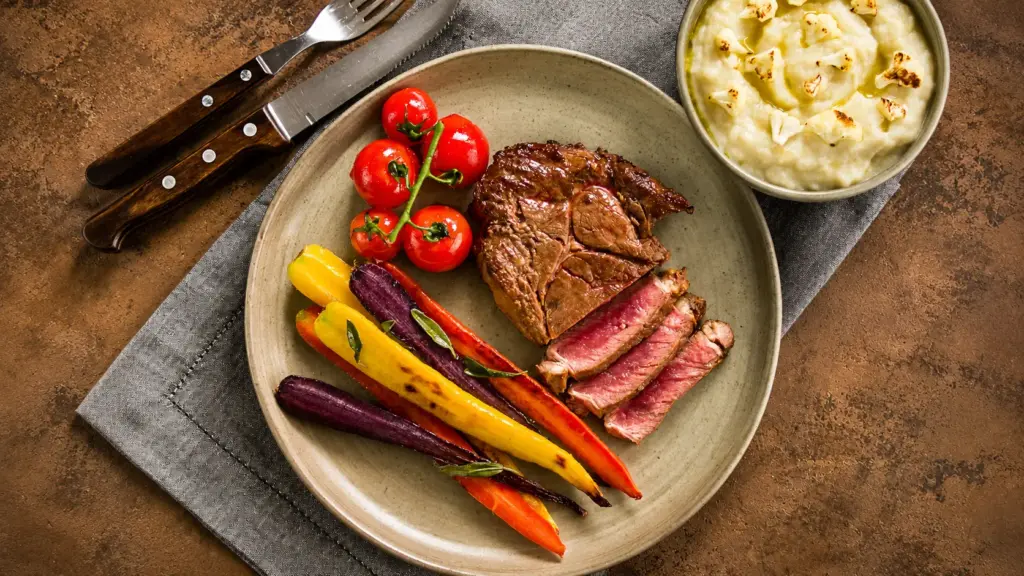
Therefore, the answer to the headline question is: no, having high blood pressure does not mean a ban on fresh red meat. Clinical trials and research based on the DASH diet show that lean cuts, prepared with moderate salt and included in a balanced dietary pattern, can be part of the diet without harming blood pressure control. The consensus of guidelines and recent studies focuses concern mainly on excess sodium, especially from cold cuts, ultra-processed products and industrialized foods.
Learn more: What is the origin of myths about meat?
Reference links
- Agrifatto – Beef per capita consumption in Brazil (2024)
- Allen TS et al. – State-of-the-Art Review: Evidence on Red Meat Consumption and Hypertension Outcomes (American Heart Journal, 2023)
- Han L et al. – Red meat, poultry, and egg consumption with the risk of hypertension: a meta-analysis of prospective cohort studies (Journal of Human Hypertension, 2018)
- Narang R et al. – Red Meat Consumption and Hypertension: An Updated Review (Current Cardiology Reports, 2025)
- WHO – Hypertension fact sheet
- O’Connor L et al. – Beef Consumption and Cardiovascular Disease Risk Factors: A Systematic Review and Meta-analysis of RCTs (PMC, 2024)
- O’Connor L et al. – Effect of red meat consumption on cardiovascular risk factors: A systematic review and Bayesian network meta-analysis of RCTs (Clinical Nutrition, 2025)
- Roussell MA et al. – Effects of a DASH-like diet containing lean beef on vascular health (Journal of Human Hypertension, 2014)
- Siervo M et al. – Effects of the DASH diet on cardiovascular risk factors: a systematic review and meta-analysis (British Journal of Nutrition, 2015)
- Sacks FM et al. – Effects on Blood Pressure of Reduced Dietary Sodium and the DASH Diet — DASH-Sodium Trial (NEJM, 2001)
- Sayer RD et al. – DASH diet retains effectiveness to reduce blood pressure when lean pork is substituted for chicken and fish (American Journal of Clinical Nutrition, 2015)