Share


The Brazilian livestock sector has undergone a profound transformation since the 1950s, when more than 60% of the population lived in rural areas. The change was not only in scale but in the very logic of production, moving from an extractive model to one driven by efficiency, anchored in what animal scientist Antônio Chaker, coordinator of the Institute of Agricultural Metrics (Inttegra), called the “three forces of modern livestock farming” in an article published on the DBO portal.
As animal scientist Luiz Josahkian observes, on the Globo Rural portal, economic stabilization from the 1990s with the Plano Real, together with globalization and increased competition, reduced margins and raised market demands. From that moment, low-productivity livestock systems—with lower product quality and longer cycles—ceased to be competitive. The sector was therefore forced to reinvent itself.
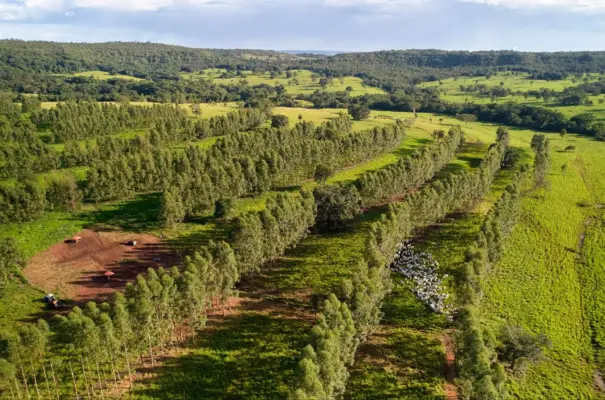
The response came through the adoption of modern production techniques, ranging from more efficient pasture management to the use of superior genetics, along with stricter sanitary measures and more efficient land-use strategies, such as Crop-Livestock-Forest Integration (ILPF). The results of this transformation are visible: reduced slaughter age, increased output and the consolidation of Brazil as a global leader in beef exports, now present in more than 150 countries, as Josahkian points out.
Presence in demanding markets reflects regular supply, sanitary control, traceability and quality standardization—attributes that only become possible within a structured production system.
For Chaker, this movement is leveraged by three central forces: climate change, the technological supercycle and the generational shift. According to him, the ability to adapt to these vectors, coupled with people and data management, is what distinguishes traditional properties from high-performance ones.
Climate change: producing under new conditions
The first of these forces moves climate from the background to the center of production strategy. Irregular rainfall, a higher frequency of extreme events and growing pressure on land use make adaptation a condition for the continuity of the activity.
In this context, producing more is no longer enough: it is necessary to produce better, with greater efficiency in resource use and greater resilience to environmental variability. Systems such as Crop-Livestock-Forest Integration (ILPF) gain relevance precisely because they allow intensifying production without the need to expand area, while contributing to soil recovery and maintaining environmental balance. As shown by the Embrapa publication and the WRI Brasil analysis, these systems help mitigate climate risks by promoting soil moisture retention, improving the microclimate and reducing vulnerability to prolonged drought periods.
At the same time, the sector operates under a robust regulatory framework: the Brazilian Forest Code ranks among the strictest legislations among agricultural-exporting countries, as shown by the study conducted by the Climate Policy Initiative (CPI), in partnership with the Sociedade Rural Brasileira (SRB) and Apex-Brasil. One distinguishing feature is the Legal Reserve, a mechanism that requires the maintenance of native vegetation areas within private properties.
The combination of legal requirements and production innovation creates a scenario in which sustainability ceases to be a parallel agenda and becomes integrated into the economic logic of production.
Technological supercycle: data, speed and precision
The second force identified by Chaker lies in the accelerated pace of technological innovation. The countryside, once characterized by empirical decisions and accumulated experience, is beginning to incorporate tools that increase control and production precision.
Soil and pasture monitoring sensors, individual animal tracking devices, drones for area mapping and management software are examples of technologies that are already part of the routines of more structured farms. The trend is for these resources to spread even further, including to smaller operations.
More than automating processes, these technologies change how decisions are made. By providing access to real-time data, they reduce inefficiencies, increase predictability and enable fine adjustments in operations.
This technological advance also expands the ability to monitor and manage aspects such as animal welfare, by allowing a more continuous, data-based reading of production conditions, as highlighted by the study Animal Welfare Management in a Digital World, published in the journal Animals. At the same time, this information base helps reduce perception asymmetries in international markets by allowing the sector to communicate its production practices with greater precision, as indicated by initiatives such as the Beef Report 2025 from ABIEC.
In this scenario, technology ceases to be a competitive differentiator and becomes a requirement for staying in the market.
Generational shift: people as the foundation of transformation
The third force lies in people. The transformation of livestock farming depends not only on climate and technology but on the ability to train, engage and manage teams prepared to operate in a more complex environment.
The so-called generational shift, highlighted by Chaker, is not limited to age succession. It represents a change in mindset about how the activity is conducted, with greater focus on management, planning, data and professionalization.
People management therefore comes to be understood as a true technology—high impact and low cost—capable of potentiating all other investments. Without trained teams, advanced technologies do not translate into real productivity gains.
In practice, this transformation materializes in initiatives that structure knowledge transfer in the field. One example is the Laço de Confiança program, mentioned by Rostyner Costa, executive manager of Rancher Relations at Minerva Foods. The initiative promotes in-person and online training, field days and technical follow-up in areas such as animal nutrition, sanitary management, farm management and traceability, based on active listening to regional demands.
Results appear directly in operations: more efficient farms, greater standardization of lots, better use of natural resources and higher-quality beef able to access more demanding, including international, markets. Moreover, the exchange of experiences among producers strengthens networks of trust, accelerating the spread of good practices.
In this sense, livestock modernization ceases to be an isolated process and is built collectively, based on knowledge, relationships and cooperation.
A system in continuous transformation
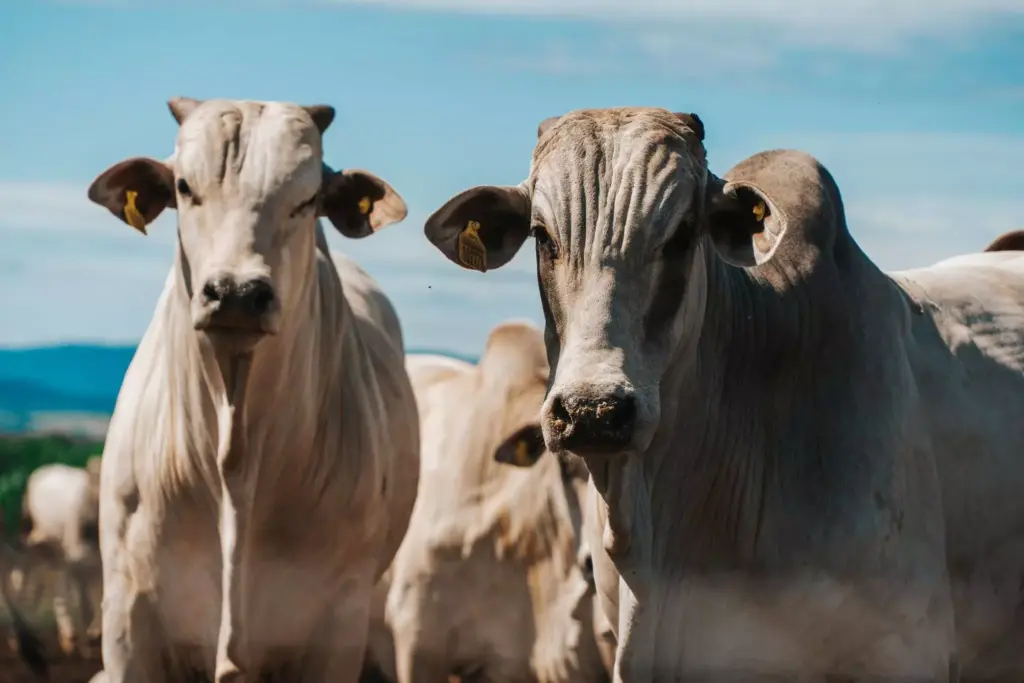
The three forces overlap and reinforce one another, forming an increasingly integrated production system.
Climate imposes limits and demands adaptation. Technology expands response and control capacity. And people make that response possible by interpreting data, executing processes and making decisions.
This combination redefines contemporary livestock farming. What was once an activity based on territorial expansion and patrimonial logic becomes a system oriented toward efficiency, management and continuous adaptation.
In the end, the transformation of livestock farming neither begins nor ends with technology or environmental conditions. It begins and ends with people—who are both the reason for the changes and the link that sustains their continuity.
Also read: Brazil turns beef into a global asset with the tripod of the new livestock sector
Reference sources:
- Animal Welfare Management in a Digital World
- The three forces that will define the success of modern livestock farmingTrajectory of Agribusiness
- Beef Report 2025
- Ten mistakes to avoid in ILPF
- Understanding the challenges of people management in Livestock 4.0
- Study points to the Brazilian Forest Code as the strictest legislation among agricultural-exporting countries
- ILPF: the economic and ecological benefits of Crop-Livestock-Forest Integration for the country
- ILPF: productivity, resilience and income on the farm
- The future of modern livestock farming