Share


Few traditions manage to cross generations with as much strength as the barbecue. Present at family gatherings, celebrations and weekends, it holds a special place in Brazilian food culture — especially in the South of the country, where it developed its own identity. To celebrate this practice that brings people together around the fire and the food, Barbecue Day was created, observed on April 24.
The choice of date refers to the historical roots of barbecue in Brazil, linked to the habits of Indigenous peoples and, later, to the gaúchos, who roasted meats over open flames during long days in the fields. Over time the technique became more refined, but it kept its essential character: slow preparation, respect for the food and the pleasure of sharing.
More than a cooking method, barbecue is a social ritual. It involves planning, choosing cuts, preparing the fire and, of course, spending time around the grill. Not surprisingly, different regions developed their own ways of doing barbecue — over coals, on a skewer, on a grate or using grills adapted to various spaces. This diversity shows there isn’t a single “correct” way, but rather different paths to the same goal: bringing people together for a good meal. To better understand these variations, it’s worth exploring how each type of setup influences the final result, as this article shows each grill, a barbecue.
Barbecue Day, between passion and technique
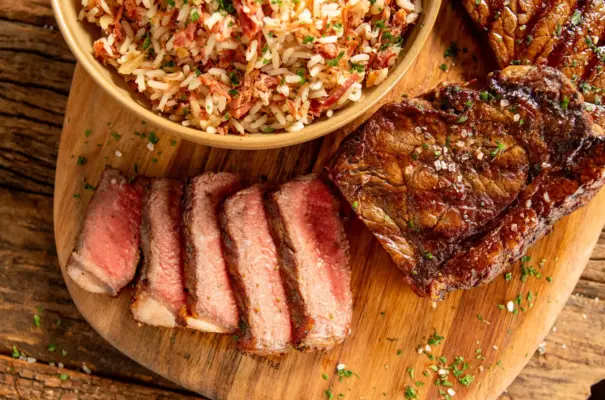
Over the years, barbecue has also incorporated more refined techniques, many inspired by professional gastronomy. Temperature control, choosing the right doneness and even resting the meat after cooking make a difference in the final result. Small details can completely transform the experience, bringing barbecue closer to a true culinary art, as shown by the techniques for a chef-worthy barbecue.
Another aspect that has gained prominence over time is the use of accessories. What was once done with just fire and improvisation now relies on a range of tools that help ensure precision, safety and convenience. Proper knives, thermometers and types of charcoal directly influence preparation and the final result. Understanding the role of these elements is essential for anyone who wants to improve their practice, as detailed in “how the right accessories transform barbecue”.
Even so, despite all the technical evolution, what defines a good barbecue remains a combination of factors: the quality of the meat, mastery of the fire and attention to detail. But there is also something less tangible — the atmosphere, the company, the time devoted to preparation. It is this sum of elements that turns a meal into a true experience. To live it to the fullest, discover what defines a perfect barbecue.
Celebrating Barbecue Day, then, is to recognize more than a culinary technique. It is to value a cultural heritage built over time that combines tradition and innovation, simplicity and sophistication. At the end of the day, barbecue remains what it has always been: a way to bring people together, share moments and turn cooking into a collective act.
Reference links:
Each Barbecue, a Grill
Techniques for a Chef-Worthy Barbecue
From Charcoal to Knives: learn how the right accessories transform barbecue
What defines a perfect barbecue?