Share


Angus has become synonymous with premium beef, standing out on restaurant menus as that “special” order. But what truly sets it apart and guarantees its superior standing in the world of beef?
Angus beef, quality guaranteed from pasture to plate
Since 2003, Brazil has had a set of classification criteria for Angus beef – the Certified Angus Beef Program, created by the Brazilian Angus Association. The program is recognized by the National Confederation of Agriculture (CNA) and receives external audits from the European company TÜV RHEINLAND, giving it international credibility.
In addition to guaranteeing the end consumer the attributes that define the breed’s superior quality, the program aims to promote the breed’s growth in the country and raise consumer awareness of the brand, expanding its presence in retail.
The certification process begins in the pen, where technicians accredited by the Brazilian Angus Association carry out an inspection to verify the breed standard. At the slaughter line, each carcass is evaluated individually, taking into account the animal’s age and degree of fat finish, according to the prerequisites established in the BR Breed Standard Manual. The other stages of the industrial process are also monitored by the Program’s technicians, ensuring quality from “pasture to plate”.
It is this complete monitoring that ensures the meat reaches the consumer with all the attributes that made it famous worldwide: distinctive tenderness and juiciness.
What are the criteria for Angus animals?
This differentiation begins even before the animal exists! To guarantee the typical characteristics, it is necessary to preserve the breed’s Scottish genetics. Thus, for cattle to be considered Angus, according to the BR Breed Standard Manual, they must have at least 66% Angus blood for castrated males and females, or at least 50% Angus blood in certain specific categories.
In addition to genetic composition, the Certified Angus Beef Program adopts technical criteria divided into evaluations performed on the animal and the carcass, ensuring quality control from the pen to the slaughterhouse. In other words, if the meat carries the program’s seal, the consumer knows it is truly Angus and has passed all these analyses and prerequisites.
Breed standard, criteria evaluated on the animal
Evaluations carried out on the animal take into account phenotypic characteristics of the breed, compatible with the standard defined in the Manual. For example:
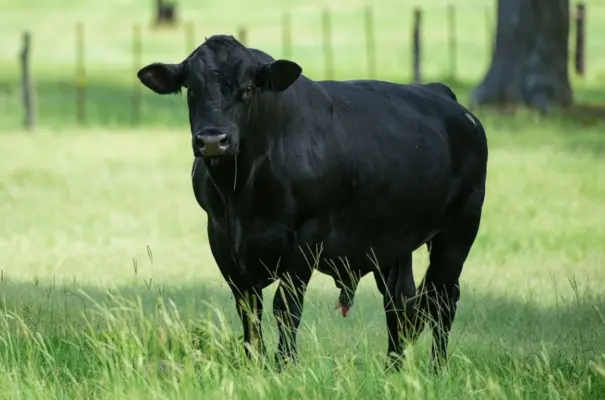
- Coat (accepted standard): black and red coats are accepted, as well as variations recognized by the program — such as araçá/brasina (mixed hairs), smoky (faded dark tone), bay (uniform yellowish) and bay araçá/brasina (bay with mixed hairs) — provided the animal’s overall appearance is compatible with the Angus breed standard and does not indicate unauthorized crossbreeding.
- Absence of horns implanted in the skull: animals with true horns are not accepted, as this is not common in Angus. Only scurs are permitted, defined as horn rudiments not attached to the bone, which do not alter the breed’s polled (hornless) standard.
- Absence of excessive zebu-like traits: animals showing a prominent hump or other pronounced zebu characteristics are disqualified, as they indicate a phenotypic predominance incompatible with the Angus breed standard established by the program.
- Absence of undesirable markings: localized spots on the loin, ribs and rump (the rear part of the animal’s back) and coat patterns classified as “painted animals” are not accepted. Facial masks that extend beyond the ears, descend along the dewlap and open on the chest are also considered out of standard.
- No indication of crossbreeding with dairy or unauthorized breeds: animals that show visual signs typical of crossbreeding with dairy breeds or breeds not covered by the program are disqualified, such as white hair on the lower legs (so-called “booted” animals), white tail tips or other phenotypic traits incompatible with the Angus breed standard defined in the BR Breed Standard Manual.
Meat quality, criteria evaluated on the carcass
The criteria related to meat quality are checked individually and pertain directly to the product that reaches the consumer. Examples include:
- Age of the animal (dentition): age control ensures younger carcasses, associated with greater meat tenderness.
- Carcass conformation: conformation is assessed individually, observing the proportion between muscle mass, bone structure and fat distribution, to ensure carcasses with the fat finish that makes the difference in tenderness and flavor.
- Subcutaneous fat finish: only carcasses with subcutaneous fat classified as medium (grade 3), uniform (grade 4) or excessive (grade 5) are approved, according to the scale adopted by the program. This criterion is fundamental for protecting the meat during chilling and for its performance in culinary preparation.
Curiosity: Black Angus and Red Angus – the same breed, different expressions
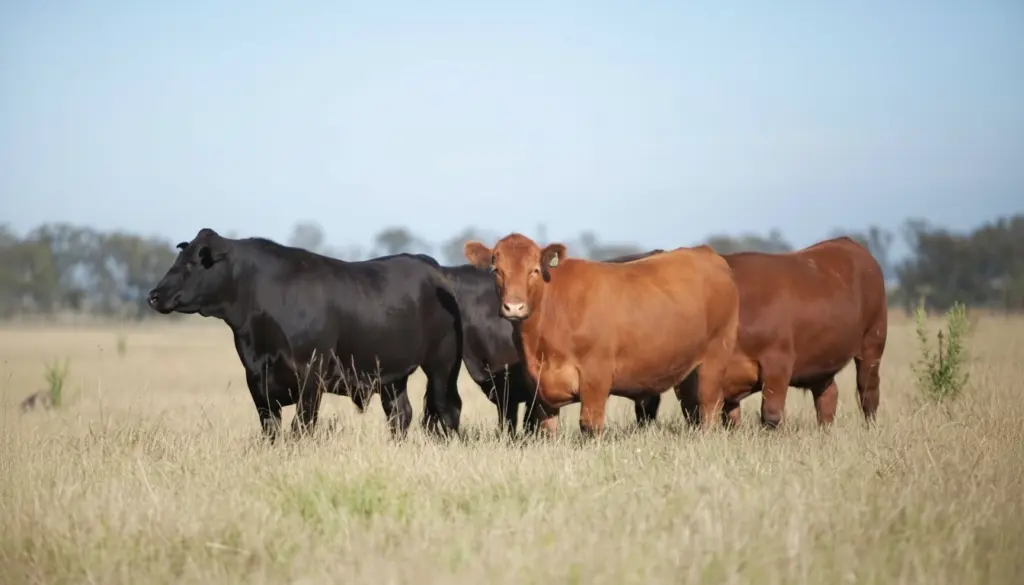
Although they are the same breed, Angus presents two main coat color variations recognized by breed associations: the Aberdeen Angus Black (Black Angus) and the Aberdeen Angus Red (Red Angus). Black Angus is the original and historically most widespread phenotype, being the most common in herds around the world. Red Angus derives from recessive red color genes present in the breed’s original population. Despite the color difference, both variations share the same genealogical registry and maintain the same productive and quality attributes that made Angus internationally renowned.
More than just a premium: a breed associated with sustainability
In addition to its recognized meat quality, Angus also stands out for attributes associated with sustainability. According to The Aberdeen-Angus Cattle Society, the organization representing the breed in its country of origin, Aberdeen-Angus goes beyond providing access to high-value markets: it is a versatile breed, capable of thriving in different conditions and production systems.
According to the association, this adaptability allows Angus to use available natural resources efficiently, contributing to more balanced production systems. The entity also points to Aberdeen-Angus as one of the most sustainable beef breeds, precisely because of its ability to feed on natural resources and its contribution to reducing the carbon footprint of the farms where it is raised.
This set of characteristics reinforces Angus’s positioning not only as a synonym for premium beef, but as a breed aligned with contemporary demands for productive efficiency, versatility and sustainability in cattle ranching.
How to buy Angus beef in Brazil?
Certified Angus beef can be found in supermarkets, butcher boutiques and distributors that work with the Certified Angus Beef Program. You can access the program’s official website to check licensed retailers by region. For online purchases, it is important to choose stores that clearly state the certification and the slaughterhouse, since traceability and provenance are especially essential when buying remotely. It is worth noting that meat considered Angus will always carry the program’s seal, which certifies the certification granted by the Brazilian Angus Association.
Reference sources: