Share


What, in fact, is animal welfare? For modern science, the answer goes far beyond the absence of suffering or compliance with basic standards. The current concept, consolidated in the Five Domains model, is an assessment tool that measures an animal’s quality of life by considering both its physical and its mental state.
This model is adopted by food industry leaders to design, manage and audit their operations. At Minerva Foods, for example, the Global Animal Welfare Policy and the Animal Welfare Program are guided by the principles of the Five Domains, using them as an evaluation and management tool for an integrated view of the process.
But this approach was not always the standard. The scientific journey to the Five Domains took decades, moving from an ethical field to a scientific and measurable discipline. To understand how the sector operates today, it is necessary to consider how the concept of care evolved.
From the freedoms to the domains
Historically, the debate on the welfare of production animals was formalized in the United Kingdom by the Brambell Report in 1965. That document gave rise to the first globally recognized standard: the “five freedoms.” This pioneering model established a set of ideals that animals should be:
- Free from hunger and thirst;
- Free from discomfort;
- Free from pain, injury and disease;
- Free to express normal behaviour;
- Free from fear and distress.
Although fundamental for putting the issue on the agenda, the Five Freedoms model began to be questioned by science itself. Its main limitation is that it relies on absolutes and focuses almost exclusively on avoiding negative experiences.
For example, the freedom from hunger is biologically inadequate. A mild state of hunger is a motivator that drives food-seeking behaviour, which is, in itself, a rewarding experience for the animal. The model also did not offer a clear way to measure or promote positive experiences, such as comfort, satiety or pleasure.
To address these gaps, Professor David Mellor and colleagues developed, starting in 1994, the Five Domains model, based on advances in neuroscience, ethology (the study of behaviour) and physiology.
The 4+1: how does the model work?
The Five Domains model recognizes that we cannot ask an animal how it feels. Therefore, it uses four observable and measurable physical and functional domains to allow evidence-based inference about the fifth and most important domain: the mental state. The first four domains are:
- Nutrition and hydration
- Physical environment
- Health and physical integrity
- Behaviour
Assessment of these four pillars allows management of the final output:
5. Feelings (or affective states)
Thus, the model does not ask “is the animal free from hunger?” (an absolute), but rather “what is the animal’s water and nutritional balance and how does this impact its mental state?” The goal is to minimize negative states — such as thirst, pain or fear — and actively promote positive states — such as satiety, comfort and vigour.
Practice in the production chain
When a company adopts the Five Domains, it commits to translating that scientific theory into practical actions, performance indicators and auditable investments. See how each domain materializes in the beef supply chain.
1. Nutrition and hydration

This domain assesses the impact of water and food intake. The ideal state is not only the absence of thirst, but “satiety and pleasure in feeding.” In practice, in phases where the company has direct operational control, such as pre-slaughter holding pens, animals are in a necessary fasting period. The focus, therefore, turns to hydration. In this case, rigorous daily monitoring of drinkers is adopted, ensuring cleanliness and access capacity for all. And for feeding, there is strict control over maximum fasting hours to avoid stress to the animal.
2. Physical environment
Here, the assessment considers how the environment affects the animal, including thermal comfort, flooring, space and safety. The goal is a “comfortable and pleasant physical environment.” In this regard, low-stress engineering is fundamental. This includes non-slip floors in trucks and ramps. These, in turn, should also be free of steep inclines. In addition, pens should be designed without sharp corners or edges that could cause injuries. Density in holding pens must also be controlled so that all animals can lie down.
The environment requires continuous maintenance. Minerva Foods’ Trajeto do Boi project is a diagnostic and management system that routinely audits all infrastructure. If a deviation — such as a misaligned gate, for example — is identified, the policy is to immediately close the site until corrected.
Management of this domain uses cutting-edge research. A detailed study in the Animal Welfare Report from Minerva analyzed the impact of shading in 636 locations. Using the Comprehensive Climate Index (CCI), the study quantified that, in regions with extreme annual heat load, effective shading can reduce the annual time in debilitating discomfort from 952 hours to just 148 hours per animal.
3. Health and physical integrity
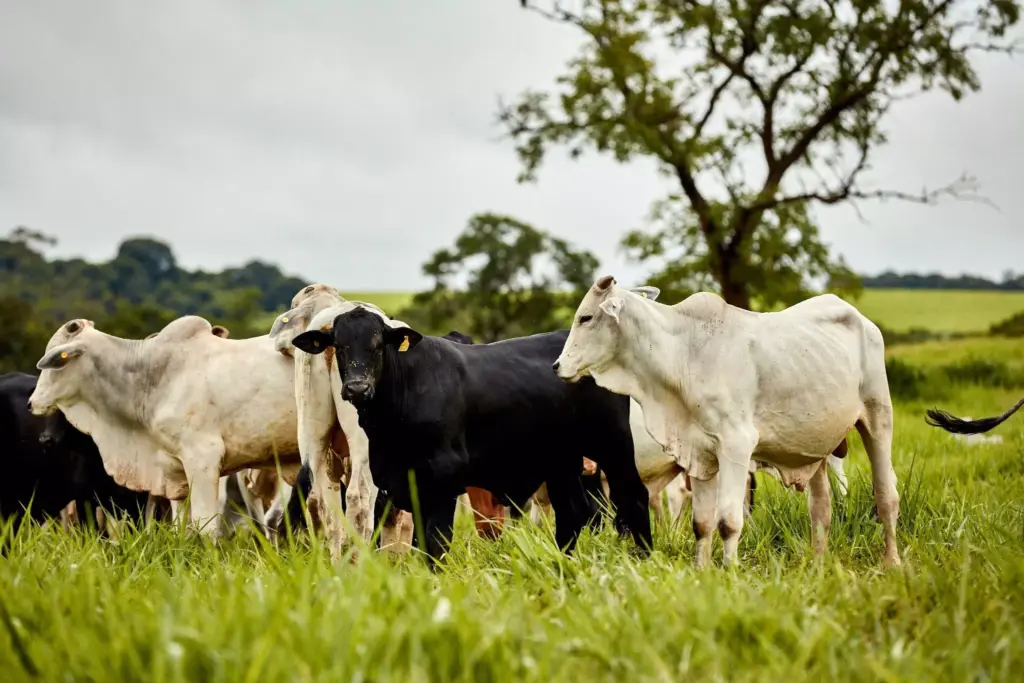
This domain focuses on the animal’s functional health, with an emphasis on preventing disease and injury. In this regard, Minerva Foods’ Antibiotic Use Policy states that good welfare practices reduce the need for antimicrobials. The framework prohibits the use of antibiotics to improve efficiency, directing use only for clinical purposes.
Execution of this domain is ensured by professionals dedicated to animal welfare, such as animal scientists, veterinarians or biologists at each operational unit.
The effectiveness of health management is validated by indicators at the slaughter point. Global beef data from Minerva Foods show that severe health failures are statistically rare events: 0.03% of animals identified in poor health conditions; 0.004% of animals dead on arrival; and 0.002% mortality in industry holding pens.
4. Behaviour
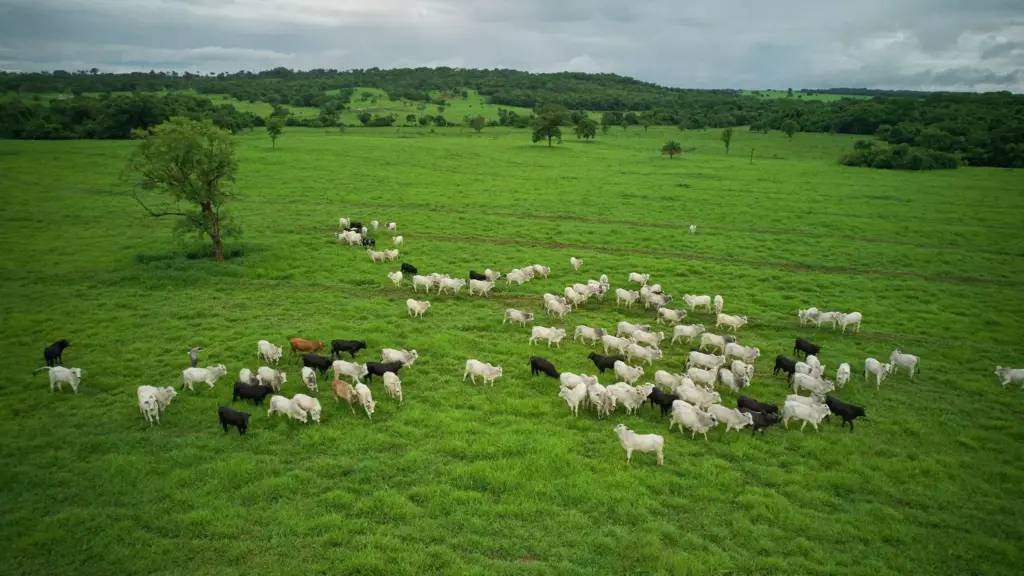
This domain assesses the opportunities the animal has to express natural and rewarding behaviours, such as exploring, socializing, grazing or ruminating in groups. The most impactful practice in this domain is the farm rearing system. Minerva Foods’ data indicate that 71% of purchased cattle are raised with pasture access. This system allows the species’ full behavioural repertoire, which is restricted in intensive confinements.
At direct contact points, such as unloading, the focus is low-stress handling based on ethology. Minerva, for example, ensures that 100% of cattle are kept in groups, respecting their gregarious behaviour — the tendency of individuals of the same species to live in groups. In addition, it standardizes the use of tools such as flags, which use visual stimuli to encourage movement, as opposed to tools based on pain or fear.
5. Feelings (or affective state)
This is the central domain and the ultimate objective. It represents the animal’s subjective mental experience, resulting from the balance of experiences in the four previous domains. It cannot be measured directly, but must be inferred.
To make this inference, the industry monitors proxy indicators validated by science, which are behaviours that indicate acute negative affective states — fear, panic and pain, for example. The goal is to keep these indicators low as evidence that management of the other domains is effective. At Minerva, data measured in 2024 show 0.86% vocalization (an indicator of fear or pain) and 0.001% agonistic behaviours — fighting (an indicator of hierarchical problems).
Beyond the domains, the welfare footprint
However, there are criticisms of the Five Domains model. The most recent is that it does not offer a clear aggregation method — that is, how to scientifically combine the impact of good nutrition (domain 1) with a poor environment (domain 2) to obtain a final score for domain 5?
Science’s answer to this question is the welfare footprint framework (WFF). This methodology, developed by scientists Wladimir J. Alonso and Cynthia Schuck-Paim, was designed specifically to quantify animal welfare objectively.
The WFF functions as an evolution of the Five Domains: it measures the time animals spend in different affective states, using tools such as the pain-track and the pleasure-track, which measure, respectively, the intensity and duration of pain and pleasure. The result is a metric of cumulative pain and pleasure.
Minerva Foods participates directly in this scientific frontier. The company has a partnership with the Center for Welfare Metrics to apply this methodology to its supply chain.
Sources:
- Application of the Five Domains model to food chain management of animal welfare: opportunities and constraints
- Evolution of animal welfare science: conceptual and methodological aspects
- Evolution, not revolution: Moving from the Five Freedoms of welfare to Five Domains – Modern Poultry
- Extending the ‘Five Domains’ model for animal welfare assessment to incorporate positive welfare states
- Operational Details of the Five Domains Model and Its Key Applications to the Assessment and Management of Animal Welfare
- ANIMAL WELFARE COMMITMENT REPORT – BASE YEAR 2024 – MINERVA FOODS.cdr
- The ‘Five Domains’ Model in EU Animal Welfare Legislation – FOUR PAWS
- The 2020 Five Domains Model: Including Human–Animal Interactions in Assessments of Animal Welfare
- UNDERSTANDING THE FIVE DOMAINS MODEL OF ANIMAL WELFARE