Share


Knowing how to properly preserve meat is about safeguarding health and avoiding waste. From purchase to preparation, there are steps that, if followed strictly, will help maintain the texture and juiciness of cuts, prevent microbiological risks and ensure the best possible nutritional use.
The following guidance applies both to consumers and to owners of supermarkets, butcher shops and restaurants that care about quality and safety. After all, the difference in a memorable meal is in the small details.
Temperature and time: the pillars of preservation
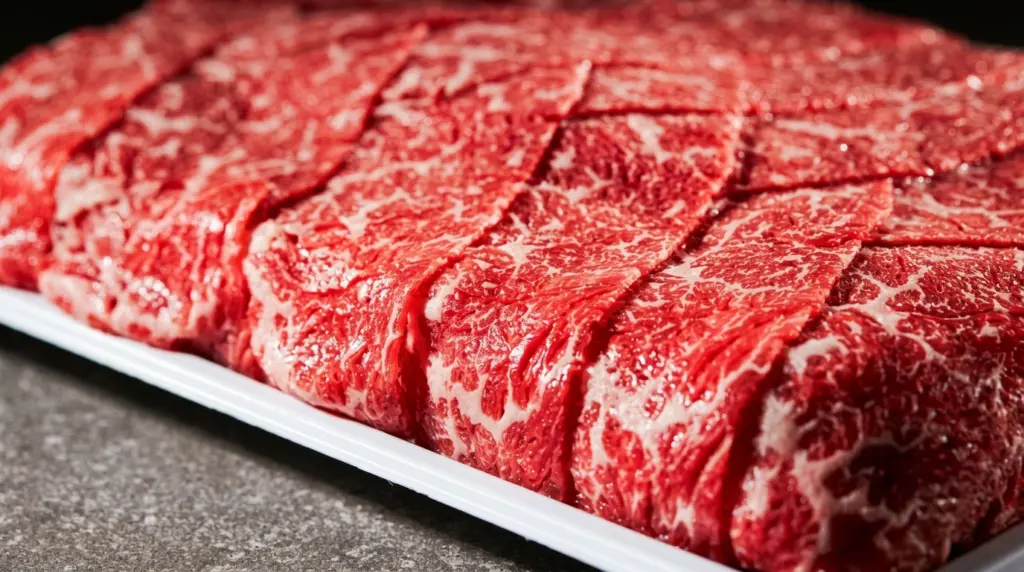
According to the Food Safety and Inspection Service (FSIS), an agency of the United States Department of Agriculture (USDA), cold slows down microorganisms and the natural oxidation process. Therefore, raw meats should be kept refrigerated, at temperatures up to 4 °C or frozen at −18 °C or below. Ideally, follow the storage, preparation and use instructions on the product label.
For that reason, it is recommended to store meats in the refrigerator for safe and faster cooling. In addition, it is important to place them in sealed containers to contain drips and prevent cross-contamination.
In Brazil, recommendations are set by the National Health Surveillance Agency (Anvisa) and the Ministry of Agriculture and Livestock (MAPA), which follow the same American guidelines aimed at reducing microorganism multiplication and preserving food safety.
Storage standards vary depending on the type of meat, whether it is fresh, cooked, roasted, whole or in pieces. A useful reference is the FoodKeeper app, available on FoodSafety.gov.
Packaging, vacuum and modified atmosphere
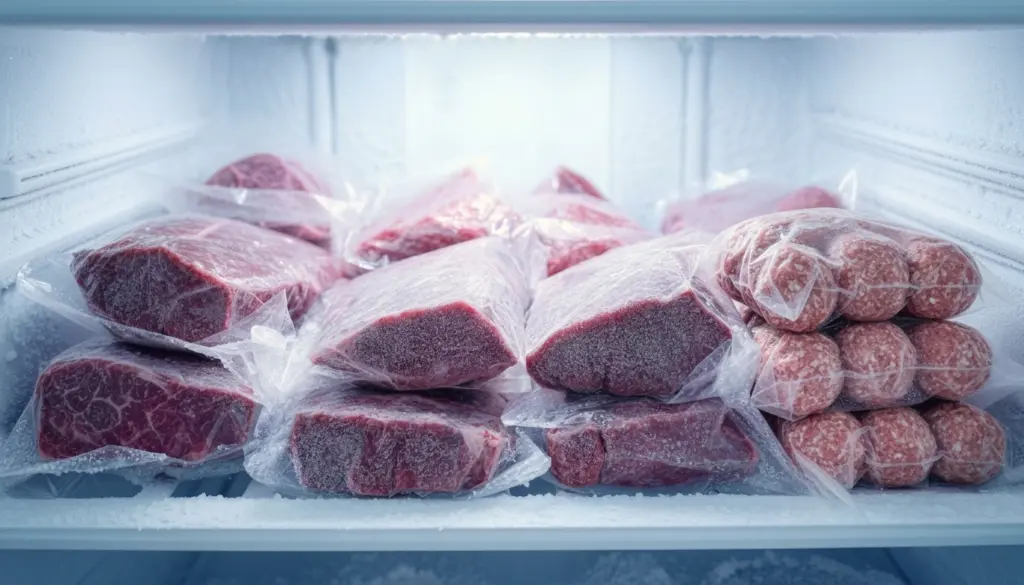
Vacuum packaging and modified atmosphere reduce fat oxidation, meat darkening and sensory losses. For this reason, only packaging approved by government agencies (such as Anvisa and MAPA) should come into contact with food.
Correct labeling of meats is necessary to avoid improper storage. For example, “fresh” and “frozen” cuts follow different conservation standards, as explained above.
Thawing and refreezing
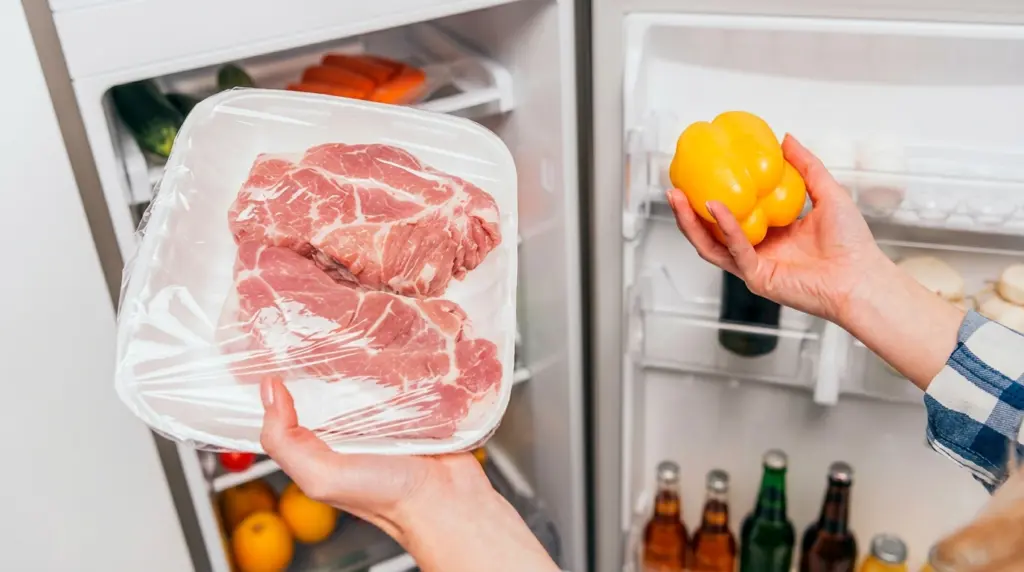
Instead of placing frozen meat directly at room temperature to start thawing, the ideal is to thaw slowly inside the refrigerator (at approximately 5 °C), which keeps the food out of the danger zone for up to 72 hours. This process, although it requires a bit more planning, prevents dripping and maintains microbiological control.
The time required for thawing this way can vary depending on the size and density of the cut. According to this guide, ground meat, stew meat, poultry and seafood take between 12 and 24 hours to thaw; steaks and chops take between 12 and 18 hours. Whole chicken or large roasts can take between 24 and 36 hours.
If that advance planning is not possible, the microwave can help by using the specific “defrost” function, as Anvisa warns. “This procedure [thawing] should be carried out under refrigeration conditions at temperatures below 5ºC or in a microwave oven when the food is immediately subjected to cooking,” explained then-director of the National Health Surveillance Agency (Anvisa), Maria Cecília Brito, in a press release. But do not forget to remove supermarket plastic packaging to avoid toxin release and place the food in a microwave-safe container.
If this is the thawing method used, it is necessary to cook the meat immediately. As explained in the video on the Viva a Vida Saudável channel, microwave thawing heats meat unevenly, from the inside out, raising the food’s temperature into the “danger zone” (between 4 °C and 60 °C), where bacteria that are not killed by freezing can multiply quickly. Immediate cooking aims to ensure the internal temperature reaches safe levels (generally above 70 °C), which eliminates harmful bacteria. That is why meat thawed in the microwave should also not be refrozen raw. In other words, meat can be “refrozen” only if it was thawed under refrigeration and kept cold. Even so, it is important to note that this process compromises part of the product’s nutritional value and that refreezing is not recommended.
As Anvisa warns, “when food conditions are ideal for microbes, a single bacterium can multiply into 130,000 in just 6 hours. Keeping the temperature below 5 ºC and above 60 ºC slows down or even prevents their multiplication. Therefore, it is important not to leave cooked foods at room temperature for more than two hours. Perishable foods should be refrigerated, preferably below 5° C, and hot cooked foods (above 60° C) should be kept hot until the moment they are served.”
Another method for quick thawing is to use cold water. For this, the meat must remain sealed in its vacuum packaging or in an airtight bag and be submerged in a bowl with cold water. Change the water every 30 to 60 minutes to keep it cold. In this process, average thawing time ranges between 30 and 60 minutes for thin cuts or sausages and between 2 and 3 hours for larger cuts (whole chickens, roasts). It is important never to use hot water, as this increases the risk of bacterial growth. Prepare immediately after thawing and do not refreeze the food raw, since the chance of product contamination increases, making the procedure not recommended.
And remember: do not wash meats before preparing them. According to the Ministry of Health, this practice actually increases the risk of contamination and disease, because “water amplifies the spread of these biological agents, increasing contamination in the kitchen environment.” Foodborne diseases (FBDs) can be especially severe for children, the elderly and people with certain comorbidities.
Brazilian regulations and good practices for preserving meat
To ensure cut integrity, the Ministry of Agriculture (MAPA) publishes Technical Inspection and Quality Regulations and Standards for inspection that standardize the identity and quality of meat and derivatives across the chain, complementing labeling and additive requirements aligned with Mercosur.
In addition, the National Health Surveillance Agency (Anvisa) centralizes standards and guidance materials on food safety, including practices that apply to domestic handling and food service. Each topic can be checked in detail on the agency’s official page.
Therefore, keeping meat at the correct temperature, in effective packaging and handling it hygienically are the pillars of good preservation. By following the guidelines of regulatory bodies, not only are nutrients preserved, but also flavor and safety — which should be monitored from the butcher to the table.
Sources:
- 4 Steps to Food Safety
- Food – Anvisa
- FoodKeeper App
- Care with beef: how to ensure only benefits?
- Can you thaw meat in the microwave?
- Meat & Catfish – Food Safety USDA
- Proper Meat Thawing Guide
- Legislation on inspection of animal-origin products
- Temperature and hygiene ensure food safety
- Do you have the habit of washing meats before cooking them?