Share


Consumers and importers are increasingly demanding regarding the products that arrive at their tables. They seek not only flavor and quality, but also meats with special attributes related to sustainability, healthfulness and animal welfare.
According to the consultancy Future Market Insights, the global grass-fed beef market (animals fed exclusively on natural or cultivated pastures) is expected to grow from US$ 13.5 billion in 2025 to up to US$ 21 billion by 2035. This represents an average annual rate of 4.5%. The advance reflects growing demand for more natural products, free from antibiotics and hormones.
Another study by Technavio also made optimistic forecasts: an increase of US$ 3.23 billion in demand for these products is expected between 2025 and 2029. According to experts, this movement is driven by consumers willing to pay more for meats that deliver superior nutritional benefits and align with environmental values.
Key Characteristics of Grass-Fed Beef
Cattle consume grass and forage throughout their lives, without significant grain supplementation. As a result, the animals’ nutritional profile shows higher levels of omega-3 fatty acids and more CLA (conjugated linoleic acid), a compound associated with metabolic benefits. Cuts also tend to be leaner, with less intramuscular fat, as explained by the DrMénchon portal.
Since the use of hormones does not occur or is drastically reduced, the production cycle is longer than that of grain-fed animals with special supplementation. This results in meats with a more intense flavor and lower total fat.
Moreover, pasture management practices reduce the carbon footprint and favor soil regeneration.
The Role of Importers and Retail
Importers and retailers are protagonists in this movement. In the United States and in European supermarkets, certified and niche meat sections have grown in response to consumers seeking transparency in the production chain. Still according to Technavio, the indirect retail segment (supermarkets and distributors) accounts for the largest share of grass-fed beef sales.
This reinforces the role of retail as a strategic link between producers and consumers, serving customers who seek specialty cuts aligned with good animal welfare and sustainability practices.
Opportunities for Brazil

As one of the world’s leading exporters of beef, Brazil is strategically positioned to meet this demand. Lines of certified products — such as organic and grass fed — have been expanded by companies like Minerva Foods, which see this movement as a way to add value and capture premium markets.
The Food and Agriculture Organization (FAO) highlights that traceability and the adoption of sustainable protocols are increasingly important requirements for accessing international markets. This means that management, although not the central topic, becomes an indispensable technical response to meet global requirements.
Furthermore, the official report from the Organization for Economic Co-operation and Development (OECD) indicates that consumption of sustainable foods is an irreversible trend. It projects that, by 2030, this market segment will grow continuously, driven both by public policies and by consumer awareness.
Given that Brazil has anticipated global trends, as exemplified by the Sino-Brazilian pilot project for bovine traceability, more demanding consumers will find it easier to locate quality products in supermarkets and butcher shops. This is due to a broad process of adapting the production chain, which seeks to meet external markets while at the same time raising the quality of what is consumed domestically.
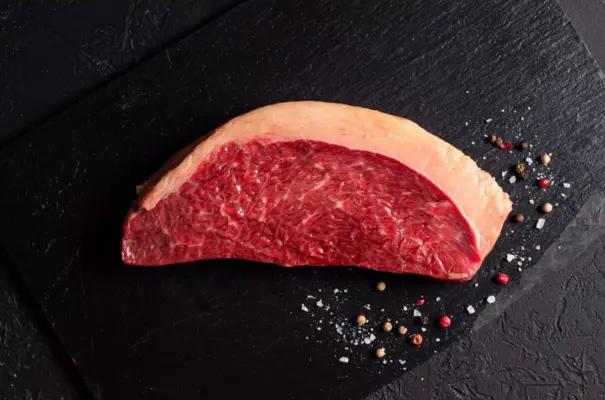
To reinforce this differential in the case of grass-fed products, Minerva Foods’ guide highlights brand attributes. The cuts come exclusively from British breeds, raised free on natural pastures, resulting in meat with a distinctive texture, unique tenderness and authentic flavor. Exclusive pasture feeding also gives the fat a slightly yellowish tint, a reflection of the beta-carotenes present in the vegetation, a characteristic valued in premium markets and associated with the product’s origin and quality.