Share


A dietary modeling study, a mathematical technique used by nutritionists and scientists to estimate what would happen to health, analyzed the effects of removing one daily serving of meat or poultry from diets framed as Healthy Dietary Patterns (HDP). The results showed that this exclusion can reduce intake of essential nutrients by more than 10%, such as protein, iron, zinc and B-complex vitamins.
The analysis, published in MDPI (Multidisciplinary Digital Publishing Institute), considered the removal of an 85-gram serving of meat or chicken, an amount consistent with traditional nutritional guidelines. When performing simulations without this serving, the researchers observed consistent declines in micronutrients fundamental to health, even after caloric adjustments aimed at compensating for them.
Why has reducing meat consumption returned to the debates?
Environmental, economic and health issues are among the main factors driving discussions about reducing (or even eliminating) meat consumption in different countries. However, the research data reinforces that replacement strategies must be incorporated into the diet to avoid nutritional deficiencies.
One example is iron. The mineral present in plant foods is non-heme iron, whose absorption by the body is significantly lower compared with heme iron found in meats. This means that unbalanced diets can compromise iron stores and increase the risk of anemia. The problem is accentuated in women of childbearing age. According to this literature review, published on PubMed, “iron losses from bleeding can be substantial and excessive menstrual blood loss is the most common cause of iron deficiency in women,” the study says, adding that “during pregnancy, there is a significant increase in iron requirements due to the rapid growth of the placenta and the fetus and the expansion of red cell mass.”
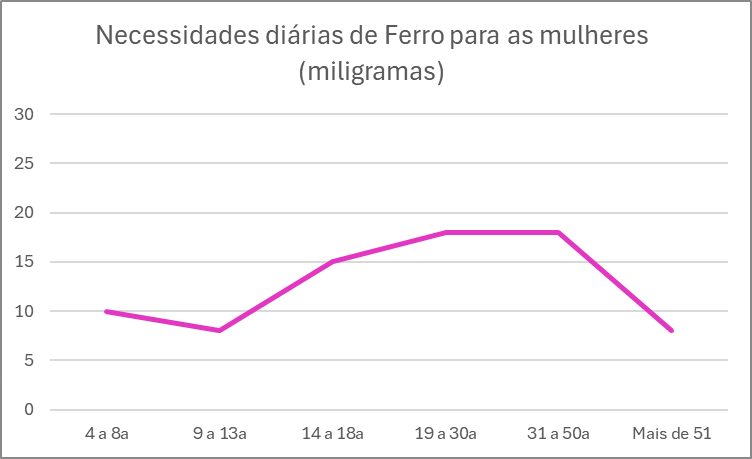
In the graph below you can see the daily requirement curve for this group by age, according to estimates from the United States Department of Agriculture (USDA) – United States Department of Agriculture (USDA), summarized in this article from the Department of Nutrition at the University of California: “The Recommended Daily Intake (RDI) of iron for all age groups of men and postmenopausal women is 8 mg/day, and for premenopausal women it is 18 mg/day. The difference between the values of the two groups is mainly related to the need to replace iron losses resulting from menstruation. Pregnant women require even more iron: 27 mg/day. For children of both sexes, between 6 months and 11 years of age, the RDI is 11 mg/day.”:
Figure 4: Evolution of the daily iron requirement for women from ages 4 to over 50 years.
A 2024 review, published in MDPI, highlights vitamin B12 that exists naturally in meats. Its deficiency can cause megaloblastic anemia, severe fatigue, and neurological and cognitive changes. The scientific literature also points out that this is the main concern in vegetarian and vegan diets, and systematic supplementation is recommended to avoid long-term problems.
Vitamin D deficiency, in turn, affects broad segments of the population regardless of dietary pattern. However, according to the study, vegan diets were associated with lower vitamin D intake compared with omnivorous diets and other vegetarian diets, or with intake below the reference value (based on 11 studies with a total of 4,703 participants). This situation can lead to bone fragility, reduced immunity and cardiometabolic risk. Although sunlight is the main driver of vitamin D synthesis in the body, animal foods serve as a critical support, providing preformed vitamin D3 and the fats required for its absorption.
According to data from the Ministry of Health, about 30% of women of childbearing age in Brazil present anemia. Prevalence is higher in low-income groups and in populations in regions with greater food insecurity, where meat and fish – sources of highly absorbable iron – are often the first items cut from the diet due to cost.
Less-meat diet and HDP: is it possible?
Yes, but with caveats. Studies point to the need to design an adequate nutritional plan to ensure the supply of essential micronutrients. However, the costs associated with food tend to rise if that is the objective.
According to the FAO (Food and Agriculture Organization of the United Nations) report State of Food Security and Nutrition in the World 2025, the price of a healthy diet in Latin America increased 3.8% between 2023 and 2024, reaching R$ 30 per day, the most expensive in the world. The FAO defines a healthy diet as one that includes four main aspects: diversity (within and between food groups), adequacy (sufficiency of all essential nutrients relative to needs), moderation (regarding foods and nutrients associated with poor health outcomes) and balance (intake of energy and macronutrients).
Despite rising prices, the number of Brazilians unable to afford better food has increased. In 2017, the number of people unable to finance adequate diets was 57.2 million (about 27% of the population); in 2020, the number fell to 42.1 million people (19.8% of the population). The figures could have been even better if it were not for the emergence of the pandemic.
Reference sources:
Vegetarian and vegan diets: benefits and drawbacks
Meat is one of the few natural sources of B12
Report 3 – Biomarkers of Micronutrient Status
Despite price increases, access to a healthy diet grows in Brazil