Share


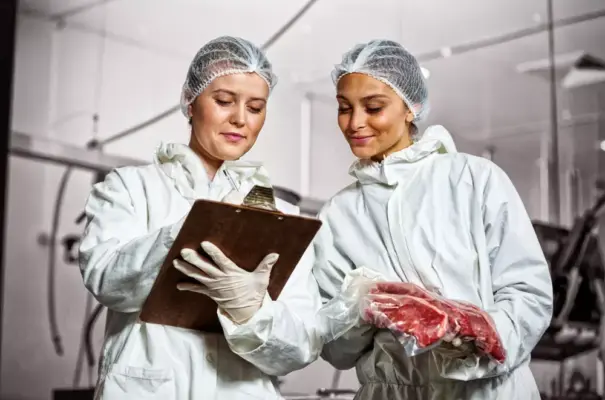
The experience of savoring a tender, juicy, and flavorful cut of meat is the culmination of a meticulous process that spans a vast value chain. The final quality of the meat—its taste and safety—depends directly on how it is handled at every stage of its journey, from origin to the consumer’s table. Throughout this long trajectory, the science of storage and preservation plays a fundamental role.
Fresh meat is one of the most perishable foods. As Prof. Roberto de Oliveira Roça explains in a study conducted for Universidade Estadual Paulista (UNESP), meat preservation is a basic necessity used to delay or prevent changes that render it unfit for consumption and reduce its quality. These changes are caused mainly by microbial, chemical, and physical factors. To ensure a high standard of safety, the Ministry of Agriculture and Livestock (MAPA) issues guidelines for refrigerated facilities and inspection procedures.
The most commonly used conservation method is chilling, when the temperature of a food is reduced to near 0 °C without freezing its free water. In the case of meat, this point corresponds to a temperature between 1 °C and 5 °C, the study indicates. Ordinance No. 304 of the Ministry of Agriculture and Livestock (MAPA), however, extends the maximum permitted temperature, determining that establishments slaughtering cattle, buffalo, and swine may only deliver meat and offal for sale at temperatures up to 7°C.
Thus, since the rate at which food deteriorates depends directly on its temperature, the speed of chemical, enzymatic, and microbiological reactions is reduced without forming ice crystals that could alter muscle structure—helping to preserve food safety without compromising quality. “If the meat temperature is lowered below -2ºC, the product freezes, changing its physical state and decreasing the rate of chemical and enzymatic reactions,” the document explains.
The efficiency of refrigeration is vital to prevent the meat from undergoing changes that jeopardize its quality. The process, therefore, must be meticulous, inducing cooling in a controlled manner, since abrupt exposure to a much lower temperature can result in “cold shortening” (cold shortening), which makes the meat tougher.
For this purpose, the industry has different carcass cooling methods, which vary in speed, temperature, relative humidity, and air circulation, facing the challenge of balancing cooling time—considering that the faster and better the process, the safer and more economical it is—without compromising tenderness.
Cooling speed, however, depends on variables such as carcass weight, the ratio between lean meat and fat, and the thickness of the external fat—factors that directly influence heat dissipation and moisture losses.
Once it leaves the cold store, the process must be equally technical and meticulous. A break in the cold chain—which encompasses the meat’s journey from the cold store to the consumer—even for a short period, can compromise the product’s safety and quality by accelerating bacterial growth and deterioration, as explained in an article published by DROME, a company specialized in technological solutions for monitoring temperature-sensitive inputs. This chain consists of maintaining an ideal refrigeration or freezing temperature at all stages of transport, storage, and display at the point of sale.
The National Health Surveillance Agency (ANVISA) sets strict standards for the transport of perishable foods, requiring transport at the temperature specified on the label, in thermally insulated vehicles with refrigeration units, with constant thermal monitoring.
Packaging: from the shelf to the fridge
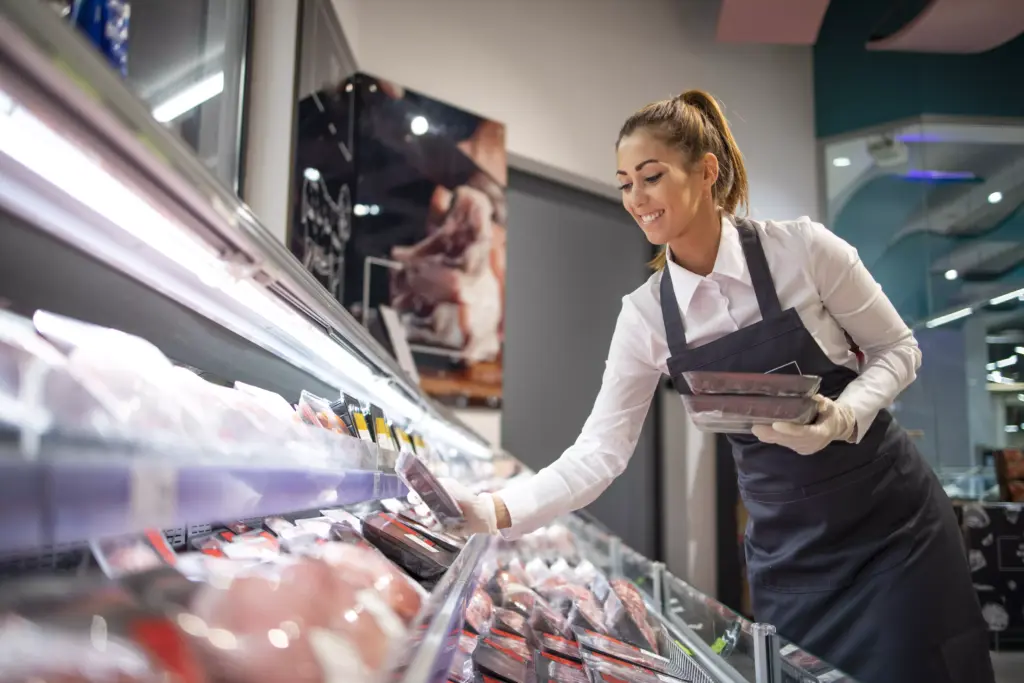
Meat packaging is the industry’s last point of contact before the product reaches the consumer’s hands. More than a simple protective layer, it is a technological solution that ensures freshness, safety, and product aesthetics. There are different packaging methods, each with its characteristics:
- Styrofoam trays with plastic film: this is the most traditional method in retail environments. It allows easy product visibility, which attracts consumers and facilitates inspection. The elastic PVC film creates a seal that exposes the meat to oxygen, maintaining the “bright red” color consumers associate with freshness. However, this method offers a significantly shorter shelf life.
- Vacuum packaging: considered an effective and durable solution, vacuum packaging removes the air from the package before sealing it. The absence of oxygen inhibits the growth of aerobic bacteria (which require oxygen to survive), slowing deterioration and extending the meat’s shelf life while maintaining flavor and texture for longer periods. In addition to reducing product waste, this technique optimizes storage space and prevents “freezer burn.” Because it is a low-oxygen environment, in vacuum packages the protein myoglobin—which stores oxygen in muscle cells—remains in its natural state, which can be darker, purplish, or even bluish. This is not a sign of spoilage but rather the absence of oxygen in the package, which ensures the product’s preservation for a much longer period.
- Modified atmosphere packaging (MAP): this method replaces the normal air in the package with a mixture of safe, approved gases (such as nitrogen, carbon dioxide, and oxygen), without the need for additional chemical preservatives. According to an article from HP Embalagens, the gas combination inhibits the growth of bacteria and fungi, preserving the meat’s safety and freshness. MAP is particularly effective at maintaining the meat’s red visual appearance, as the gas mixture is adjusted to preserve a vibrant color, making the product attractive on the shelf.
The choice of packaging is a strategic balance between functionality, cost, and aesthetic appeal. The adoption of technologies such as vacuum packaging and MAP demonstrates a commitment to extending shelf life and reducing waste—benefits that transfer directly to the consumer experience. It is important to emphasize that following the storage instructions on the label is essential.
Home storage

The quality journey continues at home, and good storage practices begin at the moment of purchase. Beyond checking the expiration date on the package, consumers should know how to identify signs of spoiled meat to ensure food safety. The main indicators of spoilage are:
- Odor: spoiled meat emits a strong, sour, or rotten smell, easily noticeable when opening the package.
- Texture: the meat’s surface becomes sticky, slimy, or viscous in consistency.
- Color: the natural color of beef ranges from cherry red to purple. Shades of orange, brown, or green, as well as irregular spots, are signs that the product is spoiled.
According to a piece from the Food Safety and Inspection Service (FSIS) of the United States Department of Agriculture (USDA), it is essential to be mindful of the temperature “Danger Zone,” which lies between 4.4°C and 60°C (40°F and 140°F), where bacteria multiply rapidly. The golden rule is to never leave food out of the refrigerator for more than 2 hours.
Freezing and storage
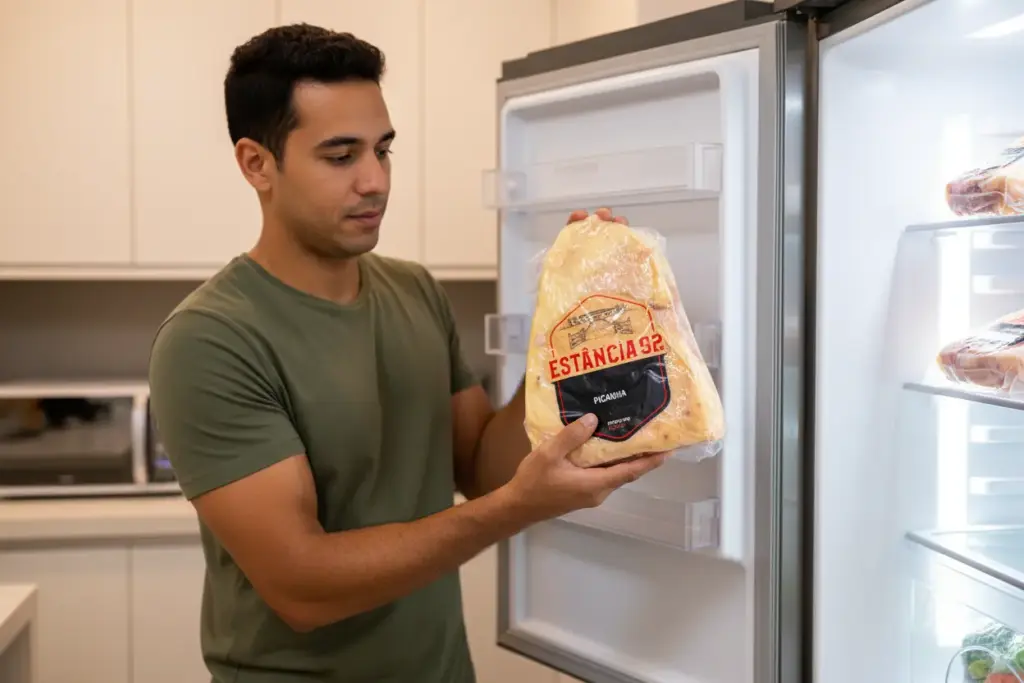
Freezing is the most effective way to extend meat’s shelf life at home. The storage temperature in this case should follow what is indicated on the product label.
Safe thawing
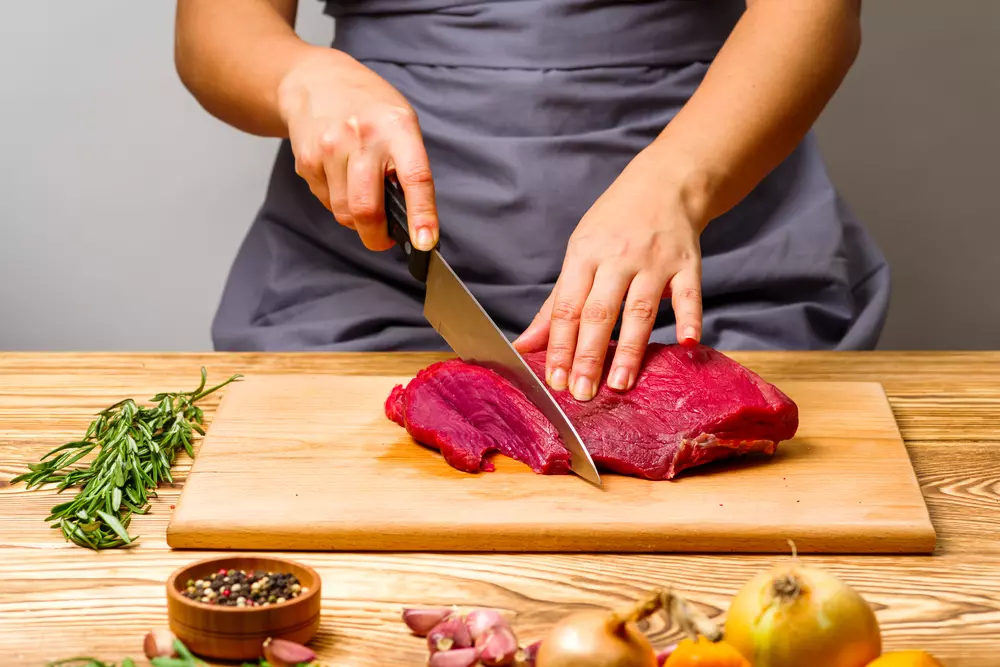
Thawing is as important as freezing in controlling meat safety and quality. The safest and recommended method is to thaw meat gradually and slowly inside the refrigerator, overnight. This process, which can take up to 24 hours, is crucial because bacteria can reactivate and multiply quickly at higher temperatures. It is worth noting that thawed meat should never be refrozen unless it has been cooked. In urgent cases, it is possible to use the microwave or the stovetop, provided the food is prepared immediately after thawing. However, refrigerator thawing remains the most recommended option because it offers greater control, lower sanitary risk, and better preservation of the product.
References:
REFRIGERAÇÃO – UNESP
Portaria n° 304 do Ministério da Agricultura e Pecuária (MAPA)
A Importância da Cadeia do Frio na Qualidade da Carne e a Tecnologia de Monitoramento
Embalagens para atmosfera modificada: o que você precisa saber
Cómo las Temperaturas Afectan a los Alimentos