
Share


The new dietary guidelines of the United States mark a significant shift in how eating is guided in the country. After decades based on a nutritional model formulated in the 1990s, the U.S. government announced a revision of its federal food policy, placing greater emphasis on whole foods and the prominence of high-quality proteins, including meat.
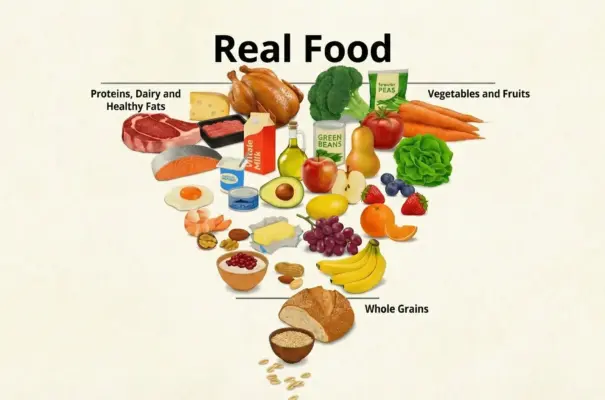
The update was presented by the Department of Health and Human Services (HHS) and the U.S. Department of Agriculture (USDA) and is detailed on the official Real Food site, created to communicate the foundations of the new guideline.
Public health crisis drives the change
According to the U.S. government, the overhaul responds to a worrying public health scenario. The country faces high rates of diet-related chronic diseases such as obesity, type 2 diabetes and cardiovascular diseases. This context prompted a review of the dietary model adopted since 1992, a period when the food pyramid prioritized high carbohydrate consumption, and coincided with the expansion of ultra-processed food intake.
According to the Real Food publication, the objective of the new policy is to put so-called “real food” back at the center of meals, promoting eating patterns based on recognizable, minimally processed and nutritionally dense foods.
Proteins as the foundation of meals
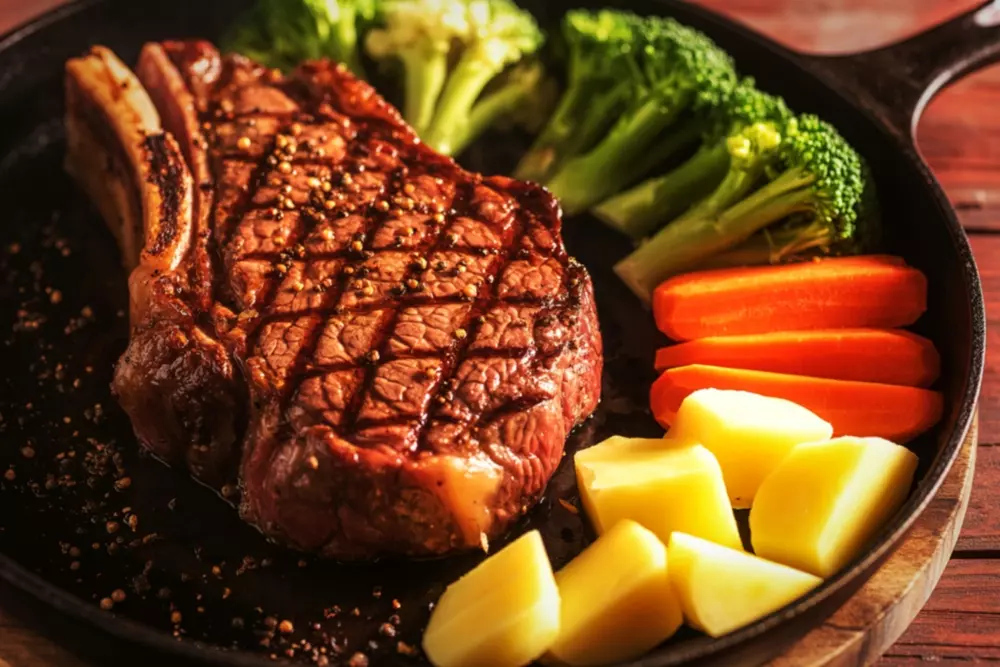
One of the central points of the new guideline is the recommendation that meals should prioritize high-quality proteins, combined with healthy fats coming from whole foods. The official site highlights both animal and plant sources, including meats, eggs, seafood, full-fat dairy, nuts, seeds, olives and avocados.
According to the argument presented by the U.S. government, proteins and vegetables form the foundation of meals by contributing to muscle health, metabolic function, gut health and more stable energy levels, as well as encouraging the natural replacement of ultra-processed foods. The daily protein target has been set at ~1.2–1.6 grams of protein per kilogram of body weight. All of this represents a break with decades of recommendations that placed carbohydrates at the center of the diet.
What the government calls “comida de verdade”
Another key concept of the new guideline is the definition of “real food,” or “comida de verdade” in Portuguese. Eating real food means choosing whole or minimally processed foods that are recognizable as food, prepared with few ingredients and without added sugars, industrial oils, artificial flavorings or preservatives.
In this context, meat appears as a food naturally aligned with this concept due to its nutritional density and for providing complete proteins, as well as essential micronutrients.
Meat as part of the nutritional solution
By explicitly including meats among the priority sources of protein and healthy fat, the new guidelines reposition the nutritional debate by emphasizing quality, nutritional density and lower degrees of processing, rather than approaches focused solely on isolated macronutrients. The change also signals a new U.S. dietary paradigm, with potential impact on public policies, institutional feeding programs and international discussions about health and nutrition.
Reference sources: