Share


Browse the content:
- Danger x risks: understand the difference
- Whole cuts and ground beef have different risk profiles
- Does raw meat have more risk than other types of raw food?
- Some groups of people need to be especially careful
- So is raw meat dangerous?
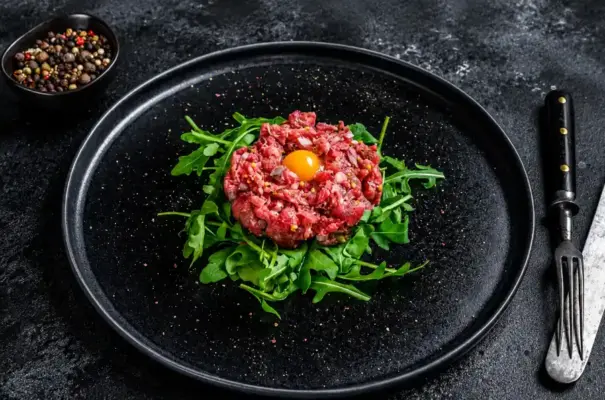
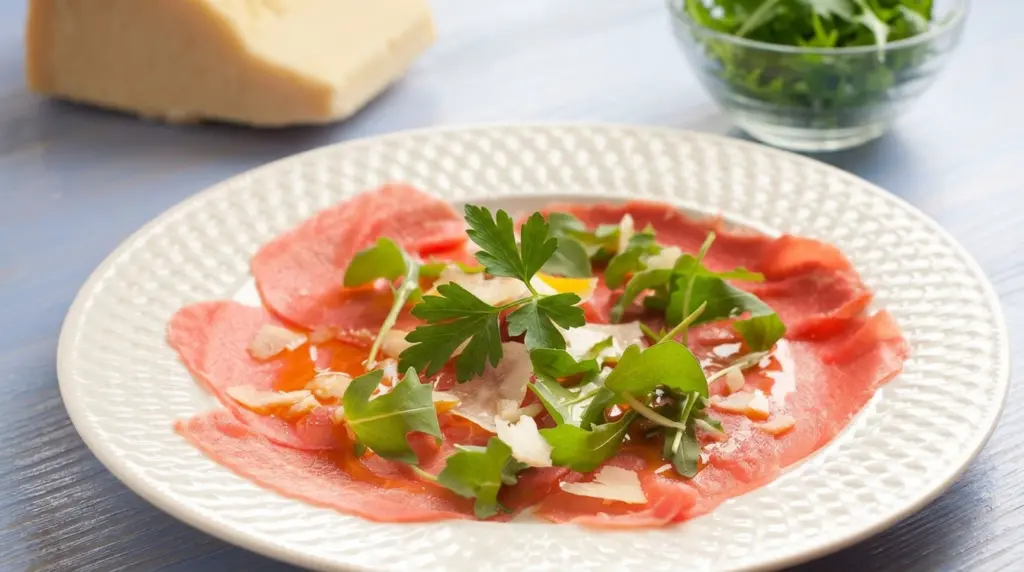
The idea that “eating raw meat is bad for you” seems like a fact to many people. After all, cooking has always been associated with eliminating bacteria and with food safety. But the reality is more complex. Raw beef dishes have been part of human diets for centuries and remain popular in different cultures — from French steak tartare to Italian carpaccio, and even Carpaccio, steak tartare, and kibbeh nayyeh eaten in several countries in the Middle East and Latin America.
That does not mean there is no risk. But the risk is not simply tied to the meat being raw. According to the World Health Organization (WHO), raw animal products may contain microorganisms capable of causing foodborne illness, including bacteria such as Salmonella, E. coli and Listeria monocytogenes. The key point, however, is that the risk mainly depends on microbial contamination and on the sanitary conditions involved during production and preparation.
Danger x risks: understand the difference

Understanding the difference between the concepts of danger and risk helps explain the issue. Danger is the possibility that a contaminating agent exists. Risk, on the other hand, depends on the actual likelihood of exposure to that agent in sufficient quantity to cause illness. That helps explain why millions of people consume raw foods every day — from sushi to oysters, ceviche and raw beef — without necessarily getting sick.
According to the Centers for Disease Control and Prevention (CDC), most foodborne illnesses are linked to hygiene failures, improper storage, incorrect refrigeration or cross-contamination during handling. In other words, the problem is often not the raw food itself, but the way it was produced, transported, stored and prepared.
Whole cuts and ground beef have different risk profiles
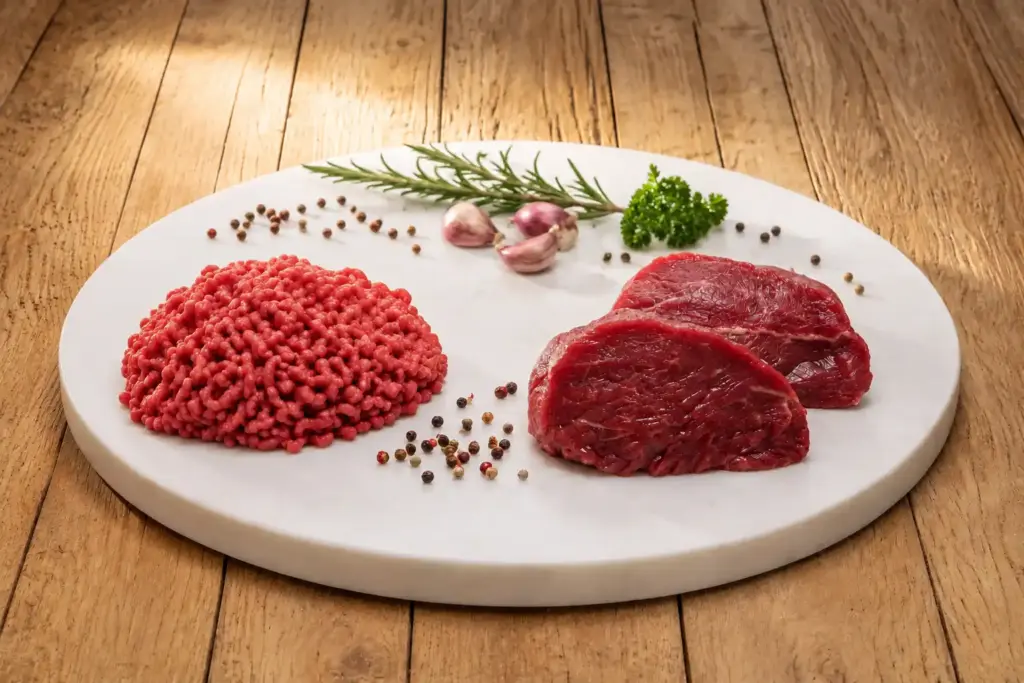
One important factor is that bacteria are usually concentrated on the surface of the cut. That is why whole cuts have a different risk profile from ground meat. The USDA Food Safety and Inspection Service explains that, during grinding, microorganisms present on the outside can be distributed throughout the mixture. That is why raw or undercooked hamburgers and meatballs, for example, tend to raise more microbiological concern than dishes made with fresh whole cuts handled properly.
Another important point is refrigeration. According to Food Safety, bacteria multiply rapidly between 4 °C and 60 °C — a range known as the “danger zone.” The longer food stays out of proper refrigeration, the greater the chance of bacterial growth (see here how to safely thaw meat). That is why restaurants specializing in raw dishes work with strict temperature control, rapid handling and immediate consumption after preparation.
This helps explain why dishes such as steak tartare or carpaccio generally use very fresh meat handled under specific protocols. In many cases, cuts are chosen precisely because they have less surface exposure and better sanitary control throughout the production chain.
Does raw meat have more risk than other types of raw food?
There is also a mistaken perception that raw beef is automatically more dangerous than any other raw food. But foodborne outbreaks can be linked to different products, including leafy greens (E. coli), eggs (Salmonella), raw milk (E. coli and Listeria), seafood (norovirus and hepatitis A) and ready-to-eat foods handled improperly (Listeria). Data from the European Food Safety Authority show that foodborne illnesses have multiple causes and depend on the entire sanitary chain — not just one specific ingredient.
That does not eliminate the risks of eating raw meat, but it helps put the discussion into perspective. Food safety depends on traceability, refrigeration, sanitary inspection, hygiene and good handling practices. The stricter these processes are, the lower the microbiological risk tends to be.
Some groups of people need to be especially careful
For more vulnerable groups, health agencies recommend caution. According to the CDC, young children, older adults, pregnant women and immunocompromised people should avoid raw or undercooked meat because of the higher risk of complications linked to foodborne infections. That is because, in these groups, foodborne illnesses can become more severe.
So is raw meat dangerous?
Science and food safety agencies show that the focus is on the microbiological and sanitary conditions surrounding the food — not just on whether it is cooked. The most accurate answer, therefore, is that the risk depends on how the meat was handled, stored and prepared.