Share


Just as diet plays a fundamental role in the human body, what cattle eat also influences aspects of their bodies. For that reason, the production model adopted, and its characteristic feeding system, has different impacts on the product that reaches the end consumer. It is in this context that the terms grass-fed (pasture-fed), grain-fed (fed grain for most of its life) and grain-finished (pasture-fed and grain-finished) have moved beyond technical jargon and become part of labels, communicating added value on shelf products and even on the menus of the world’s most sophisticated restaurants. Beyond the marketing involved, what actually changes in practice?
Understand each of the systems
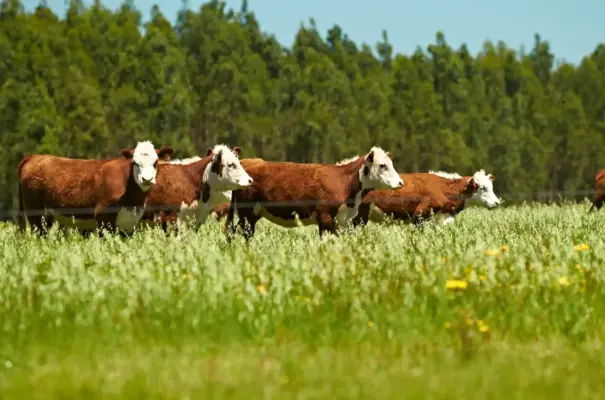
Grass-fed cattle are those that, throughout their lives, feed on forage and natural pastures. It is a system that respects the animal’s biological rhythm, with the cattle raised freely on pasture.
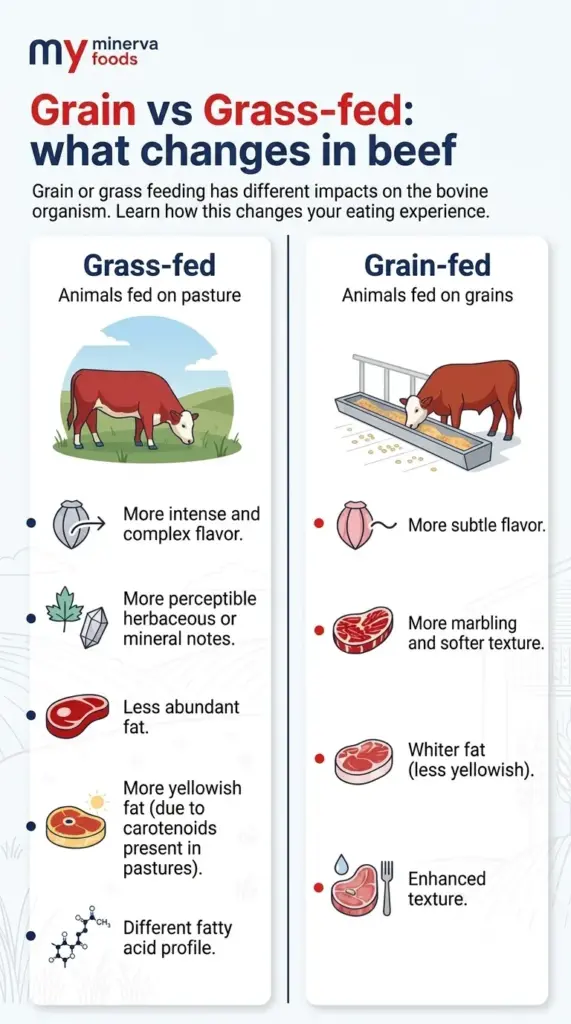
Grain-fed and grain-finished animals, on the other hand, receive a balanced diet of grains — usually corn or sorghum. The difference between them is that grain-finished animals receive this type of feeding only in the final stage of the cycle. This diet, offered in the final phases of development, is the “secret” behind weight gain and the deposition of intramuscular fat, the famous marbling.
Grain-based feeding also alters the composition of the fat in the meat, increasing the levels of monounsaturated fatty acids, commonly associated with a lower risk of cardiovascular disease, improved insulin sensitivity, reduced risk of certain types of cancer and positive effects on cognition, according to studies; and omega-6, a healthy fat with anti-inflammatory action that lowers LDL cholesterol — known as “bad” cholesterol — helping prevent cardiovascular disease, as noted by the Tua Saúde portal. During cooking, this fat melts into the meat. In this way, it increases the perception of juiciness and contributes to a feeling of tenderness.
In addition, the study published in the scientific journal Journal of Animal Science confirms that grain systems result in faster finishing times and higher feed conversion rates due to the high energy content of concentrated feeds.
On the other hand, grass-fed meat contains high levels of polyunsaturated fatty acids that, as shown in this study, omega-3 fatty acids, especially alpha-linolenic acid (ALA) and eicosapentaenoic acid (EPA), are recognized for contributing to cardiovascular health by helping reduce triglycerides and modulate inflammatory processes, in addition to exerting cardioprotective effects. Minerals such as iron, calcium, copper and selenium are essential for functions such as oxygen transport, bone formation and maintenance, immune system function and energy metabolism.
Tenderness and flavor: understand the differences in meat
According to Embrapa, tenderness and flavor are the two most important attributes for consumers. The grain-fed system stands out in this regard because of the marbling. The fat interspersed among the muscle fibers acts as a thermal insulator and lubricant during cooking. When this fat melts at high temperatures, it bathes the fibers, giving the meat juiciness and a characteristic “buttery” texture.
On the other hand, cuts from grass-fed animals are more suitable for those who prefer leaner meat, that is, with a lower fat content. The flavor of a cut like this can be more robust, complex and “natural”.
Visually, meat from pasture-raised animals may also have a more yellowish fat color, the result of a greater accumulation of carotenoids, such as beta-carotene, present in the forage consumed by cattle. This characteristic is considered a natural marker of pasture-based feeding.
Sustainability and feeding: what is the relationship?
Beyond the impact on meat properties, cattle feeding also influences environmental aspects. The farms analyzed in the study that used grazing showed soils with 40% higher organic matter content. In practice, this means more fertile soils, with a greater capacity to retain water, store carbon and provide nutrients to plants, making pastures more resilient to drought periods and reducing the need for external inputs.
The survey also detected greater micronutrient richness, such as iron, zinc and silicon, compared with land used for feed-grain monoculture.
It is also noted that well-managed pastures with high botanical diversity contribute directly to carbon sequestration in the soil. This can help meet government sustainability targets, which are important for the maintenance of the sector and of ecosystems neighboring farms.
Your experience takes center stage
Although grain-fed and pasture-fed systems have different impacts on the food that reaches the plate and even on the environment, there is no better system than the other. Minerva Foods offers both products through the Cabaña Las Lilas brand, which applies stricter standards and higher specifications, with cuts sourced from British-breed animals, delivering unique flavor, tenderness and marbling.
The Grain Fed line delivers cuts with a mild flavor and extremely tender texture – the result of a grain-rich diet, developed to offer consistency and excellence in every detail. The Grass Fed line, in turn, comes from cattle raised freely on natural pastures, producing meat with a distinctive texture, intense flavor and slightly yellow fat. Learn more about the brand here.
- Análise sensorial de carne bovina maturada utilizando a técnica do perfil livre.
- Carnes com atributos especiais ganham espaço no mercado global
- Nutritional composition of beef: a comparison of commercial North American grass- and grain-finishing systems
- Presente entre as fibras, revelado no sabor. O segredo do marmoreio na carne
- Sustentabilidade na pecuária: entre o presente e futuro da alimentação