Share


The world’s largest beef exporter, with the potential to further expand its share of global food supplies in the coming decades, Brazil continues to increase its foreign sales: in the first half of 2026 alone, beef exports generated a record US$9.929 billion in revenue, up 33.4% from the same period in 2025. The challenge, therefore, is not to produce more, but to access markets and remain competitive in them — a task that becomes more complex as new regulatory, environmental and traceability requirements advance in the main destinations for Brazilian beef.
At the center of this movement is the Carbon Border Adjustment Mechanism (CBAM), or Carbon Border Adjustment Mechanism in a direct translation. Created by the European Union, it seeks to level the playing field between European and imported products. This is because producers in the bloc already have to pay for the greenhouse gas (GHG) emissions generated by their activities through the European Union Emissions Trading System, or EU ETS.
In practice, the CBAM calculates the amount of greenhouse gases emitted during the production of certain imported goods. Based on this volume, the importer must purchase certificates corresponding to the emissions. The aim is to prevent so-called carbon leakage, or the transfer of production to countries with less stringent climate rules solely to avoid the cost of carbon and gain a competitive advantage in the European market.
Implementation was divided into stages:
- Between October 2023 and December 2025: the transition phase was in effect, during which importers had to report the emissions embedded in covered products, but without any financial charge yet.
- January 1, 2026: the definitive phase began, in which emissions from imported goods started to be included in the calculation of the financial obligation.
- February 2027: the purchase of certificates is expected to begin, including to settle emissions related to imports made in 2026. Starting in 2027, importers will also have to hold, at the end of each quarter, certificates corresponding to at least 50% of the emissions accumulated during the year.
Why beef is at the center of the debate, even though it is not directly targeted by the CBAM
The sectors currently covered by the CBAM are steel, iron, cement, aluminum, fertilizers, electricity and hydrogen. Beef is not on the list. For cattle farming, therefore, the mechanism’s impact is not direct, but lies in the precedent it sets: the environmental characteristics associated with how products are made are beginning to have concrete effects on trade relations.
According to an analysis presented in the episode “The other trade tariffs” of the Economia do Futuro podcast, featuring researcher Thais Diniz Oliveira of Cornell University, studies modeling different scenarios for sectors such as steel, iron and aluminum point to a possible decline of more than 30% in Brazilian exports over the next decade if the sector fails to adapt — as a result of the increase in costs associated with direct emissions (Scope 1 under the GHG Protocol, such as emissions arising from companies’ own industrial processes), the only emissions currently considered in the CBAM’s design for these segments.
One indication of this shift for cattle farming is the European Union Regulation on Deforestation-Free Products (EUDR), which will begin to apply on December 30, 2026, to large and medium-sized operators and, on June 30, 2027, to most micro and small operators. The regulation covers seven commodities and their derivatives — soy, cattle (beef and leather), coffee, cocoa, rubber, palm oil and timber — which together account for around one-third of Brazil’s exports to the European Union. According to a study by consultancy BIP, the requirements for full traceability, proof of deforestation-free origin and environmental due diligence imposed by the EUDR could generate additional costs of up to US$17.5 billion a year for agribusiness, equivalent to 16% of Brazil’s agroindustry exports, with the risk of excluding producers unable to comply with the new standards.
The sanitary ban: Europe tightening the screws before the CBAM arrives
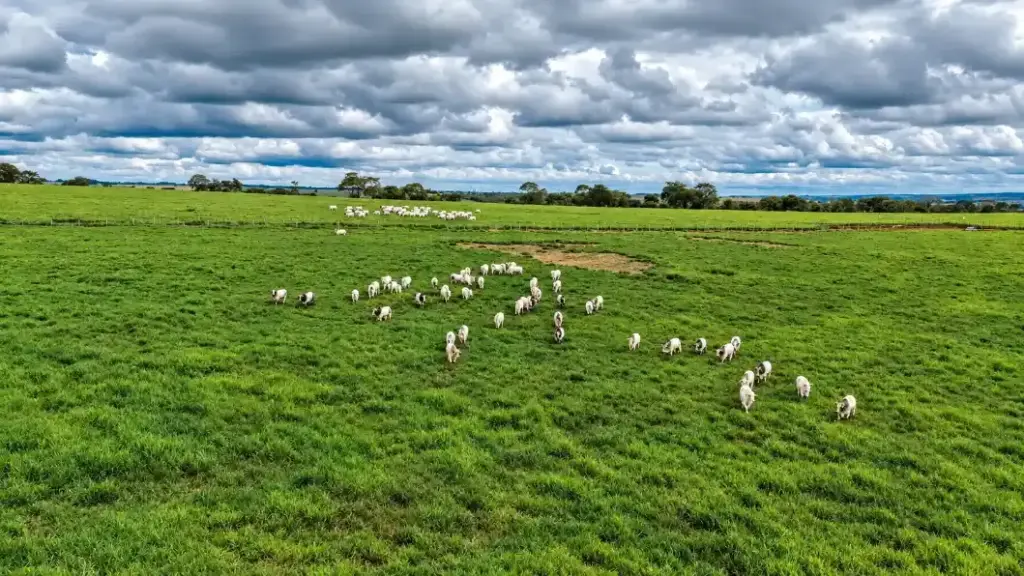
The weight of the European regulatory agenda on Brazilian beef became more concrete in early June 2026, when the European Union officially banned the import of meat, offal, fish and honey produced in Brazil as of September 3. According to the European Commission, Brazil failed to prove that its producers meet European health requirements, particularly that they do not use prohibited antimicrobial drugs — such as virginiamycin, avoparcin, tylosin, spiramycin, avilamycin and bacitracin — throughout the production chain. In April 2026, the Brazilian government had banned some of these substances, but the EU determined that additional guarantees were still lacking.
The episode is further evidence of the regulatory logic that the CBAM and the EUDR express through different instruments. Unlike China, which buys volume, the European Union shapes rules: even though it represents a small share of Brazilian exports, its decisions often reverberate far beyond the European market, serving as a reference for other importers. The bloc concentrates higher-value cuts and premium consumer niches, preserving its strategic relevance despite lower volumes.
The opportunity within the pressure
For Brazil, the issue is sensitive because it affects sectors that are important to the trade balance but are moving at different speeds in adopting practices compatible with the new international requirements. But there is a potential asset: if the CBAM also begins to consider indirect emissions, known as Scope 2 emissions (linked to energy consumption), the considerably lower carbon intensity of Brazil’s energy mix could increase the long-term competitiveness of energy-intensive sectors.
The same logic applies in the field. According to the ABIEC Beef Report 2025, over the past two decades Brazil’s pasture area has shrunk by around 11%, while productivity per hectare has nearly doubled — from 36.2 kg to 65.8 kg of carcass per hectare per year. A study by FGV Agro presented at the FAO in 2025 projects that the trajectories already under way in the sector could reduce the carbon intensity of Brazilian beef by up to 80% by 2050 in the reference scenario — from 80 kg to 16 kg of CO₂ equivalent per kilogram of beef — reaching a 92.6% reduction in the most ambitious scenarios under the ABC+ Plan.
Companies that move ahead by establishing reliable traceability systems will gain an advantage. Sustainability has gone from being a competitive differentiator to a condition for entering the European market, according to Carina Lins, Sustainability Coordinator at GS1 Brazil.
Brazil also has tools that, if activated systematically, can turn requirements into evidence: the Rural Environmental Registry (CAR), Sisbov, the Prodes satellite-based deforestation monitoring system and, currently under development, the National Plan for the Individual Identification of Cattle and Buffaloes (PNIB), which provides for the individual traceability of the entire national herd by 2032.
What is at stake
The CBAM has not yet reached the cattle farmer’s gate. But the regulatory framework of which it is part — together with the EUDR, the Mercosur-EU agreement and the new European health requirements for the production chain — has already redrawn the map of access to the European market. Those who measure, document and reduce their supply chain’s carbon footprint are not merely responding to a sustainability demand. They are building a passport to premium markets, where verified sustainability and traceability attributes can differentiate a product and justify an additional premium over the commodity price.
Reducing this change to a simple new tax means missing the main point: the CBAM is a signal that the global economy is reorganizing around climate management. For Brazilian beef, the question is whether this reorganization will arrive as a bill or an opportunity — and the answer will increasingly depend on what happens on the farm before any shipment takes place.
- ABIEC – Beef Report 2025: Brazilian cattle farming produces more with less land
- Agência Brasil – European Union officially bans Brazilian beef as of September
- Agrishow Digital – New EU environmental rules will affect Brazilian commodity exports
- Além da Energia (Engie) – CBAM challenges Brazilian competitiveness
- CNN Brasil – Brazilian beef: the challenge is no longer producing, but selling
- CNN Brasil – Brazil races against the clock to meet EU traceability requirements
- CNN Brasil – EUDR could generate an additional US$17.5 billion a year in costs for agribusiness
- Comex do Brasil – Mato Grosso meatpackers exporting to the EU fail to comply with the bloc’s anti-deforestation law (Radar Verde)
- Economia do Futuro (podcast) – The other trade tariffs, with Thais Diniz Oliveira (Cornell University)
- Minerva Foods – By 2032, Brazil’s entire cattle herd must be individually traceable (PNIB)
- Neo Mondo – Carbon becomes a tariff: how the CBAM is redrawing the boundaries of trade and climate
- Notícias Agrícolas – At the FAO, ApexBrasil presents data projecting up to a 92.6% decline in the emissions intensity of Brazilian cattle farming by 2050 (FGV Agro)