
Share


Have you ever stopped to think about what lies behind the steak on your plate?
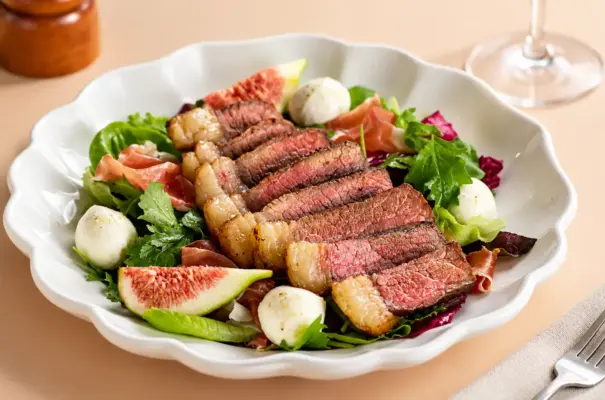
Take a moment and picture one of the most common meals on Brazilian tables: rice, beans, French fries, salad, and, at the center of the plate, a “steak.” This scene is repeated every day in millions of homes, restaurants, and cafeterias across the country. Yet we rarely stop to think about everything it represents. Behind this meal is the beef cattle supply chain, which generates billions in revenue and pays billions in taxes that translate into public and private investment, creating opportunities for millions of Brazilians. Today’s article explores the impacts of this supply chain on the Brazilian and global economies.
Does Brazil play an important role in global livestock farming?
In 2025, Brazil consolidated its position as the world’s largest producer and exporter of beef, surpassing the United States, which had historically held that position. This leadership can be explained by Brazil’s commercial cattle herd, the largest in the world, estimated at 195.5 million head, ahead of India and China. In 2025, 47.8 million animals were slaughtered in the country, generating 12.4 million metric tons of carcass weight equivalent (CWE), a record volume corresponding to 16.1% of all beef produced worldwide. Across the entire supply chain—from on-farm activities to upstream and downstream operations—this performance generated approximately BRL 1.159 trillion, equivalent to 9.1% of Brazil’s Gross Domestic Product (GDP), which totaled BRL 12.74 trillion that year. The figures are from the Beef Report 2026, published by Abiec and Athenagro Consultoria, based on IBGE data.
But does this performance benefit only cattle farmers?
Connecting this to the broader macroeconomic picture, it is important to understand that the cattle industry does not operate in isolation: it is connected to an extensive network of other industries. Inputs and services for production alone—including animal nutrition, animal health, genetics, fuels, fertilizers, machinery, and labor—generated BRL 165.5 billion across the supply chain in 2025. The meatpacking industry spent another BRL 61.6 billion on packaging, energy, logistics, and services, while Brazilian retail generated BRL 334.4 billion in revenue from sales of beef and other cattle-derived products (Beef Report 2026, Abiec).
There are also co-products that support industries such as leather, biogas and biomethane, animal feed, fertilizers, beauty products, soap, cleaning products, and others, highlighting how the cattle industry directly or indirectly drives a significant share of the country’s economy.
Read also: Cattle Upcycling: Turning Inedible Resources into High-Value Protein
What about employment? How many jobs depend on this industry?
When we talk about more than BRL 1.15 trillion generated across the economy, we are not referring only to accounting and financial flows, but to the livelihoods of families from north to south. It is estimated that the beef cattle sector supports around 9 million direct, indirect, and induced jobs through the income effect on the economy (Athenagro / Beef Report).
From cowboys and animal scientists on farms to animal health technicians, meatpacking plant workers, refrigerated truck drivers, neighborhood butchers, and supermarket employees, the cattle industry is one of the country’s major drivers of productive inclusion. It plays an irreplaceable role in what is known as the “decentralization of development”: while much of the service sector and traditional industry is concentrated in state capitals and metropolitan areas, cattle farming generates income, helps keep young people in rural areas, and creates demand for local businesses in hundreds of inland municipalities that, without beef cattle farming, would face stagnant economies.
But don’t we export most of the beef we produce?
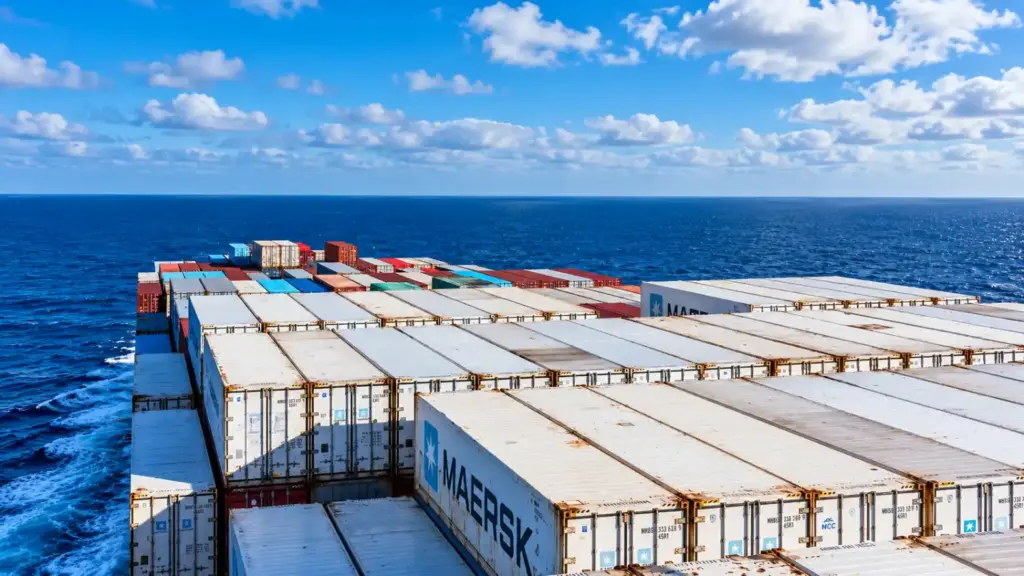
No. Just over 60% of the beef produced in Brazil is consumed domestically, while the remainder is exported. Exporting a product such as beef also helps generate income for the country and contributes to “balancing” the Brazilian economy. International trade denominated in U.S. dollars generates striking figures.
In 2025, Brazil earned US$18 billion from beef exports, an all-time record, 40% higher than in 2024 (US$12.9 billion) and more than 21 times the amount recorded in 2000 (US$836 million). That works out to more than US$34,000 flowing into the country every minute, continuously throughout the entire year (Beef Report 2026, Abiec, based on Athenagro/Secex data). Looking at the composition of these sales, fresh beef accounted for 88.1% of export volume and 92.1% of export revenue in 2025 (Beef Report 2026, Abiec). Among Brazilian states, Mato Grosso led as the origin of shipments (24.4%), followed by São Paulo (18.3%), Goiás (12.7%), and Mato Grosso do Sul (11.2%).
Who are the main buyers of brazilian beef?
A large part of Brazil’s international trade performance is driven by its largest customer: China. Just over two decades ago, the Asian giant purchased virtually no Brazilian beef. As we often say, “all it took was for Chinese consumers to try Brazilian beef to be won over by it.” In 2010, annual per capita beef consumption in China was approximately 4 to 4.5 kg per person (carcass weight equivalent). By 2025, driven by rapid urbanization, the rise of the middle class, and greater diversification of protein sources in the diet, this figure had reached around 7.5 to 7.8 kg per person—an increase of approximately 75% to 80% over the period. Although this remains well below the levels seen in Brazil (around 35 to 40 kg per capita per year) or in the United States, every modest 1 kg increase in annual consumption per Chinese citizen represents additional demand of approximately 1.4 million metric tons of beef, given the size of China’s population.
In 2025, China accounted for 47.3% of Brazil’s total beef export volume (1.7 million metric tons) and 49.4% of export revenue, equivalent to US$8.9 billion. From China’s perspective, more than half (56.2%) of all the beef it imports from around the world comes from Brazil (Beef Report 2026, Abiec). Despite the opportunity and strategic partnership, such a high concentration in a single major buyer is undoubtedly a point of concern for the sector and the Brazilian economy.
What is the impact of agribusiness and beef on Brazil’s trade balance?
Broadening the perspective from beef to agribusiness as a whole helps explain why the sector is rightly regarded as a major engine of the Brazilian economy. In 2025, agribusiness exports totaled US$169.2 billion and generated a trade surplus of US$149.1 billion. Without this contribution, Brazil would have ended the year with a trade deficit, as the combined trade balance of the other sectors of the economy was negative by US$81 billion (Beef Report 2026, Abiec, based on Athenagro/Secex data). Within this context, beef has gained increasing importance: its share of total agribusiness exports rose from 3.95% in 2000 to 10.60% in 2025. It is worth remembering the wide variety and large volume of agricultural and animal products exported by Brazil.
Beyond export revenue, what else does the beef supply chain generate for Brazil?
Beyond the revenue generated by exports, the beef supply chain also accounts for a significant share of public revenue. It is estimated that, in 2025, the beef cattle sector contributed BRL 172.6 billion in taxes and union contributions across its entire supply chain, in addition to generating BRL 49.7 billion in wages in other sectors of the economy (Beef Report 2026, Abiec). These resources are used to build schools, hospitals, roads, and fund other investments.
This impact can be illustrated by municipalities such as São Félix do Xingu, in the state of Pará, which has the largest cattle herd among Brazilian municipalities: approximately 2.5 million head of cattle, or 38 cattle for every resident. Between 2010 and 2023, the municipality’s GDP per capita rose from BRL 5,422.71 to BRL 35,953.63, an increase of 563% (IBGE Cidades). The change can also be seen in social indicators: the Municipal Human Development Index (MHDI) increased from 0.435 in 2000 to 0.594 in 2010 (up 36.6%), while the school enrollment rate among children aged 6 to 14 rose from 77.90% in 2010 to 94.63% in 2022 (IBGE Cidades). This demonstrates how beef cattle farming can transform income and living conditions in the communities where it becomes established.
How does Brazil ensure the safety and quality of its beef for the Global Market?
Maintaining global export leadership requires unquestionable sanitary and compliance standards. Brazilian products are currently sold in more than 175 international markets (Beef Report 2026, Abiec). The central pillar of this credibility is the rigorous inspection system: according to the latest data, approximately 63.6% of cattle slaughtered in Brazil are processed at plants overseen by the Federal Inspection Service (SIF), establishments responsible for 66.5% of all beef produced in the country (Beef Report 2026, Abiec).
This means that the manufacturing process, traceability, animal welfare and biosecurity meet the requirements of the world’s most demanding health agencies—from the United States to the European Union and Arab countries, which require strict “Halal” slaughter. Brazilian beef has built its competitiveness on scale and supply predictability combined with controlled sanitary standards.
After all these figures, what does the future hold for beef?
According to projections by Abiec, Brazilian production could exceed 15 million tonnes of carcass weight equivalent (CWE) by 2035, with exports surpassing 7 million tonnes a year (Beef Report 2026, Abiec). In line with this optimism, the Agricultural Outlook 2026-2035 report by the OECD and FAO projects global beef production of 82 million tonnes by 2035. But we will explore these future figures in greater detail in another article.
This positive growth trajectory will require strategic lessons to be learned at home. We need to move forward with opening and expanding high-value markets—such as Southeast Asia, the Middle East and North America—to reduce excessive dependence on a single buyer. In addition, product differentiation—through sustainable beef protocols, complete individual traceability and the appreciation of the flavor of grass-fed beef—will be key to capturing price premiums in more sophisticated markets.
If the numbers are anything to go by, Brazil has all the conditions needed to remain the world’s leading beef supplier, placing an increasing amount of Brazilian beef on tables both abroad and at home.
*Thanks to Vinicius Cambaúva and Rafael Rosalino for their support in writing this article.