Share


Making a homemade burger is no longer just about frying a simple patty of ground beef. The rise of the artisan burger culture has raised the bar for Brazilian palates, bringing a fundamental concept to the forefront: the blend. But what exactly is it?
In short, a blend is the strategic combination of different beef cuts and proportions of meat and fat, designed to balance flavor, juiciness, texture and structure. There is no single ideal mixture, however: the choice depends on the characteristics of each cut and the desired result.
According to analyses by Guia do Hambúrguer and Politi Academy, a thinner burger with an intense crust requires a different composition from the one recommended for a thick version or for a recipe with a more pronounced flavor. While the thinner version calls for a higher fat content, between 20% and 30%, the recommendation for the thick version is an average of 15% to 20% fat. Understanding the role of each element makes it possible to choose the most suitable blend for each style and create your own combinations, since there are no strict rules.
One blend to call your own
The word blend comes from English and can be translated as “mixture” or “combination.” The term is used in different segments, such as coffee, wine, spirits and perfumes, to describe the intentional union of components with complementary characteristics.
Applied to burgers, this logic means that cuts are not chosen at random. Each combination is formulated according to the expected result and the preparation technique to be used, taking into account the role of each element in the mixture.
Blend for a smash burger: 70% chuck and 30% brisket
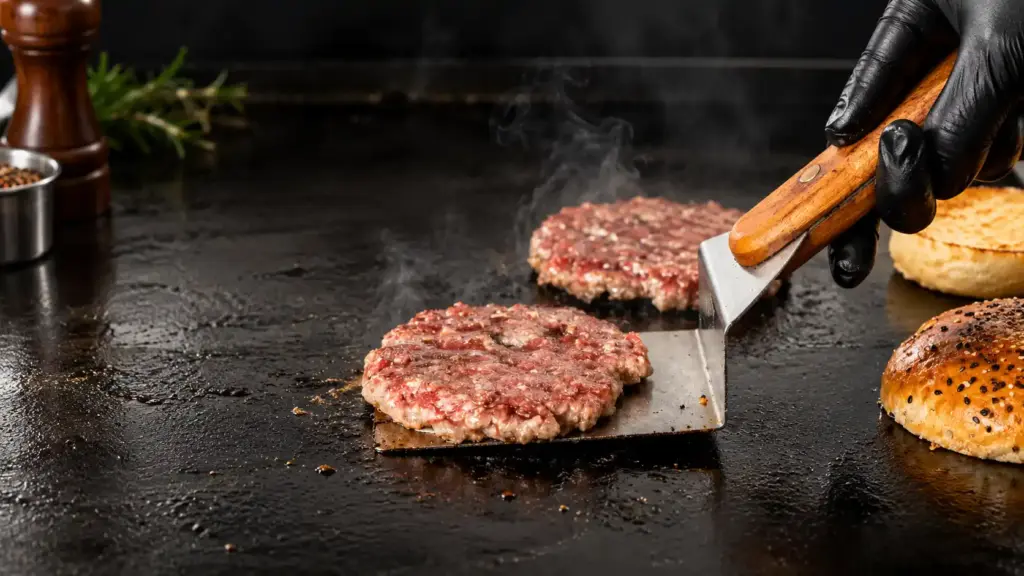
One of the clearest examples of how technique shapes the final result is the smash burger. Historian George Motz explained to Food & Wine that, despite its more recent popularization, the technique is not new: it dates back to the earliest ways of preparing hamburgers. “You go back to the 1880s, when they were pressing small balls of ground beef onto griddles at agricultural fairs or similar events, and this was done purely for speed. They realized that if a thick burger takes ten minutes to cook and a smash burger takes two, why spend those extra eight minutes?” he asked.
The interesting thing is that the success of the smash burger does not actually lie in the blend, but in the pressing technique, which flattens the meat as soon as it comes into contact with a very hot surface, reducing its thickness and increasing the area in contact with the griddle. This speeds up cooking and promotes the formation of the flavorful, crisp outer crust that characterizes this style.
The right blend, however, helps achieve this result without leaving the burger dry. Guia do Hambúrguer recommends a fat ratio of between 20% and 25%. For this preparation, the combination can be 70% chuck and 30% brisket, which adds the fat needed to preserve juiciness and intensify the flavor to the chuck’s structure. The Chuck Eye Roll and Brisket (Granito) cuts, both from Minerva Foods’ Estância 92 brand, are an example of this combination.
Thick and juicy burger: 70% flank steak and 30% short rib
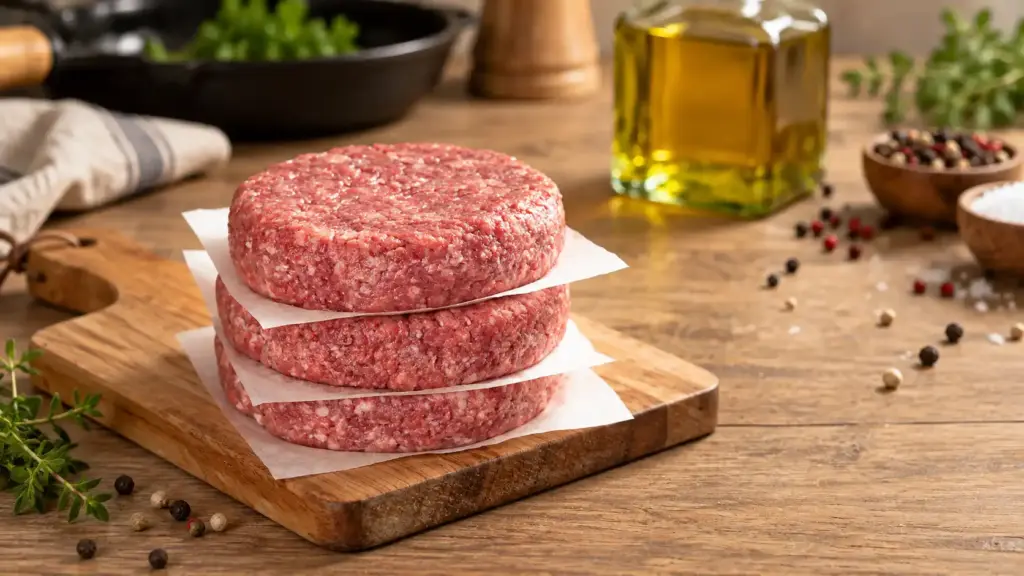
Unlike a smash burger, a thick burger requires slower cooking, capable of reaching the center of the meat without drying out the exterior. Its thickness also helps preserve a moister center and better highlight the texture and flavor of the blend. For this result, the recommendation is 70% flank steak and 30% short rib. The flank steak forms the burger’s base, with a pronounced flavor and tender texture, while the short rib adds fat and intensity. The combination helps maintain juiciness during the longer cooking time required by a thicker patty. The Fralda Red Meat and Costela Janela/Minga cuts from Estância 92 are ideal for this blend.
Bold flavor: 50% short rib and 50% brisket
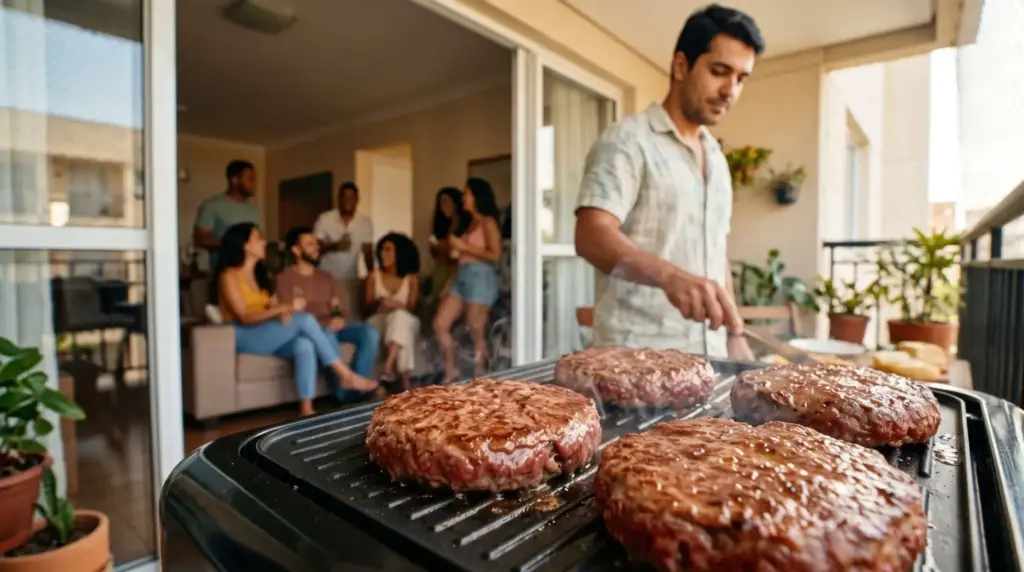
For those who prefer a more intensely flavored burger, Minerva Foods, on one of its official Instagram profiles (@minervacompanybrasil), suggests an equal-parts combination of Costela Janela/Minga and Brisket (Granito), both from Estância 92. Both cuts have a significant amount of fat and pronounced flavors, creating a full-bodied and juicy blend.
This composition can also serve as a base for smoked preparations. In this case, however, the result does not come solely from the choice of cuts: the characteristic aroma depends on the technique used, such as grilling, firewood, charcoal or smoking. The blend contributes enough intensity and fat to complement this type of preparation without losing its prominence.
Gourmet burger vs. artisan burger
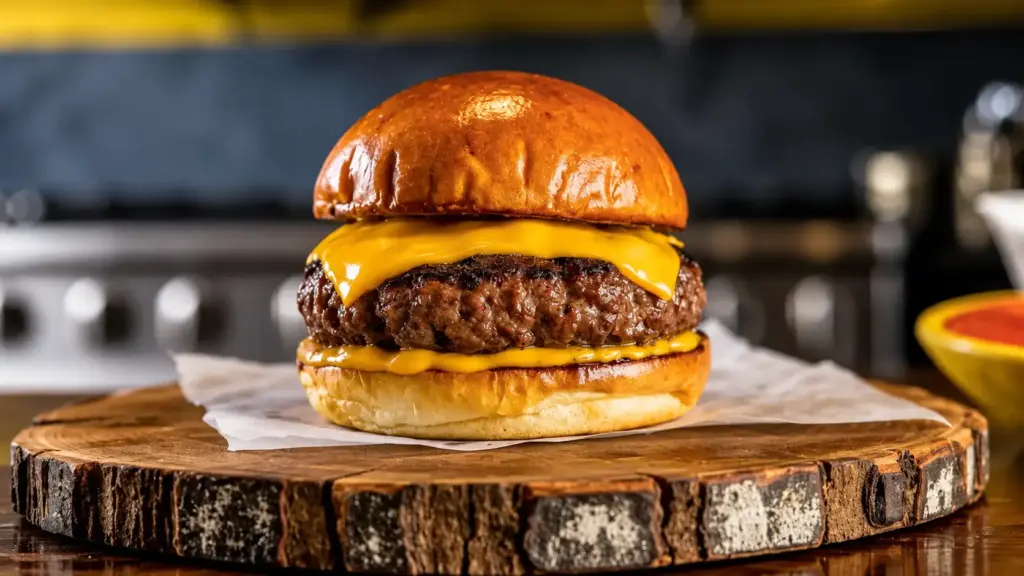
Although they often appear as synonyms, “gourmet” and “artisan” do not mean exactly the same thing. In the context of burger restaurants, artisan primarily refers to the production method: preparation on a smaller scale, handling of the meat, defining the blend and shaping the burgers by the establishment or cook themselves.
The term “gourmet,” on the other hand, is used to communicate a more elaborate or distinctive concept. It may involve selected cuts, ingredients considered special, signature combinations, more elaborate assembly and careful presentation. There is no single technical criterion, however, that determines at what height, type of meat, cattle breed or number of ingredients a burger becomes gourmet.
Thus, an artisan burger may have a simple recipe, without claiming to be gourmet. Likewise, using the word “gourmet” does not guarantee that the meat was ground, combined and shaped by hand. More than the labels, it is the blend, the ingredients and the preparation technique that make it possible to understand what each burger offers.
Read also: From the grill to the pot: how to choose the best beef cuts