Share


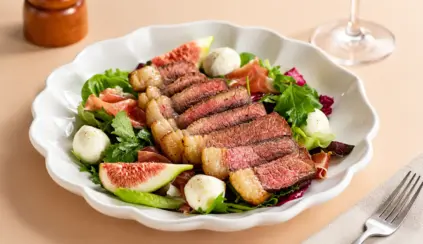
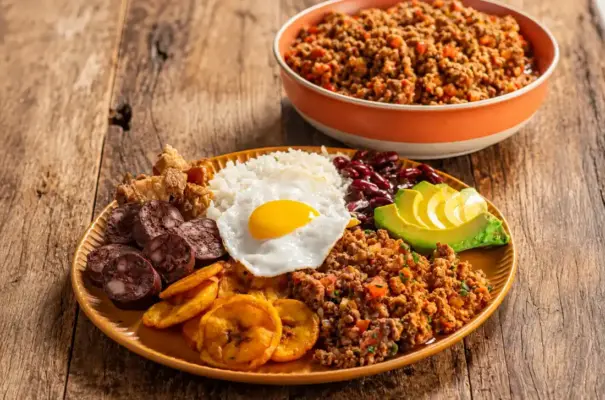
The success of a dish depends not only on the skill of the person preparing it, but also on choosing the right meat. Each beef cut has its own characteristics in terms of muscle fibers, fat, collagen, tenderness, and flavor. Understanding how these differences affect cooking is the first step toward achieving the best results. That is why knowing the main beef cuts helps you choose the best option for each recipe, whether you are preparing quick steaks, pot roasts, roasted meats, ground beef, or dishes that require longer cooking times.
The key is understanding how each cut reacts to heat, cooking time, and the cooking method used. This knowledge also helps overcome the old distinction between “first-rate meat” and “second-rate meat,” an expression widely used in the Brazilian market to differentiate more highly valued cuts from others considered less noble. Cuts that were once little explored have gained prominence in both professional and home kitchens, precisely because they can deliver flavor, convenience, and excellent value when prepared properly.
Below, find out which beef cuts are best suited to different cooking methods, from the grill to the pot.
Browse the content:
- Best beef cuts for high heat and quick cooking
- Best beef cuts for slow cooking and stews
- 3 most popular beef cuts for slow cooking
- Beef cuts for indirect heat and long cooking
- Cuts for the oven, covered cooking, smoking, and other indirect-heat methods
- Best beef cuts for steaks, ground beef, and the skillet
- 3 beef cuts for quick everyday dishes
- And what are the premium beef cuts?
- Science-based choices
- So, which cut should you choose?
Best beef cuts for high heat and quick cooking
Some beef cuts are better suited to quick cooking at high temperatures, such as grilling, cooking on a griddle, or using a very hot skillet. In general, they are found in the loin and in parts of the hindquarter.
In practice, this means that these muscles undergo less physical exertion throughout the animal’s life and therefore tend to have more tender fibers. In addition, many of these cuts have a fat cap or marbling—the fat distributed throughout the muscle fibers—which helps preserve juiciness and intensify flavor during cooking.
Because they have less rigid fibers, these cuts do not require long cooking times. On the contrary, the ideal approach is to expose them to high heat for a short period. This allows the surface to develop a crust while the inside remains tender and juicy—the process known as searing.
4 beef cuts that work well for quick, high-heat cooking
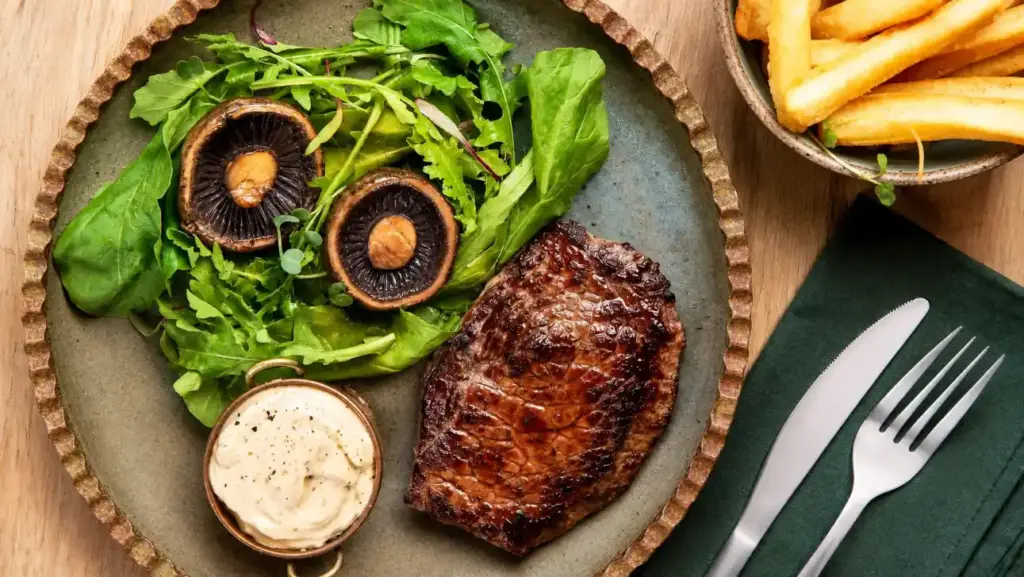
The time required to cook meat depends largely on its thickness: the thinner the cut, the more quickly heat reaches its center. That is why different cuts can be prepared in just a few minutes when sliced into steaks or strips.
Not all of them, however, have the same texture when they spend little time over the heat. Naturally tender cuts or those with well-distributed fat tend to respond better to high temperatures because they can develop a golden crust on the outside while retaining their juiciness inside without requiring prolonged cooking. These include:
- Picanha: located on the hindquarter, near the top round, it is known for its fat cap, which contributes to flavor and juiciness. For quick cooking, it should be divided into steaks or smaller portions that can be prepared on the grill, griddle, or in a skillet.
- Fraldinha: located near the rib, this cut is flat, relatively thin, and has long, pronounced fibers. Because of these characteristics, it can be cooked quickly either as steaks or, depending on its size, as a whole piece. To preserve its tenderness, it is important not to overcook it.
- Ancho steak: taken from the front portion of the striploin, it has marbling and a central strip of fat separating muscles with different textures. Usually sold as thick steaks, it works well on the grill, griddle, or in a skillet, provided its thickness is taken into account when controlling cooking time and temperature.
- Chorizo steak: obtained from the rear portion of the striploin, it has tender fibers and a layer of fat along the side. It is also usually prepared as a steak over high heat, a condition that encourages the formation of an outer crust without excessively prolonging the cooking of the interior.
For those looking for a specific guide to barbecue meats, it is also worth reading the article on the best cuts for barbecue.
Best beef cuts for slow cooking and stews
Beef cuts best suited to slow cooking, stews, pot roasts, and pressure cooking generally come from areas such as the forequarter and legs. Because these areas are more heavily exercised, they contain muscles with denser fibers and a greater amount of collagen-rich connective tissue, according to a study published by The Scientific World Journal.
This characteristic explains why these cuts are not always the best choice for quick dry-heat cooking—a technique that exposes food to high temperatures without using water or another cooking liquid—such as grilling or cooking on a griddle. When exposed to high heat for a short time, they can become tougher. In longer, moist-heat preparations, such as stews and pressure-cooker recipes, collagen turns into natural gelatin, contributing to a more tender, juicy, and full-bodied texture.
In practice, these are cuts that need time, liquid, and controlled temperature to deliver their best results. That is why they work particularly well in sauces, stocks, diced-meat dishes, stews, and classic pot-roast recipes. For soups and stocks, collagen-rich cuts such as shin, chuck, and osso buco also tend to produce better results. During prolonged cooking, these meats release flavor and help thicken the stock, while becoming tender when given sufficient time.
3 most popular beef cuts for slow cooking
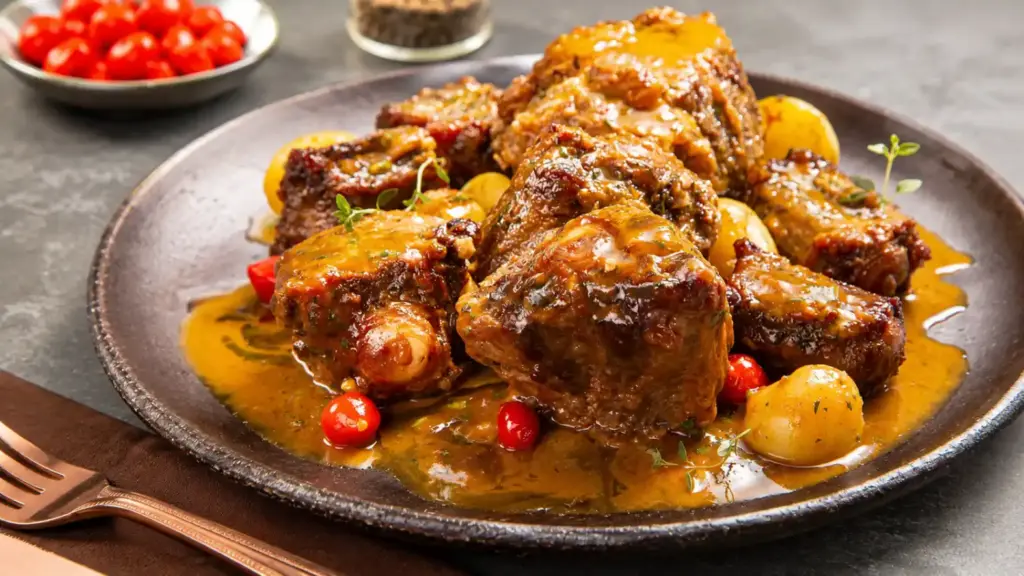
- Chuck: one of the best-known forequarter cuts, it stands out for its versatility. It works very well in stews, pot roasts, braised dishes, and preparations with sauce, becoming more tender and flavorful when cooked for longer.
- Front and rear shin: rich in collagen, it is an excellent choice for stocks, soups, stews, and hearty sauces. When cut with the bone, it becomes osso buco, a preparation in which slow cooking helps extract flavor and texture from the meat.
- Shoulder: located on the front part of the animal, it is well suited to stews, diced-meat dishes, pulled beef, and one-pot recipes. When cooked with time and moisture, it delivers tenderness and excellent culinary versatility.
Beef cuts for indirect heat and long cooking
In addition to cuts suited to pot roasts and stews, there are larger cuts that require a different approach: time, patience, and indirect heat. In general, these are larger pieces with bones, a layer of fat, more structured fibers, or alternating layers of meat and fat.
In these cases, the goal is not to quickly sear the surface, but to allow heat to gradually reach the center of the piece. This way, the meat cooks all the way through without the outside burning before the interior reaches the desired texture. That is why these cuts tend to work best in preparations such as oven roasting, covered cooking, open-fire cooking, smoking, or slow roasting.
Cuts for the oven, covered cooking, smoking, and other indirect-heat methods
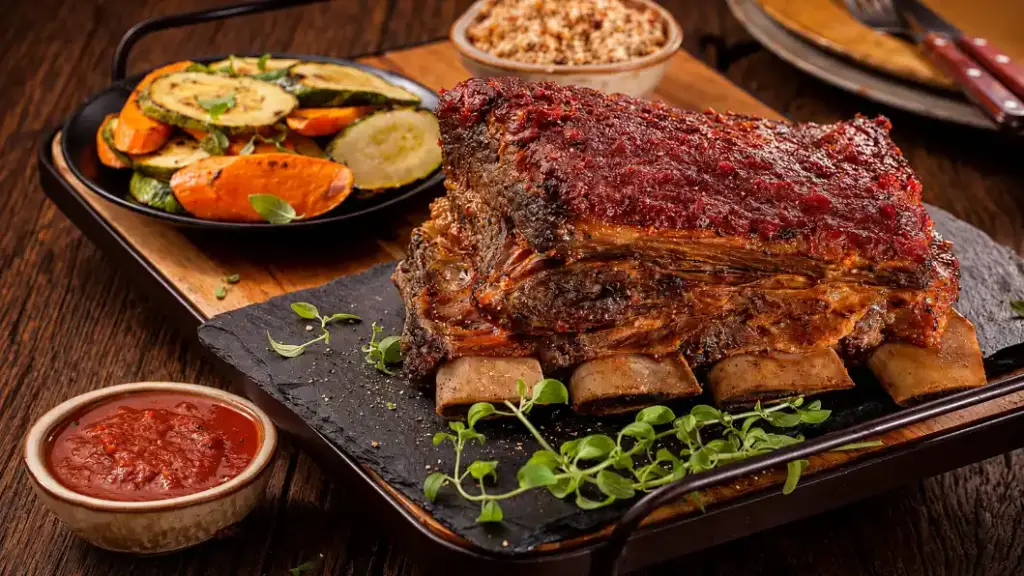
- Ribs: one of the most traditional cuts for slow cooking, ribs contain bone, fat, and firmer fibers, and therefore need time to become tender. They can be prepared using covered cooking, in the oven, on a barbecue with indirect heat, or over an open fire. One classic sign that they have reached the ideal point is when the meat comes away from the bone easily.
- Hump steak: typical of zebu cattle, which make up most of Brazil’s herd, hump steak is located in the animal’s hump. It is a cut with marbling and distinctive fibers that requires prolonged cooking or slow roasting so that the fat distributes more evenly throughout the meat and the texture becomes more tender. For this reason, it is often prepared using covered cooking, in the oven, on a barbecue, or by partially cooking it before finishing.
Best beef cuts for steaks, ground beef, and the skillet
In everyday home cooking, some dishes call for cuts that are practical, versatile, and quick to cook. This is the case with skillet steaks, sautéed strips, stroganoff, breaded steaks, quick diced-meat dishes, and ground beef.
This group includes cuts that do not require long cooking times to be enjoyable. In general, they are meats with more tender fibers that work well when sliced into thin steaks, strips, or small cubes. The key is to cut across the fibers correctly and control the cooking time to prevent the meat from losing moisture and drying out.
3 beef cuts for quick everyday dishes
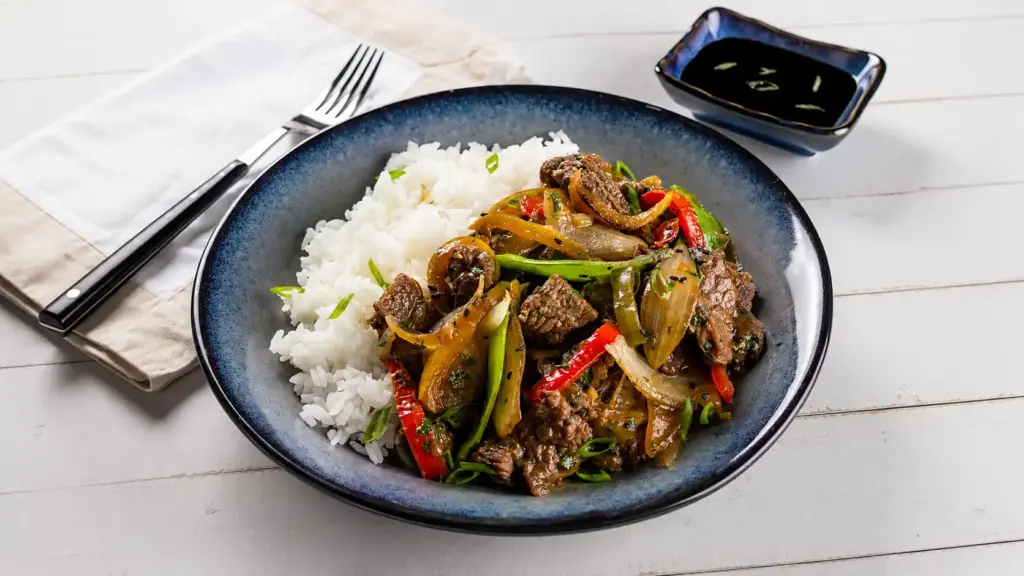
- Filet mignon: one of the most tender beef cuts, it has little visible fat and works well in medallions, thick steaks, stroganoff strips, and quick skillet preparations.
- Top round: a lean cut with short fibers and excellent versatility. It is widely used for ground beef, meatballs, lean homemade burgers, thin steaks, and breaded steaks. Because it contains little fat, it requires attention to cooking time to prevent it from drying out.
- Rump: a versatile hindquarter cut, it can be divided into rump center, tri-tip, and picanha, depending on how the piece is separated. The rump center yields tender steaks, strips, and cubes.
For those looking for convenience and excellent value for money, Minerva Foods’ PUL line includes a variety of cuts that add convenience to everyday cooking.
And what are the premium beef cuts?
The expression “premium cuts” is generally used to describe more highly valued meats, whether because of their tenderness, juiciness, presentation, or association with premium product lines. Technically, however, beef quality does not depend solely on the cut. It also involves genetics, breed, the animal’s diet, fat finishing, and consistency.
Therefore, rather than classifying meat simply as “premium” or “ordinary,” it is best to consider the combination of cut, origin, production standards, and culinary purpose. A specialty cut such as Prime Rib, Flat Iron, or Denver Steak may gain value through its boning technique and presentation; a premium product, meanwhile, also depends on the quality of the raw material from which the cut originated.
To learn more about this world, also read the article Certified-origin beef and “Prime Rib, Brisket, Denver Steak… what lies behind the different names for beef?”
Beef cuts and their best uses
| Beef cut | Best use |
| Picanha | Grill, griddle, and thick steaks |
| Fraldinha | Grill, quick roasts, and strips |
| Ancho steak | Grill, griddle, and skillet |
| Chorizo steak | Grill, griddle, and parrilla |
| Filet mignon | Medallions, stroganoff, and quick steaks |
| Top round | Ground beef, breaded steaks, and thin steaks |
| Rump | Steaks, strips, cubes, and grilling |
| Chuck | Pot roasts, stews, and braised dishes |
| Shin | Soups, stocks, osso buco, and pressure cooking |
| Shoulder | Diced-meat dishes, stews, and pulled beef |
| Top round | Pot roasts, long roasts, and roast beef |
| Ribs | Covered cooking, oven roasting, open-fire cooking, and slow cooking |
| Hump steak | Covered cooking, oven roasting, barbecue, and slow roasting |
Science-based choices
Choosing the most suitable beef cuts for each preparation depends on more than personal preference. It is related to the animal’s anatomy, the meat’s muscular composition, the physical and chemical changes that occur during cooking, and the quality of the raw material from which the cut originated.
From the standpoint of muscle structure, three components help explain much of this behavior: actin and myosin, the proteins that form muscle fibers, and collagen, which is found in connective tissue. When exposed to heat, these structures react in different ways. This is precisely why some cuts work better in quick preparations, while others require time, liquid, and controlled temperature.
According to a study published in the journal Meat Science, myosin begins to denature at lower temperatures, approximately between 40°C and 50°C, contributing to the first changes in texture. Collagen, in turn, shrinks and can dissolve at higher temperatures, especially when exposed to moist heat for longer periods, transforming into gelatin. Actin denatures at higher temperatures, a process associated with the toughening of the fibers and loss of juiciness.
In practice, as meat is heated, the muscle fibers contract and begin expelling some of the water held inside them. That is why cuts with less connective tissue tend to benefit from quick, precise cooking that preserves internal moisture. Examples include filet mignon, striploin, rump, ancho, and chorizo.
Cuts richer in collagen, generally from areas that undergo greater exertion, such as the forequarter, legs, and ribs, require a different cooking approach. With time, moisture, and controlled temperature, collagen gradually turns into gelatin, making the meat more tender and contributing to richer sauces, stocks, and fuller-bodied textures.
So, which cut should you choose?
In general, smaller cuts with less collagen tend to produce better results when cooked over direct, intense heat. Larger pieces rich in connective tissue, on the other hand, tend to benefit from longer cooking at lower temperatures or with greater moisture. These principles provide a science-based guide, but the choice of cut and technique also depends on the result each person wants to achieve. In the end, the most important thing is to understand the characteristics of the meat and make the most of its different preparation methods.
- Embrapa (Cortes Bovinos)
- G1 (Receitas de Costela no Bafo)
- Minerva Foods (Picanha Super)
- Minerva Foods (Bife Ancho)
- Meu Minerva (Bife de Chorizo Premium)
- Mapa de cortes bovinos (Minerva Foods)
- ResearchGate (Muscle Structure and Meat Quality)
- ScienceDirect / Meat Science (Thermal Denaturation of Meat Proteins)
- YouTube (MasterChef Brasil – Técnicas de Cozinha)