Share


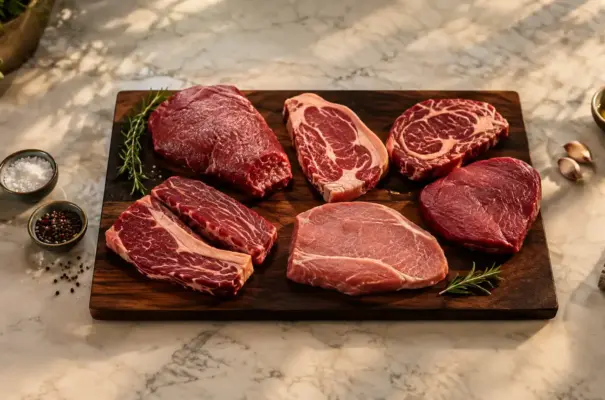
There is an “instinct” behind the choices of most consumers: looking for a cut of meat that displays an even, bright cherry-red color. A tray with cuts that are darker or slightly brownish may not be as appealing in the popular imagination. However, according to food science, this variation in color is normal and, in most cases, is not an indicator of quality.
The change in the color of meat on store shelves is directly linked to the type of packaging used and to the natural chemical reactions that occur between the meat and the environment in which it is stored. Read on to find out why these changes happen, what they mean, and how to assess the quality and safety of food on supermarket shelves.
Why does meat change color?
Science explains that the change in meat color is directly linked to myoglobin, a protein found in muscles and responsible for their pigmentation. As this protein comes into contact with oxygen or undergoes other chemical reactions, it takes on different forms, each associated with a particular color. That is why the same meat can range from purplish to bright red or brown without color alone indicating that the product is unfit for consumption. There are four main situations:
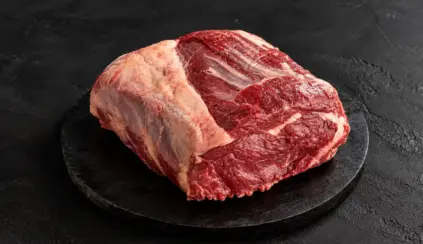
- Dark red or purplish — deoxymyoglobin: this is the form of myoglobin when it has no oxygen bound to it. That is why it is common in vacuum-packed meat and in the interior of a cut, where there is little contact with air. Once the package is opened, the meat may become redder as it receives oxygen.
- Bright red — oxymyoglobin: when myoglobin binds to oxygen, oxymyoglobin is formed. It is what gives meat that bright cherry-red color normally associated with fresh meat.
- Brown or tan — metmyoglobin: over time, myoglobin can oxidize, forming metmyoglobin, which makes the meat brownish. This transformation may be favored by limited oxygen availability, higher temperatures, and changes in pH (a measure of the meat’s acidity). Microbial activity can also contribute to changes in pigmentation. Therefore, although browning may occur naturally during storage, color alone cannot determine whether meat is fit or unfit for consumption: odor, texture, expiration date, and storage conditions must also be considered.
- Bright and more stable red — carboxymyoglobin: in specific packaging systems, myoglobin can bind to carbon monoxide, a gas that, at controlled concentrations, may be used in the gas mixture inside the package to help preserve the meat’s red color. This bond produces carboxymyoglobin, which keeps the red color bright for longer. However, the use of this technology varies according to the legislation of each country: in the United States, for example, it is used at low concentrations, which the country’s regulatory agency considers safe for specific meat-packaging systems. In Brazil, substances used for technological purposes in food may only be employed in the categories, functions, and limits expressly provided for under health regulations.
The role of packaging
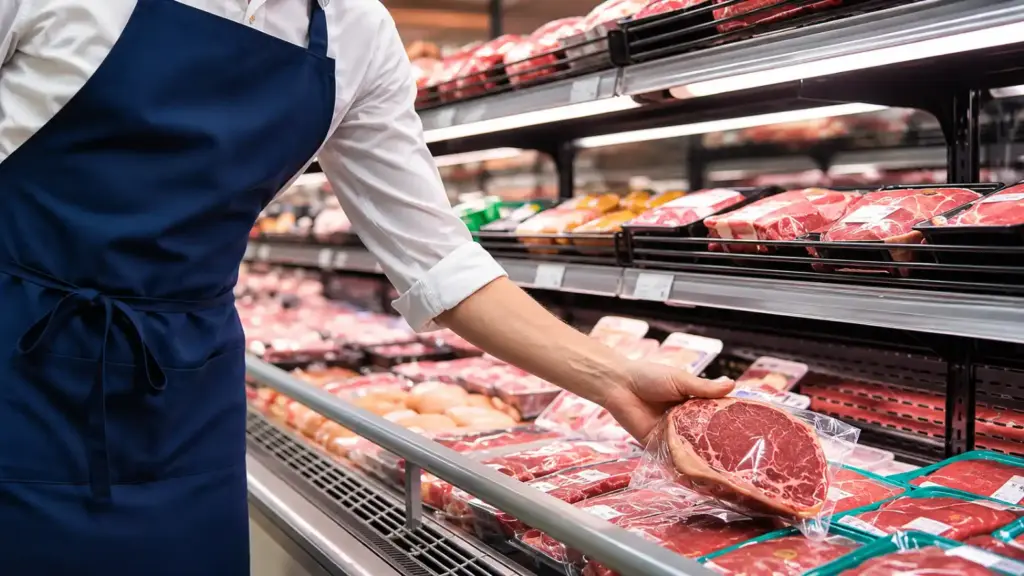
Packaging plays an important role in preserving meat and ensuring its safety. It creates a barrier between the food and the external environment and, depending on the technology used, helps control factors such as the presence of oxygen and the growth of certain microorganisms, helping to delay deterioration and extend the product’s shelf life, as shown by the scientific literature.
As preservation technologies have advanced, different packaging systems have emerged. Some remove virtually all the air around the meat, while others replace the air with a controlled mixture of gases, a technique known as modified-atmosphere packaging. These differences affect more than preservation: they also help determine the color we see on the shelf because they alter the amount of oxygen available to interact with myoglobin.
Vacuum packaging: the air is removed before the package is sealed, leaving very little oxygen in contact with the meat. Under these conditions, deoxymyoglobin predominates, and the cut tends to have a dark red or purplish color.
Skin packaging (VSP): this also uses a vacuum, but the plastic film adheres to the surface of the meat and follows the shape of the cut, leaving virtually no air pockets. With minimal oxygen available, it also favors a dark red or purplish color.
Modified atmosphere with high oxygen content: this generally uses a tray sealed with film, but instead of ordinary air, it contains a controlled mixture of gases with a high concentration of oxygen. This environment favors the formation of oxymyoglobin and, consequently, the bright red color consumers associate with fresh meat. Over time, however, the pigment may oxidize and take on brownish tones.
Modified atmosphere with carbon monoxide: used in certain markets, this system employs a small, controlled concentration of carbon monoxide (CO) in the gas mixture. CO binds to myoglobin and forms carboxymyoglobin, which produces a highly stable bright red color, delaying the change to brown tones. The use of this technology is subject to each country’s regulations and is not authorized in the same way in all markets.
And this dynamic does not end on the shelf. When the package is opened at home, the environment around the meat changes again. A cut removed from vacuum packaging, for example, begins to receive oxygen and may change from dark red or purplish to a brighter red within a few minutes — a phenomenon known as blooming.
If the meat remains exposed for more than a day, the myoglobin may continue to oxidize and the surface may take on brown tones: when meat is kept refrigerated between 2 °C and 4 °C, a thin brown layer begins to form just below the red surface after 1 to 3 days. As the days pass, the brown layer advances toward the surface. In fresh meat, the appearance of brown color on the visible surface may take up to 1 week, while in more aged or previously stored meat, the conversion to brown occurs more quickly.
| Lighting also changes how we see meat |
Have you noticed that meat may appear to have one color on the shelf and another when you bring it home? Lighting may be one explanation.
The color we see depends on the light that falls on the meat and is reflected into our eyes. Therefore, different types of light bulbs can enhance the red or make the same cut appear darker, duller, or grayer, without any actual change having necessarily occurred in the product.
Lights with a greater presence of red tones tend to highlight the reddish color of meat, while some cooler lighting may make it appear less intense. That is why the appearance observed on the shelf will not always be exactly the same under the lighting in your home kitchen.
Light can also have a second effect: it may not only change our perception but also contribute to an actual change in color. Prolonged exposure to light, especially when accompanied by heat or certain wavelengths, may promote the oxidation of myoglobin and accelerate the appearance of brown tones.
In practice, color is important information, but it should be interpreted together with other signs, such as the condition of the packaging, expiration date, storage, odor, and texture. A small difference in color between the shelf and your home does not mean that the meat has deteriorated.
How can you tell whether meat is safe to eat?
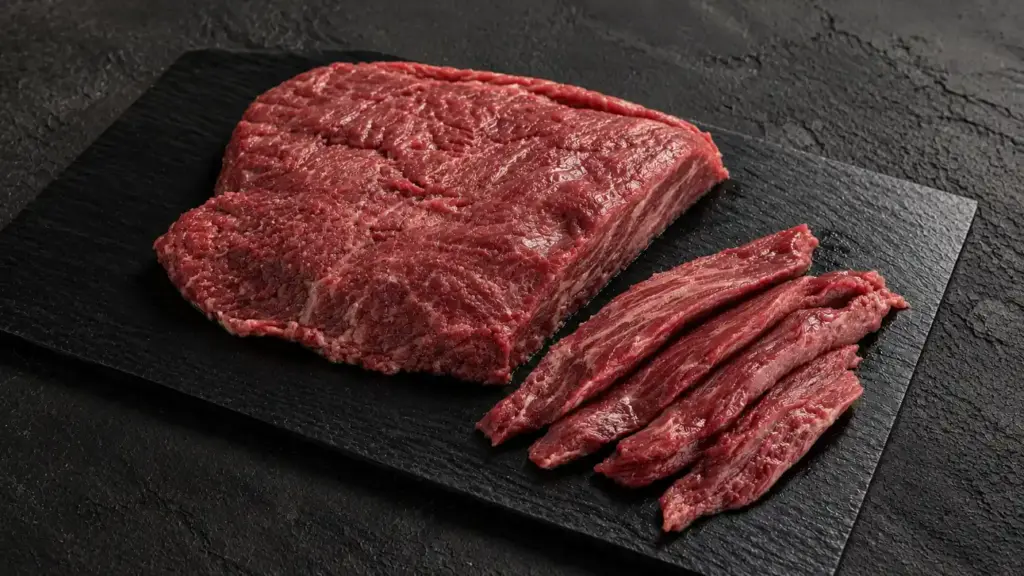
Since color alone does not determine meat quality, consumers should use their other senses to make a safe choice at the supermarket and at home:
Odor: fresh meat should have a mild, characteristic smell. Strong, sour, or unpleasant odors indicate deterioration.
Texture and viscosity: the surface should be firm and slightly moist, but never sticky or slippery to the touch.
Temperature and expiration date: check that the tray is properly refrigerated in the display case and observe the expiration date indicated on the label
Read also: The role of science, technology (and you!) in ensuring food quality and safety