
Share


Brazil holds a prominent position in the global beef market: it is the world’s largest exporter, the second-largest producer, and the third-largest consumer, according to the Ministry of Agriculture and Livestock. In such a relevant market, the search for differentiation and consumers’ growing demand for food with known origin and proven quality have driven the importance of certified-origin beef.
Why is certified-origin beef important?
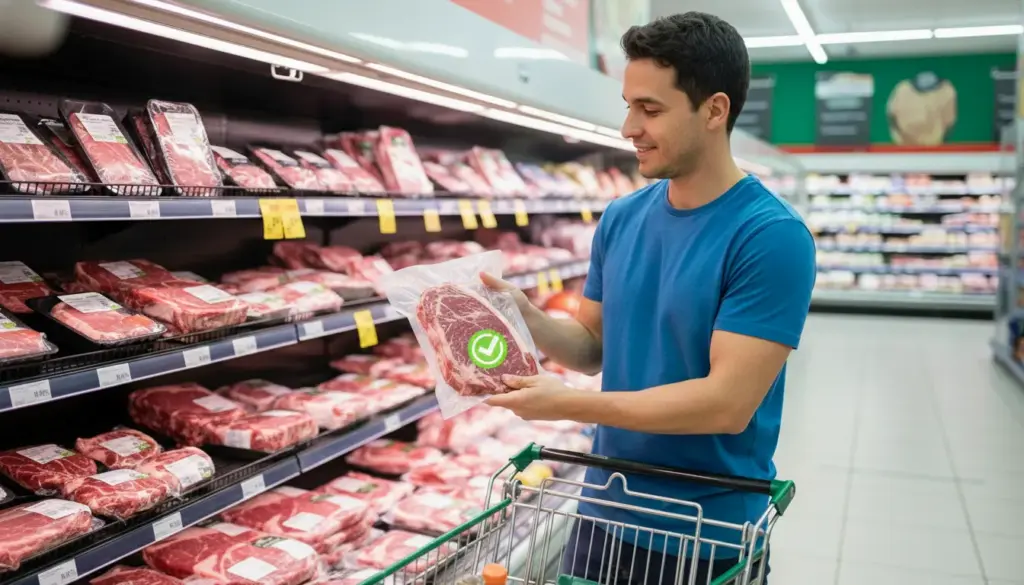
Digitally generated image
Beef certification is a process in which a certification body issues a seal to attest that the product meets predetermined criteria of quality, food safety, animal welfare and/or sustainability, depending on the type of certification.
Having an independent third party – that is, a specialized external auditor focused on specific criteria and supported by validated methodologies – further legitimizes the certification process as a strategic tool to ensure compliance with the assessed requirements and as a reliable form of public recognition. As explained by Food Chain ID on its website – which offers testing, verification, and certification services across the food industry supply chain – the verification process may include sample collection and laboratory analysis to check, for example, aspects such as residues of veterinary drugs and the nutritional quality of the meat, reinforcing food safety.
Through certification seals, consumers gain assurance regarding the origin and attributes of the meat and of the production processes. For producers, certification adds value to the product and opens doors to stricter markets, such as international ones, in addition to serving as a management tool that drives continuous improvement, since certifications generally need to be renewed periodically. Some of them also result in reports that can guide management in the pursuit of higher scores or more rigorous classifications.
In this way, certification strengthens the entire supply chain, as the reduction of negative experiences and the increase in consumer satisfaction resulting from proven quality and safety help unlock the market’s growth potential, as highlighted in a publication by the Brazilian Association of Dorper and White Dorper Breeders (ABCDorper).
Beef certifications
Photo: Minerva Foods
There are two types of certifications: mandatory and voluntary. The first refers to certifications required by law, which primarily aim to guarantee public health and food safety.
Mandatory certifications
In Brazil, the main example is the Federal Inspection Service (Serviço de Inspeção Federal – SIF), along with state and municipal inspection services (SIE/SIM), which oversee the slaughter and processing of products of animal origin throughout the country, ensuring that the product reaches consumers in appropriate hygienic and sanitary conditions.
A study published by the Brazilian Journal Health Review reinforces the value of sanitary certification, which not only guarantees transparency but also consumer trust, since it proves that the food has undergone rigorous safety procedures and quality control, making it suitable for human consumption.
Another legal requirement that is key to the movement and slaughter of animals is the Animal Transit Guide (Guia de Trânsito Animal – GTA), which certifies the herd’s sanitary status. Both SIF/SIE/SIM and the GTA are overseen by the Ministry of Agriculture and Livestock (MAPA) and state animal health and agricultural defense agencies.
Voluntary certifications
Voluntary certifications are those that producers or meatpackers choose to adhere to, usually to serve specific market niches, add value to their products, stand out in terms of quality, sustainability, or animal welfare, or meet specific requirements of importing markets. For example, labels such as Certified Humane attest to animal welfare, while Angus certification attests to breed.
There are also regional quality or sustainability programs such as Certifica Minas, the Certification Program for Agricultural and Agribusiness Products of the State of Minas Gerais, which stems from a technological, logistical, and operational approach focused on modernizing beef cattle production processes in the state.
According to the Agrolink website, the main voluntary program for individual traceability in Brazil – which can be required in official sanitary programs or to meet export demands from blocs such as the European Union – is the Brazilian System of Identification and Certification of Bovine and Bubaline Livestock (SISBOV).
Minerva Foods, which has received the “Gold Seal” for the fifth consecutive year for its Corporate Greenhouse Gas (GHG) Emissions Inventory under the Brazilian GHG Protocol Program, has an initiative called the Renove Program. The program works alongside cattle ranchers to implement regenerative, low-carbon agricultural practices while preserving native ecosystems. On these farms, all emissions generated during the production process are measured. Based on third-party audits of the data collection, it is also possible to obtain certification for low-emission or carbon-neutral beef.
References
- Carne bovina é um dos principais produtos pecuários nas exportações brasileiras
- Carne bovina é produto pecuário de destaque nas exportações brasileiras
- Análise de Resíduos de Pesticidas e Drogas Veterinários na Produção de Carne no Brasil
- Você sabe qual é a importância da certificação da carne de cordeiro?
- Serviço de Inspeção Federal (SIF)
- A importância da certificação sanitária para garantir a segurança alimentar em produtos de origem animal
- Carne Bovina: Definidas as garantias para certificação oficial
- Minerva Foods conquista selo ouro em seu inventário de carbono
- Programa Renove