Share


- Undercooked meat: is it bad for your health?
- Doneness isn’t the only important factor
- Whole cuts and ground meat don’t present the same risk
- Some groups need extra caution
- So, is undercooked meat harmful?
Undercooked meat: is it bad for your health?
The phrase “undercooked meat is bad” is often repeated when the topic is food. But in practice, the scientific answer is more complex than a simple “yes” or “no”.
The main risk associated with consuming raw or undercooked meats is not the beef itself, but the possibility of microbiological contamination by bacteria such as E. coli, Salmonella and others responsible for foodborne illness, as well as parasites and protozoa that cause food infections.
According to the Centers for Disease Control and Prevention (CDC), raw or undercooked meats can contain microorganisms capable of causing food poisoning. This does not mean that every undercooked cut automatically represents a danger. Not surprisingly, there are classic dishes worldwide that involve raw meat. According to the Ministry of Health, it is important that meat is always frozen, and that vendors follow sanitary standards to ensure the meat is suitable for consumption.
Doneness isn’t the only important factor
Food safety depends on a combination of factors: the origin of the meat, proper refrigeration, hygiene during preparation, storage and the internal temperature reached during cooking.
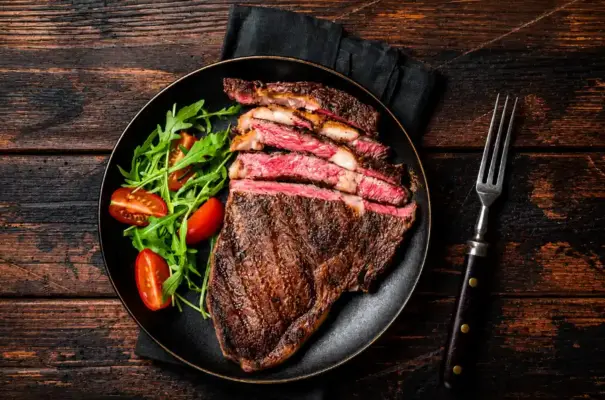
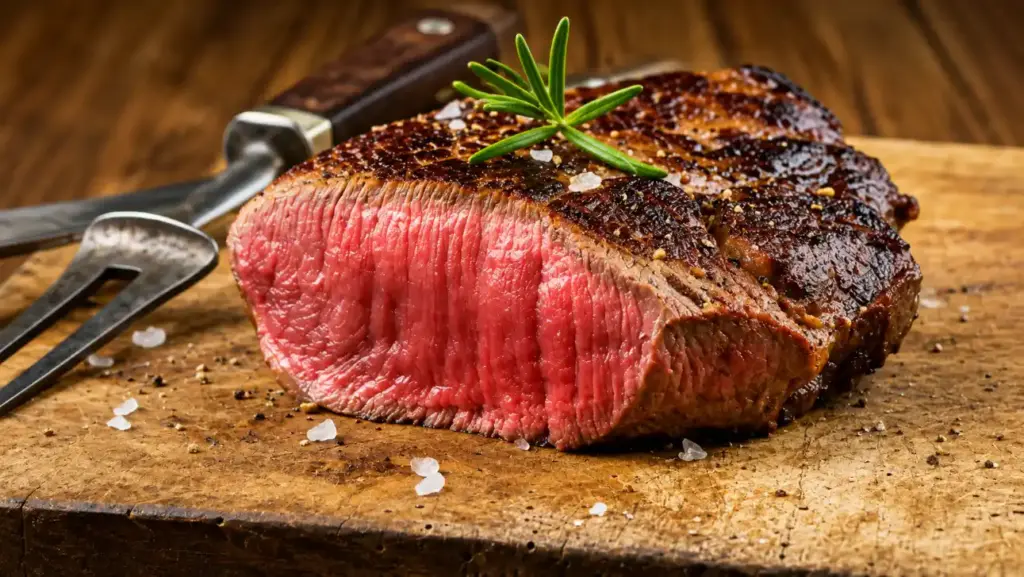
According to Foodsafety.gov and the USDA, whole beef cuts can be safely consumed when they reach a minimum internal temperature of 63 °C, followed by a three-minute rest before eating.
In the case of ground meat, the recommendation rises to 71 °C, precisely because the risk of internal contamination is higher.
The USDA notes that appearance and color are not reliable indicators of safety. Meat can remain pink even after reaching a safe temperature, just as overly dark meat does not guarantee the absence of contamination.
Another frequently overlooked point is cross-contamination. Knives, cutting boards and utensils used for raw meat can transfer bacteria to ready-to-eat foods.
The CDC warns that separating raw from cooked foods and properly sanitizing surfaces is one of the most important measures to prevent foodborne illness.
Whole cuts and ground meat don’t present the same risk
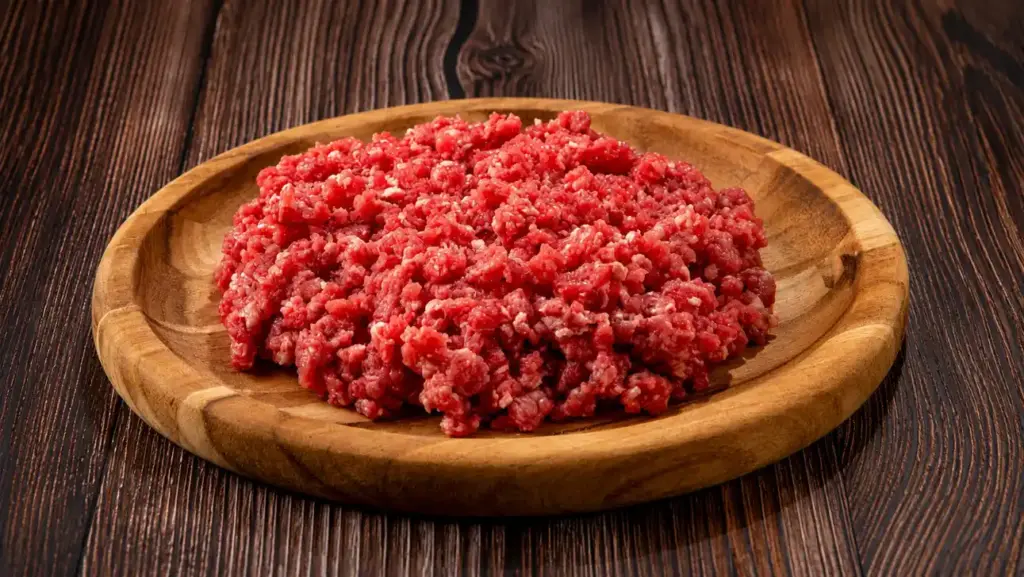
One of the most important distinctions made by food safety agencies is between whole cuts and ground or minced meats.
According to the Food Safety and Inspection Service (FSIS) of the U.S. Department of Agriculture (USDA), bacteria tend to be concentrated on the surface of meat. When a whole steak is seared at high temperature, the exterior reaches heat sufficient to significantly reduce this microbiological risk.
With ground or minced meat, the scenario changes. During grinding, the surface of the meat is mixed into the interior of the product, which can distribute microorganisms throughout. The CDC points out that in the case of E. coli, a bacterium commonly found in raw ground beef, it is eliminated by thorough cooking, which for ground meat corresponds to an internal temperature of 71 °C.
Some groups need extra caution

Although healthy adults have a lower risk of serious complications, some groups are more vulnerable to foodborne infections. According to the CDC, pregnant women, older adults, young children and immunocompromised people should avoid raw or undercooked meats due to the higher risk of complications. In these cases, the recommendation is usually to prioritize fully cooked meats and pay extra attention to storage and preparation.
So, is undercooked meat harmful?
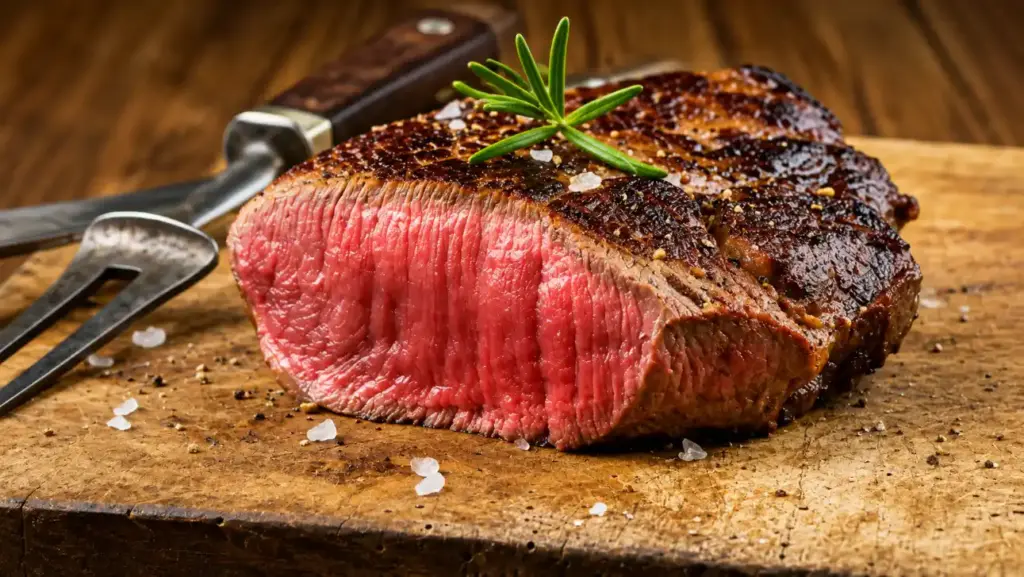
Whole cuts of beef prepared correctly present a different risk than ground meats, raw products or improperly handled foods. For this reason, the question may need to be reframed. More important than “rare or well done” is whether the meat was handled, stored and prepared safely.
Food safety involves temperature, hygiene, preservation and provenance—not just doneness preference. Scientific evidence shows that the issue is not simply that meat is “red” or “pink”, but the microbiological and sanitary context of the food.