

Share


As the world’s biggest football tournament approaches, attention turns not only to the pitch but also to what happens behind the scenes. Physical preparation, muscle recovery, and nutritional strategies move beyond coaching staffs and become topics of headlines, social media discussions, and, inevitably, conversations among people who exercise, work long hours, or simply want to live healthier lives.
In this context, an increasingly common question becomes even more relevant: what is the real role of dietary supplements in our health and performance?
Whey Protein: From the Gym to the Grocery Store
A walk through any supermarket makes it clear that protein has become the star of the shelves. It appears on the labels of yogurts, cereals, breads, and even ice cream. Whey protein powders, protein bars, and fortified products are no longer exclusive to athletes—they have become part of everyday meals for ordinary families.
The promise is appealing: build lean muscle, boost metabolism, and simplify nutrition amid increasingly demanding routines. But this convenience raises an important question: are consumers replacing the foundations of a healthy diet with simplified—and often ultra-processed—alternatives?
What High-Performance Athletes Know (and Practice)
In professional sports, nutrition is never treated in isolation. Elite athletes rely on multidisciplinary teams that balance macronutrient and micronutrient intake, hydration, and recovery time. No supplement replaces a complete nutrition plan; it is merely one component of a much larger system.
The same principle applies to everyone. A balanced diet, nutritional variety, and adequate protein intake influence energy levels, physical recovery, healthy aging, and overall quality of life—whether on the field or off.
Real Protein: What Science Says
A report published by the FAO, titled Contribution of Terrestrial Animal Source Food to Healthy Diets for Improved Nutrition and Health Outcomes, is straightforward: foods derived from terrestrial animals provide high-quality protein, important fatty acids, and a wide range of essential nutrients that are difficult to find together in a single supplement.
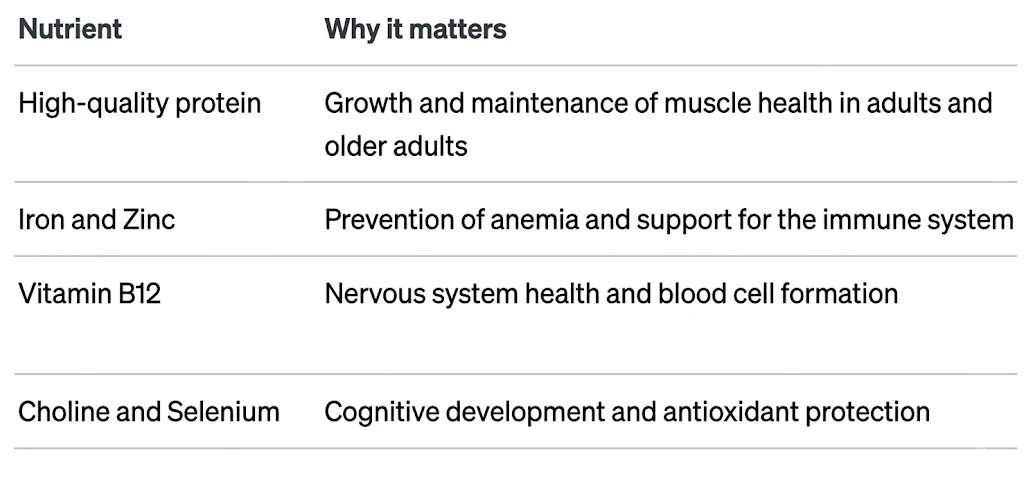
Brazilian fitness expert and longevity advocate Márcio Atalla summarizes the issue well when discussing red meat. According to him, red meat provides protein of exceptionally high biological value, containing all essential amino acids in ideal proportions, as well as heme iron—which is absorbed much more efficiently by the body—B vitamins, and even naturally occurring creatine.“A small steak can already provide the protein needed for a meal,” he explains.
Supplements Have Their Place—But Not the Leading Role
This does not mean demonizing whey protein or protein bars. Atalla himself acknowledges that these products are “an excellent source of rapidly absorbed protein and very practical in situations such as leaving the gym on a busy day.”
The issue is not eliminating these products entirely, but rather understanding their proper role. Supplements are meant to complement the diet, not replace it.
And excess consumption carries risks. Josemar de Almeida Moura, professor in the Department of Internal Medicine at the Federal University of Minas Gerais (UFMG), warns that the human kidney was not designed to continuously filter large amounts of protein. Individuals with hypertension, pre-existing kidney damage, or a predisposition to nephropathy face a higher risk of developing kidney disease over the long term when protein is consumed excessively.
The Danger of a Reductionist View of Nutrition
The scientific series Ultra-Processed Foods and Human Health, published by The Lancet, highlights the limitations of believing that isolated nutrients can solve complex health problems. According to the researchers, health recommendations should be based on real evidence rather than what they describe as “voodoo optimism”—the belief that a new discovery or miracle ingredient will somehow solve humanity’s health challenges.
The problem, therefore, is not any specific supplement. Rather, it is the combination of poor dietary habits and the illusion that convenience can replace genuine nutritional quality.
Whey protein has become one of nutrition’s favorite products. And it can indeed be helpful because of its convenience and rapid absorption. But when it comes to nutritional quality, nothing surpasses real food. See for yourself:
The Lesson We Can Learn from Sports
The world’s biggest football tournament amplifies a reflection that applies to everyone: there is no magic formula for performance. Elite athletes understand this better than anyone.
A protein bar can be useful during a hectic day. A whey protein shake after a workout certainly has its place. But the foundation of a healthy life and consistent performance remains real food—the kind that combines complete proteins, micronutrients, fiber, and all the nutritional synergies that science, at least for now, still cannot replicate in a single packet.
References: