Share


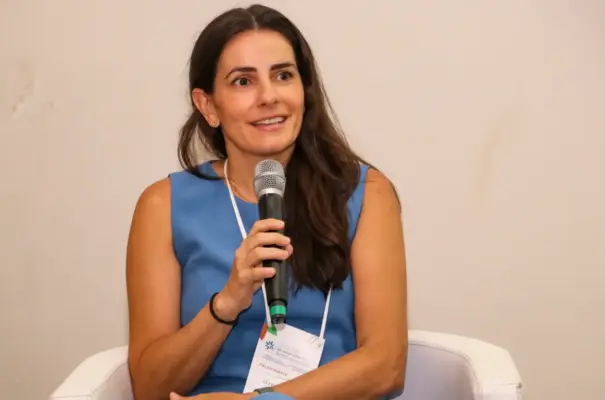
For years, Luciana Haddad was the first to arrive and the last to leave the hospital. “I never said no,” she told the My Minerva Foods portal. In a predominantly male environment, she believed she had to do more to be treated as an equal.
The turning point came with motherhood. “I only realized I said yes to everything when I had a child.” From then on, the challenge—accompanied by self-demand—became another: saying no either to work or to her child.
This inflection point helps explain the trajectory of the transplant specialist who today has nearly 30 years as a researcher, and who is also a former president of the Brazilian Association of Organ Transplantation (ABTO).
Growing up in a male environment
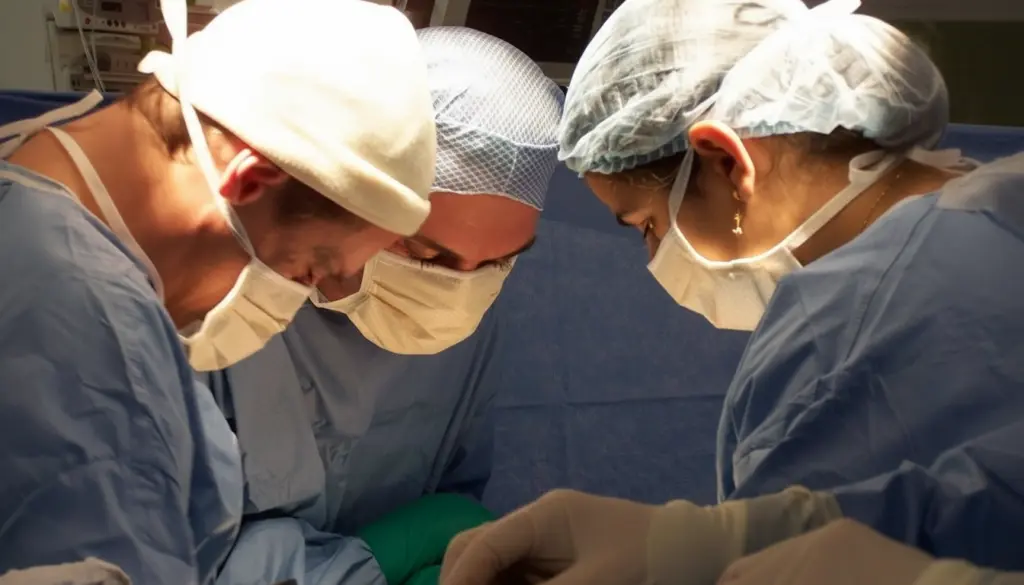
Trained in surgery and later in digestive surgery, Luciana began her career in a setting where she was the only woman among the residents. “There were hardly any attending physicians.” She recalls situations that would be unacceptable today: comments like “cute,” attempts at physical closeness and phrases such as “are you going to cry?”, reinforcing the idea that women were more fragile or emotional, were common. “Things that happened back then might not go without a complaint today.”
When she started, women in leadership positions were even rarer. “We’ve been seeing more and more; it’s important to bring that example, but they are still a minority,” she emphasizes.
High performance and limits
To be recognized, Luciana adopted a clear strategy: maximum excellence and high availability. “I thought it was the only way to be considered equal.” That meant taking on everything. “They even took advantage of me in that regard.” Over time, she realized this model was not sustainable. “We also have to know how to put ourselves forward and set boundaries.”
References that showed it was possible
Among her inspirations is Angelita Gama, a coloproctology surgeon and researcher at the University of São Paulo (USP), the first woman surgeon in Latin America to receive the Bigelow Medal, which honors a surgeon whose career represents a notable contribution to scientific progress and surgical education, and the only woman among the 34 recipients to date. Luciana accompanied her final years of practice and describes the experience as a privilege.
At home, examples were also strong: a mother who was an active physician and a grandmother who was an independent teacher. “I already had the view that it wasn’t easy, but it was possible.”
Motherhood, generation and cultural change
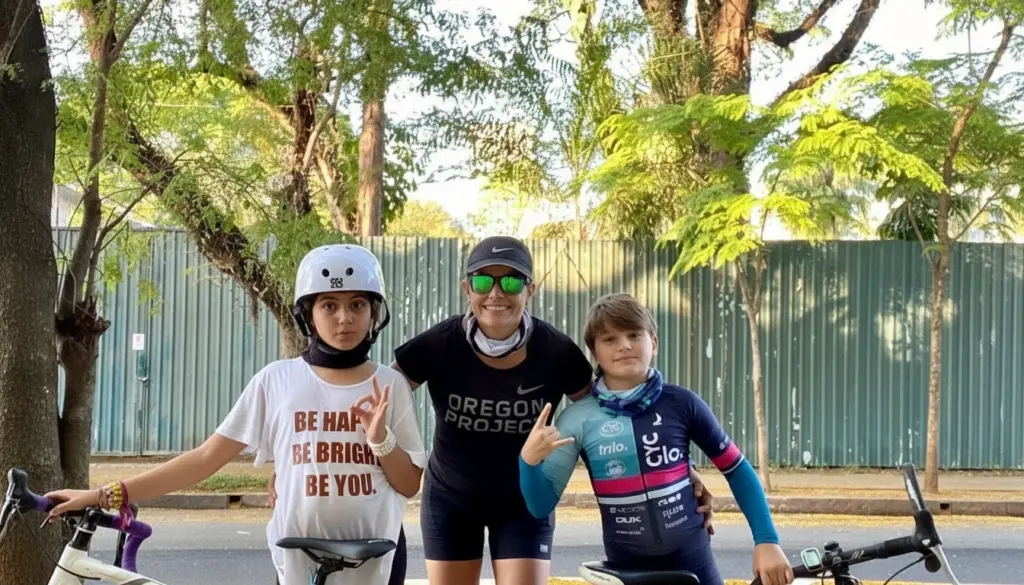
Mother of a 16-year-old daughter and a 14-year-old son, Luciana notices generational differences. “My daughter was born into a world where women already see themselves differently, as feminists, as independent.”
At the same time, Luciana Haddad recognizes the need to educate boys in the face of a still-present “structural machismo.” For her, change involves partnership: “We need to unite. Having men as partners, not as enemies.” She also highlights the importance of partnerships among women themselves, going against a social history in which women were encouraged to compete and defend their territories. “There were men who said you couldn’t have more women on the team… Today I work with a lot of women and it’s great.”
From the hospital to social media: Luciana Haddad brings science to the people
Luciana continues to work in the transplant service at the Hospital das Clínicas of the Faculty of Medicine at USP, alongside her academic career as a professor and researcher.
In the past three years, she has invested in science communication through the FalaLu channel on Instagram and YouTube. The decision arose during the Covid-19 pandemic, when she began producing explanatory videos and sharing them on social media. She later broadened the topics to physical activity, nutrition, health habits and quality of life. “Often information is here in the Academy, but if it doesn’t become something that helps people’s lives, it doesn’t make sense.” For her, science is measured and needs to be explained with balance.
A message for girls
When speaking to girls interested in science, Luciana is direct: “It’s a passionate universe. There’s no boredom, there’s no lack of challenges.” As a general message, she is categorical: “Girls can do whatever they want. The world is increasingly ours.” There are still barriers, but for her, unity strengthens the path, and the challenge is fuel to go further.
Read more: Female leadership in agribusiness: from management to science, a transformation underway