Share


Many people do not know, but the liquid that comes out of meat bought at butcher shops and supermarkets is not blood, but myoglobin, a muscle protein that stores oxygen and gives meat its characteristic red color.
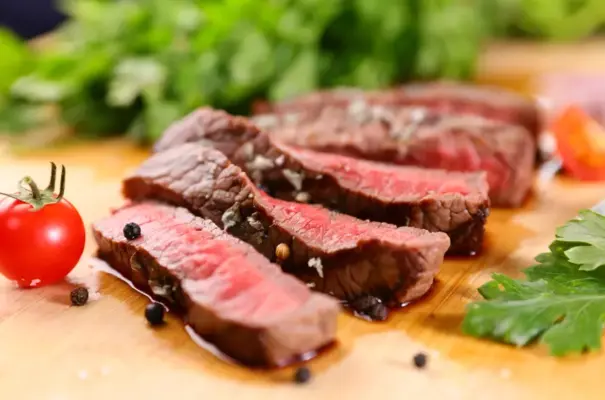
This substance runs out of raw meat and mixes with water. When cut or processed, myoglobin blends with the muscle fibers, which ensures the inherent juiciness and texture of the food. Its concentration varies between species and between muscles of the same animal. For example, red meats, such as beef, have high levels of the substance, while white meats, like chicken, have less. In any case, once exposed to oxygen, oxymyoglobin is formed, giving the meat a bright-red color. That hue attests to the quality of the product.
What is the nutritional influence of myoglobin?
It influences not only flavor and texture, but also the nutritional properties of meat. It is rich in heme iron, which is highly bioavailable and contributes to the prevention of conditions such as anemia. This type of iron is four to five times more bioavailable than non-heme iron found in plants, according to a scientific review available in the USP repository.
In addition to strengthening health, heme iron assists in the synthesis of neurotransmitters such as dopamine and serotonin. This leads to improved cognitive function in the long term; it is worth noting that iron deficiency can cause mental fatigue, difficulty concentrating and irritability.
Although myoglobin itself is not an abundant source of isolated protein, it is present in meats that are rich in essential amino acids. This supports the maintenance and repair of body tissues—something especially important for those who spend a few minutes daily doing physical activity.
More active animals, such as oxen, tend to have more myoglobin. Therefore, the concentration of this component is higher in those products.
Why does meat shrink when cooked?
About 70% of meat is made up of water. When heated, muscle fibers contract and expel that water, which reduces the volume of the food. Proteins such as actin and myosin denature with heat, causing the fibers to shorten. The document “Transformation of Muscle into Meat,” published by the Federal University of Rio Grande do Sul (UFRGS), explains the phenomenon in detail.
Myoglobin denatures at temperatures between 60 °C and 70 °C – which changes the color of the meat from red to brown. While it does not directly cause the shrinkage, its denaturation accompanies the loss of water, since it is dissolved in the intracellular fluid.
Therefore, when ordering a generous cut at a restaurant or barbecue, it is not surprising that the size appears smaller than expected: the process is natural and cannot be entirely avoided—only minimized through specific cooking techniques.
How myoglobin helps consumers choose better at the display or butcher counter
Myoglobin is a pigment present in meat, and its interaction with oxygen determines the color the consumer sees when buying a cut. That color is one of the most immediate indicators of freshness and preservation, and it varies according to the chemical state of myoglobin. Therefore, understanding its different forms helps better interpret the appearance of meat and distinguish common situations, such as fresh meat exposed to air, vacuum-packed meat, or cuts with longer storage times.
There are three main forms of myoglobin that directly influence the appearance of meat. Deoxymyoglobin (Mb), with a red-purple color, predominates in vacuum-packed meats where oxygen is absent; when the package is opened, this form quickly converts to oxymyoglobin. Oxymyoglobin (O₂Mb), with a bright-red color, is typical of fresh meat exposed to oxygen and corresponds to the expected standard of freshness. Metmyoglobin (MetMb), brown in color, appears in meats with longer storage time or prolonged exposure to air, indicating oxidation.
In the specific case of vacuum-packed meats, it is common for the product to have a purplish tone when opened, resulting from the predominance of deoxymyoglobin. This appearance does not represent spoilage or risk, because on contact with air the pigment reacts and the meat quickly acquires the natural red of oxymyoglobin. When the meat shows darker or brown tones, it is important to observe other factors such as odor and texture, since the presence of metmyoglobin may signal longer storage time, without necessarily implying immediate loss of quality.
The amount of myoglobin also directly affects the perception of juiciness. Thus, naturally redder cuts—such as beef forequarter cuts, chuck or flank—tend to retain more liquid when properly prepared. Cuts with less myoglobin, like chicken and pork, have a lighter color and release less pigment during thawing.
Another important tip: packaging with excessive accumulation of liquid (known as drip) can indicate a break in the cold chain, prior thawing or inadequate handling. Since myoglobin mixes with the muscle water, an abnormal volume of this liquid is a warning for the consumer to evaluate the product more carefully before purchase.
For those seeking meats with more intense flavor, the more active muscles—which concentrate greater amounts of myoglobin—are good choices. For quick preparations, cuts with lower concentration tend to cook more evenly.
References:
Quality and digestibility of red meat protein are higher compared to plants, says study
What is behind the quality of beef?
What is the difference between consuming protein from plant and animal sources, based on reliable sources?
Bioavailability of iron in food: its importance to the body (2009)
TRANSFORMATION OF MUSCLE INTO MEAT*