Share


How Luzanir Turned Grief into Innovation in the Cerrado
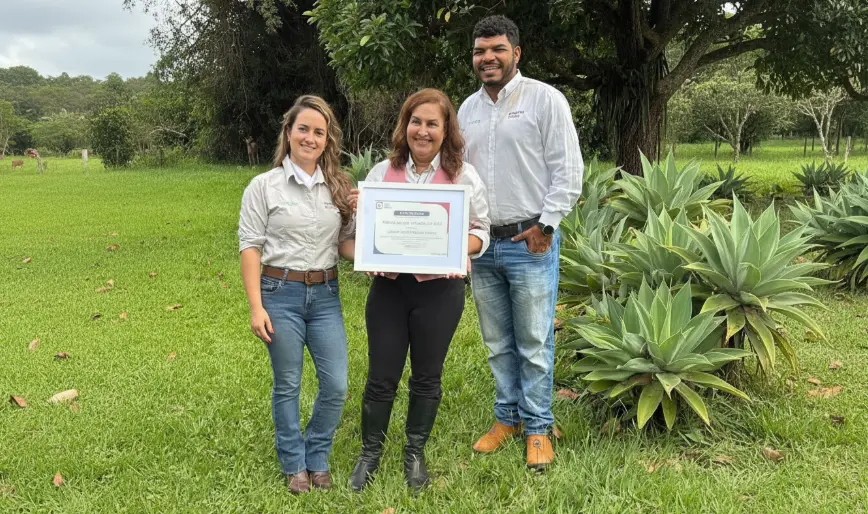
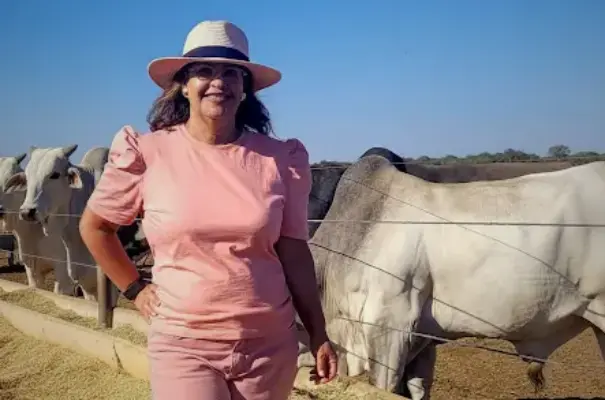
Luzanir Luíza de Moura Peixoto does not see pasture merely as an expanse of land for cattle. For her, the soil is a living organism that requires listening, patience and, above all, method. Sitting in the passenger seat of the pickup, driven by her daughter Luísa as she navigates the dirt road to the São José farm in Bela Vista de Goiás/GO, the psychologist, visual artist and PhD in Education told My Minerva Foods a bit of her story — which passes through classrooms and clinics — and revealed the manager who, a few years ago, had to swap chalk for tall boots under the weight of a forced and painful succession.
Luzanir’s history in agribusiness began quietly. For three decades she was what she calls a “secondary figure.” While her husband, Donizete Peixoto da Costa, ran the businesses he founded in the 1980s, Luzanir focused on raising their two daughters and on her academic career. Everything changed with Donizete’s untimely death in October 2023. Overnight, grief came with pressure: neighbors, acquaintances and even supposed family friends subtly suggested that the best path for three women alone would be to lease out the farm.
They chose the opposite path. Luzanir took the reins alongside her daughters, Luana and Luísa Peixoto. “Women need to stop being secondary. I was secondary for 30 years,” Luzanir says.
“Agribusiness needs responsible people, and a woman who wants to work in the sector is fully capable of taking responsibility, with courage and competence. That does not depend on gender,” she adds.
Management shock: from retail to the corral
If Luzanir brought intellectual baggage and a humane perspective, her daughter Luana brought pragmatism. A former manager at a large multinational retailer, Luana applied corporate compliance rigor to the day-to-day of the farm. The first measure was symbolic and hygienic: removing 13 tons of scrap metal that had accumulated over decades. What many saw as “history,” the new management saw as inefficiency and visual liability.
The farm was “turned upside down.” Luana instituted a golden rule: not a single screw enters the property without an invoice. The cash flow, previously intuitive, began to be managed with management tools. Investment in cutting-edge machinery — modern harvesters and planters — was a strategic decision to address the shortage of skilled labor and ensure the operation relied not only on “muscle,” but on processes.
The result of this mother-daughter symbiosis showed in the numbers. Under female leadership, Fazenda São José began producing 15% more soy than under the patriarch, with lower operating costs. Efficiency was such that the inheritance tax (ITCMD), known to destabilize the finances of many family farms, was paid entirely with the inherited funds and the equivalent of one soybean harvest.
Science and sustainability: cattle as a nutrient machine
Innovation at São José is not limited to management software. Luzanir deepened the use of the Integrated Crop-Livestock System (ILP), a technology developed by Embrapa that allows rotational land use. In summer, soy occupies the soil; in winter, corn intercropped with brachiaria — the so-called safrinha — provides the residue for no-till planting and pasture for cattle.
Luzanir’s managerial and scientific streak also stands out in the circular economy. She continued a project started by Donizete in 2018 in which the wastes from confined cattle — manure and urine — are mixed with rock powder and agricultural gypsum and turned into organo-mineral fertilizer. The cycle closes: what leaves the corral returns to fertilize pasture and cropland, drastically reducing dependence on imported chemical fertilizers.
“The cow is this marvelous machine… it returns to me the residue better than what I gave it to eat,” the producer explains. “With organo-mineral fertilizer production, our costs go down, it’s sustainable and the land improves.”
This technical vision is accompanied by an environmental education project. Luzanir reforests degraded areas with native Cerrado fruit seedlings, integrating preservation with production. The farm today is a study field for Embrapa and universities — an open-air laboratory where scientific protocols are followed without the cultural resistance common among more traditional producers.
The sustainable practices allowed the farm to join the Renove Program, an initiative by Minerva Foods that brings together ranchers who adopt regenerative, low-carbon agricultural practices while preserving native ecosystems. Seeking continuous improvement, joining the program was also a way to add new knowledge. It was through the program, for example, that she received technical assistance to restore degraded pasture areas, helping raise stocking rates and improve the soil’s physical and biological attributes.
Humanization against prejudice
Productive success, however, came with a social cost. Luana and Luzanir faced subtle sabotage within some of their social circles. There were attempts to mislead technicians to force them to abandon the business. In rural settings, a young, single woman managing millions of reais still causes discomfort. Luana describes a necessary isolation to protect herself from gossip and moral judgments her father never had to face.
The response came through caring for people. While the market doubted them, the farm workers became their greatest allies. Luzanir improved housing and accommodations and established a work logistics that respects rest. The ILP system helped in this process because it guarantees productive activity year-round, eliminating the need for seasonal layoffs.
The future of Fazenda São José is being designed with the precision of someone who knows the land demands professionalism. With successive productivity records and the projection of marketing 1,500 head of high-lineage cattle, Luzanir proved that sensitivity and technical rigor are two sides of the same coin.
At the end of the day, when the sun sets over the soybean fields and pasture, Luzanir does not see only the success of a business. She sees the legacy of her husband and of a teacher who taught herself — and an entire sector — that gender does not define competence, but the way one looks toward the horizon. Brazilian agribusiness, increasingly technological and sustainable, is finally taking on the faces and voices of the women who have always been there but who have now decided to step into the leading role.
References:
ILPF: produtividade, resiliência e renda no campo
Upcycling bovino: gado transforma recursos não comestíveis em proteína de alto valor
Esterco: do descarte a insumo agrícola e energia
Do boi, nada se perde: tudo se transforma