Share


Growing without expanding. Although at first glance the phrase may seem paradoxical, it reflects the global challenge of securing food for a growing population without opening new productive areas. It is the well-known task of doing more with less.
According to Embrapa, “the adoption of technologies in Brazilian livestock has enabled the modernization of the sector with increases in production and productivity, on sustainable grounds. Over the last 40 years, […] beef production has increased fourfold.”
This evolution also responds to changes in the international agribusiness regulatory and commercial environment, such as the EU Deforestation Regulation (EUDR), which imposes stricter socio-environmental requirements for trade with European countries, as well as greater pressure from the United States and East Asia for more traceable, efficient and sustainable production systems. It is in this context that the performance of Brazilian livestock began to depend not only on export volume but on the capacity to meet higher standards of quality, transparency and environmental impact, which has enabled the Brazilian sector to position itself even in the premium meat segment, as highlighted by Minerva Foods Latam Cattle Purchasing Director Fabiano Ribeiro Tito Rosa. “The strength of Brazilian premium beef lies not only in animal genetics or the diversity of production systems, which range from technologically advanced feedlots to pasture-based production with traceability of direct and indirect suppliers, but also in the sector’s ability to align productivity, sustainability and innovation. This tripod is today the true passport to international markets.”
The three pillars of the new livestock sector that position Brazil in the global premium beef market
With the second largest cattle herd in the world in 2024, according to IBGE data published last year, Brazil occupies a central position in this productive transition. The strategic tripod formed by productivity, sustainability and innovation has changed the way the country produces beef, including achieving high competitiveness in the premium segment, and demonstrates how efficiency and environmental preservation can go hand in hand.
Productivity: more meat without expanding pasture
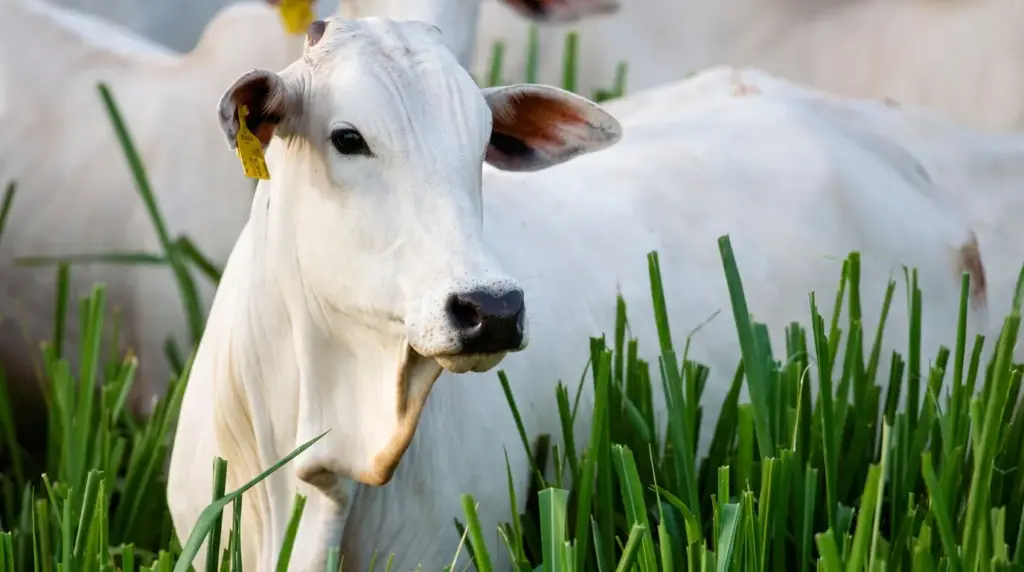
Brazilian livestock is going through a profound transition, moving away from empiricism and the old “eyeballing” approach to adopt management based on evidence, economic indicators and market intelligence. In this way, the producer stops being just a “landowner” and becomes a data manager and rural entrepreneur, consolidating a model where operational efficiency is no longer a differentiator but a minimum requirement.
The concept of the “short-cycle steer” (animals that reach slaughter weight in less time) has allowed Brazil to increase production without expanding pasture area, according to a report by the Brazilian Association of Meat Exporting Industries (ABIEC). This means that, even while maintaining or reducing the land used for production, the country can scale volume according to demand. This efficiency gain is directly linked to the recovery of degraded pastures, to genetic improvement of the herd and to the intensification of management.
Technologies such as artificial insemination and genomic selection, for example, ensure animals with better marbling (the intramuscular fat responsible for tenderness and flavor), qualities increasingly valued in premium markets. At the same time, practices like pasture rotation help preserve the soil, increase productivity and reduce the cost per arroba produced.
Read also: With the Land-Sparing Effect, Brazilian beef production grows without pressuring forests
Environmental, social and economic sustainability
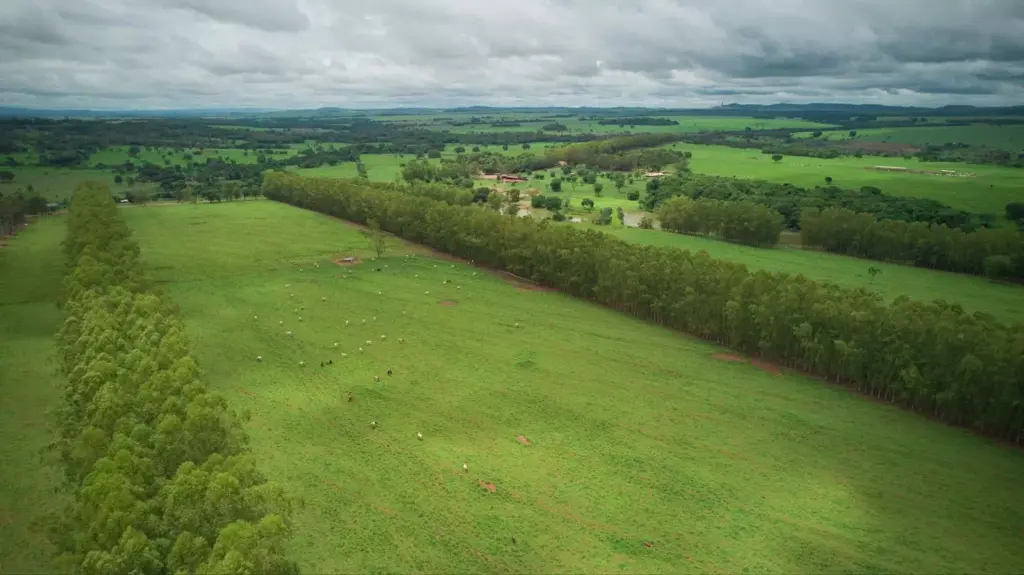
The second pillar of the new livestock sector lies in the ability to prove the origin of production and reduce environmental impacts along the supply chain. Monitoring software using satellites enables broad traceability, helping slaughterhouses verify the source of each animal and combat the triangulation of cattle from illegal areas.
Another highlight is the Crop-Livestock-Forestry Integration (ILPF) system, which has become a showcase for “low-carbon livestock” by combining trees, pastures and agricultural activities in the same area. A study carried out by Embrapa Pecuária Sudeste concluded that the carbon sequestered by the trees and the soil can offset methane emissions equivalent to more than two adult cattle per hectare. The presence of trees also provides greater thermal comfort for animals due to shade.
These practices have helped consolidate the image of so-called low-carbon livestock, increasingly valued by consumers and international regulators.
Read also: Regulated carbon market expands prospects for low-carbon livestock
Innovation – technology and end-to-end management
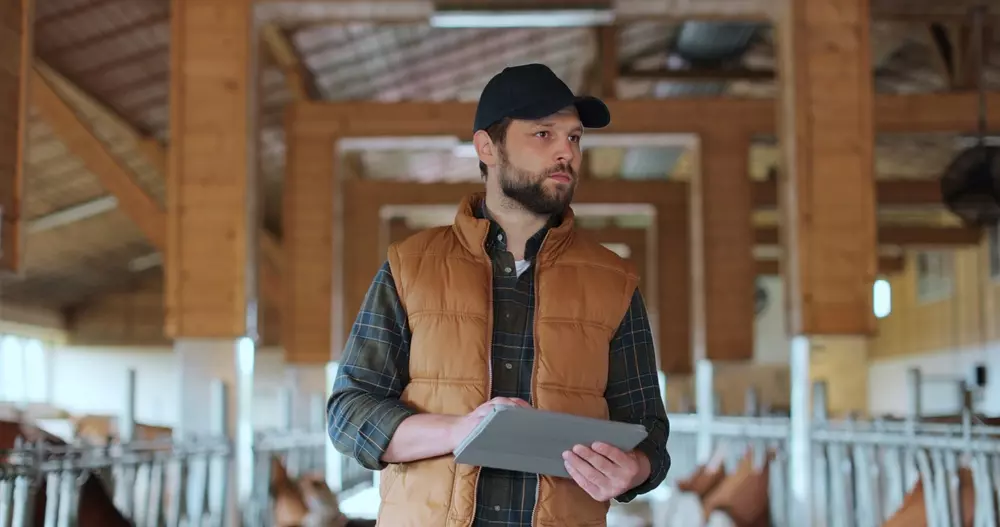
Brazilian “Agtech” (agricultural technology) has undergone substantial changes over the years, arriving at the concept of Livestock 4.0, in which connectivity is central, enabling the use of integrated tools and systems, automation and precision livestock farming based on data and real-time information with a high degree of accuracy.
The use of software for financial and operational management in feedlots, for example, increases producers’ technical efficiency, allowing them to produce more arrobas with the same amount of inputs compared with those who do not use these tools.
The Automatic Field Weighing System with Remote Data Transmission (BalPass), developed in cooperation by Embrapa, COIMMA and the Federal University of Mato Grosso do Sul (UFMS), is another example. The scale allows individual weighing without the need for the animal to stop, avoiding changes in the animal’s habits.
Technological progress also includes the use of artificial intelligence in herd management. Algorithm-based systems analyze animal behavioral data and help predict health problems before clinical symptoms appear, enabling faster and more precise interventions, as explained by the portal Precision Livestock Farming. On smart farms, situations that once seemed futuristic are already reality with the combined use of robots and sensors, allowing routine processes to be automated, such as checking water troughs.
In the industrial sector, innovation materializes, for example, in the use of sensors and artificial intelligence to ensure meat quality and the ideal fat finish of cuts, whether inside the slaughterhouse or out in the field, where smart cameras measure the animal’s fat finish curve in real time, ensuring that the product delivered to the plant meets industrial quality standards.
This movement is already a reality in large operations. At Minerva Foods, artificial intelligence is applied directly on the production line to qualify and standardize the product. Cameras installed at the facilities capture images of carcasses in real time while algorithms classify cuts with a high degree of precision. The technology increases accuracy in carcass quality assessment and turns the process into a continuous data source, making it possible to identify patterns among suppliers, regional variations in cattle and potential operational deviations, with direct impact on decision-making across the entire chain.
This technological and productive advance is also reflected in the sector’s commercial performance. According to data compiled by Portal DBO from the Foreign Trade Secretariat (Secex), Brazilian beef exports reached 235.9 thousand tonnes in February 2026, a historic record for the month and representing a 23.9% increase compared to the same period in 2025. In revenue, shipments totaled US$ 1.33 billion, driven by market diversification and the consolidation of Brazilian beef in demanding destinations.
Another relevant front is the National Cattle Traceability Plan, which foresees the progressive expansion of individual identification of the herd until 2032 using electronic ear tags with RFID (Radio Frequency Identification) technology and tamper-proof chips. The measure seeks to strengthen supply chain transparency and meet the sanitary and environmental requirements of international trade.
It is this convergence between productivity, sustainability and digital technology that allows the country to sustain the tripod of the new livestock sector, making Brazilian products more competitive and scalable in an increasingly demanding global market and enabling a strategic positioning in premium markets.
Sources:
- Beef Report 2025 | Profile of Livestock in Brazil – ABIEC
- EUDR
- Brazilian beef exports reach 235.9k t in Feb/26, a record for the month
- ILPF: productivity, resilience and income on the farm
- Artificial Intelligence in Livestock: how AI is revolutionizing productivity, animal health and sustainability on the farm
- System with trees neutralizes methane emissions from more than two cattle per hectare – Embrapa Portal
- Value of livestock and aquaculture production reaches R$132.8 billion in 2024, with record production of milk, eggs and honey | News Agency