Share


The association between red meat and obesity is common in discussions about healthy eating. The logic seems intuitive: red meat contains fat, fat is calorie-dense, therefore eating meat makes you gain weight. But the relationship between a specific food and weight gain is much more complex than this linear chain suggests. After all, energy balance — that is, the difference between calories consumed and expended — is the main determinant of body weight. It is influenced by dietary patterns, physical activity level, food composition, and genetic and behavioral factors.
What the WHO says about the causes of obesity
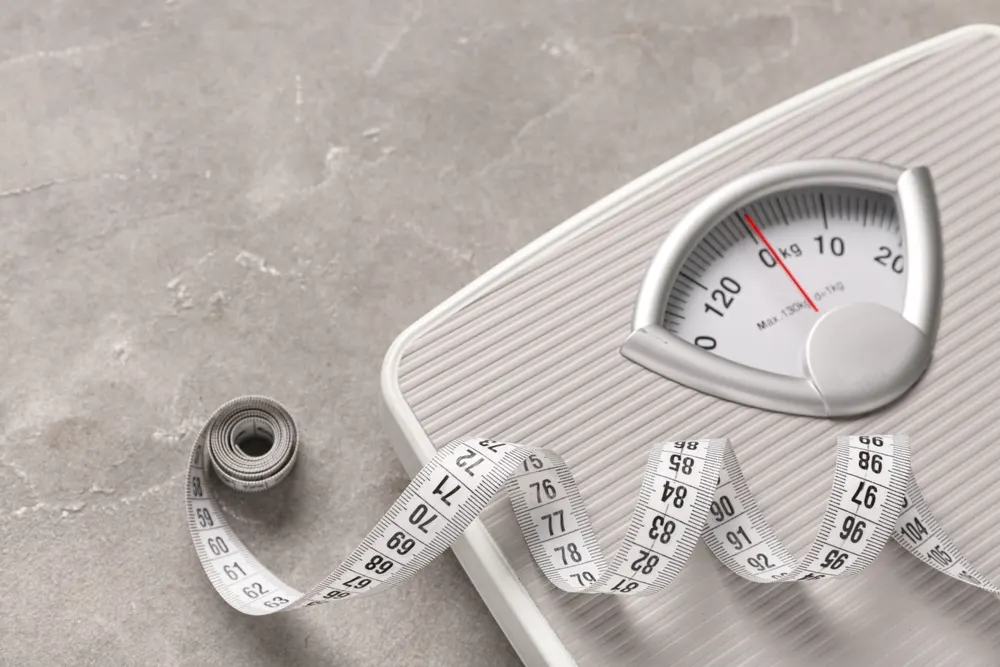
The World Health Organization (WHO) defines obesity as a chronic, relapsing disease that results from complex interactions among genetics, neurobiology, eating behaviors, access to healthy foods, market forces and a broader environment. The fundamental factor that leads to overweight and obesity, according to the WHO, is an imbalance between caloric intake and energy expenditure — and this imbalance is shaped by increasingly obesogenic environments (those that promote or facilitate unhealthy food choices and sedentary behaviors, which hinder the adoption and maintenance of healthy eating habits and regular physical activity, as noted by the Ministry of Health), driven by industrialized food systems, sedentary lifestyles and socioeconomic changes.
According to the Brazilian Association for the Study of Obesity and Metabolic Syndrome (Abeso), 2.3 billion adults worldwide were overweight in 2025, of whom 700 million are classified as obese with a body mass index (BMI) above 30. This scenario points to structural determinants of the problem: increased availability of highly palatable, low-cost ultra-processed foods, reduced everyday physical activity, and individual genetic factors.
What do the studies say?

An analysis published in Obesity Reviews, which pooled 21 observational studies with more than 1.1 million participants, found an association between higher consumption of red and processed meat and greater risks of obesity, mean BMI, and waist circumference. However, the authors themselves emphasize that results varied considerably from study to study, which limits generalization.
A meta-analysis published in Clinical Nutrition ESPEN reached a different conclusion: red meat consumption was not associated with the risk of overweight, and there was no association between total meat consumption and obesity. A critical point explaining part of this inconsistency is the so-called confounding factor — when other habits associated with the studied group may influence the observed outcome.
The review of 24 randomized controlled trials (RCTs), in which participants are randomly assigned to diets with or without red meat while controlling other factors, published in the journal Obesity from Texas Tech University, also found no significant effect of unprocessed red meat on BMI, weight, or body fat. The authors, however, note that the included studies had relatively short durations, which may be insufficient to detect modest effects on weight that would only manifest over months or years.
Fresh meat versus processed meat: a fundamental distinction
As in the debates about cancer and about cardiovascular disease covered in previous articles in this series, the distinction between fresh red meat and processed meat is central in the context of obesity. Ham, sausage, bacon, salami and similar products differ substantially from unprocessed meat in composition: they contain much more sodium, additives such as nitrites and nitrates, added fats and often sugars.
Ultra-processed products in general, which include processed meats, are formulated to be highly palatable, with combinations of fat, salt and sugar that encourage consumption beyond caloric needs. A review published in Current Nutrition Reports concludes that higher consumption of ultra-processed foods is one of the main drivers of the obesity epidemic, with consistent observational evidence and support from high-quality clinical data. Meanwhile, a narrative review published in Foods indicates that ultra-processed foods contribute to excessive caloric intake and nutritional deficits, worsening obesity rates.
In this sense, part of the associations observed between meat and obesity in population studies may be driven by the consumption of processed meats and other animal-origin ultra-processed foods, and not by fresh unprocessed meat.
The role of protein: red meat and satiety
One aspect that the simplified narrative tends to ignore is that red meat is a source of high-quality protein. Protein, in turn, is the macronutrient with the greatest effect on satiety, increases the energy expenditure required to digest and absorb nutrients (diet-induced thermogenesis), and helps preserve so-called “lean mass” during weight loss, as shown in a review published in the American Journal of Clinical Nutrition. For this reason, high-protein diets are effective for reducing body weight. Check the benefits:
- Increase in appetite-suppressing chemicals (anorexigenic hormones such as GLP-1, cholecystokinin and peptide YY);
- Reduction of the hunger hormone (ghrelin);
- Increase in resting energy expenditure; and
- Preservation of muscle mass.
Obesity is a multifactorial disease

Obesity results from a complex set of factors that includes genetic predisposition, the food environment, physical activity level, sleep quality, chronic stress and access to unprocessed foods. The WHO explicitly recognizes that, in most cases, obesity is a multifactorial disease determined by environments, psychosocial factors and genetic variants, and not by the presence or absence of a single food in the diet.
What the scientific literature more consistently indicates as a dietary determinant of obesity is the consumption of ultra-processed foods, sugar-sweetened beverages, diets high in energy density and low in nutritional value, rather than moderate intake of fresh red meat within a balanced dietary pattern. Sedentary behavior, sleep deprivation and stress also appear as independent risk factors for weight gain, regardless of diet composition.
So, does red meat cause obesity?
The available scientific evidence does not allow us to state that fresh red meat, consumed in moderation, causes obesity. Observational studies present inconsistent results, with some meta-analyses showing a positive association and others finding no effect, and they face important limitations in controlling for confounding factors. When attention turns to randomized clinical trials, which allow a more direct assessment, no effect of unprocessed red meat on weight, BMI, and body fat was detected.
The distinction between fresh meat and processed meat is essential: animal-origin ultra-processed products, due to their composition and formulation, have much stronger links to weight gain than a cut of fresh unprocessed meat. And the overall dietary context — the general dietary pattern, the level of physical activity, the consumption of ultra-processed foods — is more determinant than any single isolated food.
Consuming fresh red meat in moderation, as part of a balanced dietary pattern and combined with an active lifestyle, is compatible with maintaining a healthy weight. The most consistent point in the scientific literature is the need to limit ultra-processed foods as a central strategy for preventing obesity.
Learn more: What is the origin of the myths about meat?
Reference links:
- Agrifatto – Per capita beef consumption in Brazil (2024) may reach the highest level since 2014
- Akheruzzaman M et al. – Effect of unprocessed red meat on obesity and related factors: A systematic review and meta-analysis (Obesity, 2025)
- Obesogenic environment: do you know what it is?
- CiCarne Yearbook of the beef production chain 2024-2025
- Daneshzad E et al. – Red meat, overweight and obesity: a systematic review and meta-analysis of observational studies (Clinical Nutrition ESPEN, 2021)
- Dicken SJ, Batterham RL – Ultra-Processed Food and Obesity: What Is the Evidence? (Current Nutrition Reports, 2024)
- Monda A et al. – Ultra-Processed Food Intake and Increased Risk of Obesity: A Narrative Review (Foods, 2024)
- Moon J, Koh G – Clinical Evidence and Mechanisms of High-Protein Diet-Induced Weight Loss (Journal of Obesity & Metabolic Syndrome, 2020)
- WHO – Obesity and overweight fact sheet (2024)
- Paddon-Jones D et al. – Protein, weight management, and satiety (American Journal of Clinical Nutrition, 2008)
- Rouhani MH et al. – Is there a relationship between red or processed meat intake and obesity? A systematic review and meta-analysis (Obesity Reviews, 2014)