
Share


The floods that hit Rio Grande do Sul in 2024 left more than R$100 billion in losses across the state, according to the National Confederation of Municipalities (CNM), exposing a challenge that is likely to worsen as climate change intensifies: how can agricultural production and the credit that finances it be protected from droughts, floods and other extreme events? Brazil has an extensive rural financing system, but it still struggles to integrate prevention, insurance and other protection instruments into a consistent risk management policy. When a crop fails, who absorbs the losses?
The Intergovernmental Panel on Climate Change (IPCC) has already documented the increase in the frequency and intensity of extreme weather events, while the Swiss Re Institute has recorded the global rise in insured losses from natural catastrophes, putting pressure on insurance and reinsurance markets worldwide. For the Food and Agriculture Organization (FAO), agriculture is among the sectors most vulnerable to this scenario, facing growing risks of production losses and economic volatility.
To understand how Brazil can address this vulnerability, we spoke with Pedro Loyola, coordinator of the Observatory of Rural Credit and Insurance at FGV Agro (OCSR-FGV Agro). The expert argues that insurance should no longer be treated as a complementary form of credit protection, but should instead become part of a permanent risk management structure combining prevention, insurance, reinsurance and public mechanisms for catastrophic losses.
The paradox behind the numbers
Loyola sums up the problem in one sentence: worsening climate risk raises the technical price of insurance, but it is precisely this worsening risk that makes it irresponsible to finance a crop without protection.
The numbers show the tension. Between 2018 and 2025, Brazil’s agricultural insurance market paid approximately R$26 billion in claims. In some years, the figures simply did not add up: the loss ratio reached 140.2% in 2022. In other words, claims alone exceeded the amounts collected—known as premiums in the insurance sector—even before insurers’ operating expenses were deducted. At the same time, between 2021 and 2025, the area supported by the Rural Insurance Premium Subsidy Program (PSR) fell by approximately 76.6%, while the number of policies dropped by roughly 71%. “The Brazilian contradiction is this: the climate is becoming more ‘expensive,’ but public policy is still trying to save money precisely on the tool that transfers this risk before a crop failure,” Loyola says.
The protection tower: how to distribute risks before a crop failure
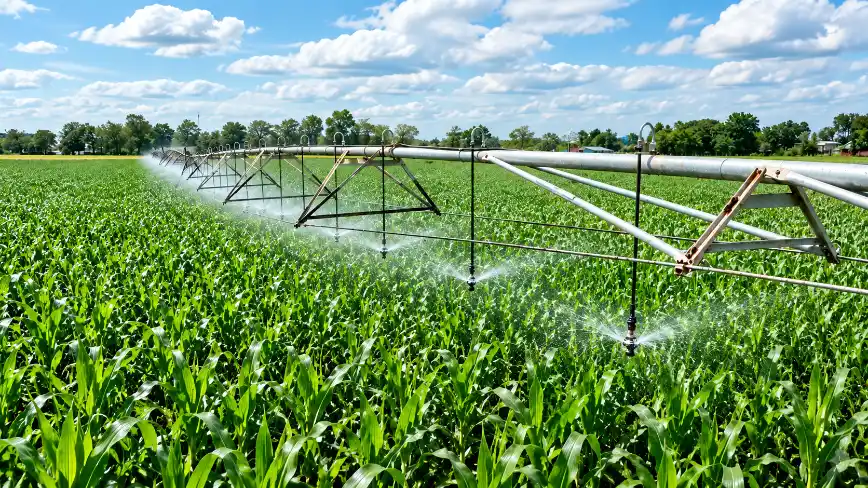
For Loyola, rural insurance can—and should!—be the main tool for transferring climate risk in Brazilian agriculture, but it cannot be the only one. Before insurance, he says, come the Agricultural Climate Risk Zoning (ZARC), soil management, irrigation, production diversification and the correct choice of planting window.
After insurance come reinsurance, stabilization mechanisms and a catastrophic layer for events that exceed the market’s ordinary capacity. It is a layered architecture:
- Frequent risks reduced through prevention;
- Intermediate risks transferred to insurance;
- Severe risks distributed through reinsurance; and
- Catastrophes addressed by public mechanisms defined in advance.
“Insurance does not make it rain, improve soil or prevent flooding. It would be intellectually dishonest to sell it as a universal solution. What it does very well is one decisive thing: turning a covered physical loss into liquidity at the moment the producer needs to keep operating,” he explains.
Rio Grande do Sul: when risk extends beyond the fields
The 2024 floods help illustrate why production protection cannot depend on a single type of insurance. For Loyola, the tragedy in Rio Grande do Sul offered a lesson that goes beyond the amount of claims paid, which in the insurance market alone exceeded R$6 billion in requests related to the floods. The catastrophe affected more than farmland: it damaged soil, machinery, silos, livestock, roads, power infrastructure, logistics, housing and producers’ ability to repay their debts. “There is no single policy capable of solving everything. Producers need a portfolio of protection,” he says.
Agricultural, machinery, property, storage and livestock insurance provide different types of coverage and, according to him, it is common for producers to discover too late that they had not purchased, for example, specific coverage for excessive rainfall or flooding.
There is also a fiscal lesson, which Loyola considers central: when private coverage and prevention are limited, disaster quickly spreads to credit, suppliers, banks and public budgets. “Risk does not disappear because it was not insured; it merely shifts from one balance sheet to another and usually reaches the Treasury at the worst possible moment, when political pressure has already taken hold.”
Why can’t insurance alone absorb all risks?
This capacity has limits. It is defined by insurers’ capital, reinsurance contracts, portfolio diversification, solvency rules and, above all, the price producers can afford. According to Loyola, the underlying problem is correlation: a drought or flood can affect thousands of producers at the same time, and when there is insufficient diversification, the market responds by raising prices and deductibles or simply ceasing to offer capacity in certain regions.
It is in light of these limits that the protection tower advocated by the expert becomes important. It consists of the producer, insurer, coinsurance and reinsurance, a supplementary fund and, only in the event of an extraordinary catastrophe, a residual public response. “There comes a point when a risk is insurable, but the premium is no longer economically affordable. That is where the public-private architecture comes in.”
How international capital views Brazil’s climate risk
International reinsurers see Brazil as a combination of major opportunity and high uncertainty: scale, diversified crops and a significant market, but also substantial exposure to droughts, excessive rainfall, frost, heat waves and regionally correlated events.
According to Loyola, Swiss Re’s global index for 2024 estimated an agricultural protection gap of approximately US$76 billion, with around 55% of the world’s insurable agricultural value still unprotected. Among the four major producers assessed—the United States, China, India and Brazil—resilience was considered lowest precisely in Brazil, with public budget constraints limiting the reach of insurance.
“There is no shortage of international interest in Brazil. What makes capital more expensive is uncertainty. Reinsurers do not shy away from well-measured risk; they shy away from poorly understood risk and unpredictable rules. In other words: the climate is already expensive; we do not need to add institutional instability.”
He cites examples from other countries that provide this predictability: the permanent federal programs in the United States and Canada, Spain’s coordinated pool of insurers—which brought together approximately €19.3 billion in insured capital in 2025—the Turkish loss-sharing model and France’s separation of everyday losses, insurable risks and catastrophic events.
In his view, Brazil is not lagging because it lacks tools—it has insurers, reinsurers, the PSR, Proagro, ZARC and databases—but because it has been unable to make them work as a system. “In mature countries, insurance and reinsurance are part of the central architecture of agricultural policy; in Brazil, insurance frequently comes at the end of the budget queue.”
From subsidized credit to risk management
Loyola advocates a shift in logic that, he says, does not mean ending subsidized credit, but rather stopping the practice of extending it without protection. Today, he says, agricultural policy is assessed mainly by the volume announced in the Crop Plan and by interest rates; what is missing is a systematic assessment of how much of that credit is effectively protected, whether producers follow ZARC, adopt appropriate management practices and have the capacity to weather a crop failure.
“Nearly 150 years after producers gathered at the Agricultural Congress in Recife to demand technical assistance, rural credit and agricultural insurance, Brazil has built a gigantic financing system and is still debating whether risk protection belongs in the budget. That says a great deal about our priorities.”
For Loyola, the state needs to act where clear market failures exist: correlated losses, information asymmetry, high distribution costs, small producers without sufficient scale and catastrophes that exceed private capacity.
“International experience shows that there is virtually no large-scale agricultural insurance market without public participation. The question is not whether the state participates, but whether it participates before the loss, with rules, data and a budget, or afterward, through renegotiations and improvised bailouts.” For him, “the real luxury today is financing hundreds of billions of reais without defining in advance who will absorb the next crop failure. The country needs to decide whether it wants to pay for risk beforehand, through prevention, insurance and reinsurance, or continue discovering the price afterward, when it has already become default, renegotiation and fiscal pressure.”