Share


When a food product crosses borders, it carries much more than flavor, quality and commercial value. It also carries a story. And, increasingly, that story needs to be told through data. Where did it come from? Which farms did it pass through? Is production associated with deforestation? Were the laws of the country of origin respected? This is the level of transparency that the European Union seeks to expand through Regulation (EU) 2023/1115, the European Union Deforestation Regulation (EUDR). On the one hand, the EUDR raises the level of requirements; on the other, it could accelerate and bring scale to a transformation that is already under way.
Products associated with seven commodities are subject to requirements for entry into and commercialization in the European market. They are:
- cattle;
- soy;
- coffee;
- cocoa;
- palm oil;
- rubber; and
- wood.
EUDR and Brazilian cattle farming
For cattle farming, the message is clear: origin and traceability are no longer merely differentiating attributes. They are becoming part of the very infrastructure required to access increasingly demanding markets.
The challenge is significant, but Brazil is not starting from scratch. The country already has public satellite-monitoring systems, animal-movement records, land databases and an industry that has been investing in technology, protocols and supply-chain governance, such as Minerva Foods, which has its own protocols and systems. With integrated global operations, the company has unified operating procedures, market-validated solutions tested through pilot projects and an established traceability base.
What exactly is the EUDR?
The EUDR was created to reduce the contribution of European consumption to deforestation and forest degradation in different parts of the world.
The regulation establishes conditions for products covered by the rules to be placed on the European Union market or exported from the bloc. These rules apply to products related to cattle, cocoa, coffee, palm oil, rubber, soy and wood, provided they are included in Annex I of the regulation.
This means that classification does not depend solely on the commodity. The customs code and the specific description of each product must also be verified.
In the case of cattle, the scope includes live animals, fresh, chilled or frozen meat, certain offal and some prepared or preserved products.
More than a general sustainability declaration, the EUDR requires verifiable information about origin, the location of production, legal compliance and the risk of deforestation.
When does it take effect?
The EUDR is already formally in force, but its main obligations become applicable on different dates, depending on the company’s profile:
- December 30, 2026, for medium-sized and large operators;
- June 30, 2027, for micro and small operators;
- December 30, 2026, for certain micro and small companies that were already covered by the European Timber Regulation.
The classification must take into account the specific definitions in European legislation. Therefore, it is not advisable to summarize the classification using only general revenue and employee-number ranges.
The deadlines mark the beginning of the effective application of the obligations and responsibilities established by the regulation. In practice, however, preparation needs to begin earlier: origin data, controls and information systems cannot be built overnight.
What about cattle leather?
The scope of products derived from cattle has recently been updated. On July 13, 2026, the European Commission adopted a delegated act removing bovine hides, skins and leather products from Annex I of the EUDR. The update also excludes other items and adds new products, such as soluble coffee, certain palm-oil derivatives and frozen bovine tongues.
The change must be monitored in light of the institutional processing of the delegated act and its formal entry into force. Corporate communications should therefore avoid both stating that leather remains definitively covered and treating its exclusion as though it had already been fully consolidated at every stage of the regulatory process.
The removal of leather does not change the inclusion of cattle among the regulation’s seven core commodities. Beef and the other listed products remain subject to the applicable requirements.
Why does cattle require a different approach?
Cattle farming has its own dynamics. Unlike certain agricultural crops, which remain tied to the same area throughout the production cycle, an animal may pass through different farms before reaching the slaughterhouse.
The breeding, rearing and finishing stages may take place on two, three or more farms. There are also systems in which the entire cycle is carried out on a single property.
This diversity is one of the strengths of Brazilian cattle farming, as it allows for different production systems, scales and regional conditions. However, it makes traceability more complex.
For cattle products, the EUDR requires the geolocation of all establishments where the animals were kept. According to European guidance, establishments connected to cattle production may be reported using individual latitude and longitude points, rather than necessarily through polygons, as occurs in certain situations involving agricultural commodities.
The challenge is not merely knowing which farm sold the animal to the slaughterhouse. It is building visibility into the relevant establishments throughout its entire journey.
The EUDR’s three core requirements
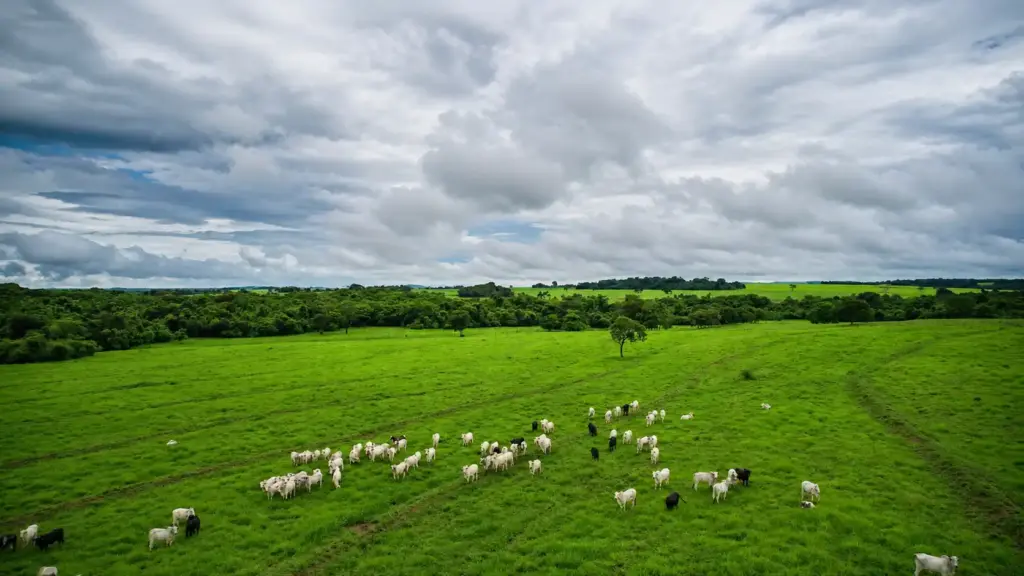
For a covered product to be placed on the European market, three conditions must be met simultaneously.
1) Be deforestation-free
The commodity used in production must not have been produced in an area subjected to deforestation after December 31, 2020.
For the EUDR, deforestation has a specific legal definition: the conversion of an area classified as forest to agricultural use, including use for raising animals. This is important because the European concept does not automatically correspond to every instance of native-vegetation clearing. The assessment depends on the characteristics of the area and the definitions established by the regulation.
2) Comply with the legislation of the country of production
The product must also have been produced in accordance with the relevant legislation of the country of origin. The EUDR adopts a broad concept of legality, which may involve:
- land-use rights;
- environmental protection;
- third-party rights;
- labor rights;
- human rights;
- Indigenous peoples’ rights;
- free, prior and informed consent;
- tax, trade, customs and anti-corruption rules.
Therefore, the assessment is not limited to deforestation. Social, labor, land-tenure and territorial issues may also form part of the compliance evaluation.
3) Be covered by a due diligence statement
Before placing the product on the European market, the responsible operator must conduct due diligence, assess the risks and conclude that there is no risk, or only negligible risk, of non-compliance.
After this analysis, a Due Diligence Statement (DDS) must be submitted through the European Union’s official system.
The DDS is not a certificate automatically issued by the European platform, nor does it mean that an authority has conducted a prior audit of the entire supply chain. By submitting the statement, the operator assumes responsibility for the information and the product’s compliance.
What changes in practice for producers and exporters?
Preparing for the EUDR goes far beyond collecting geographic coordinates. It requires a structure capable of connecting commercial, territorial, environmental and operational information. Components of this preparation include:
- Supply-chain mapping: identifying the establishments involved in the animals’ origin and movement.
- Data governance: defining who collects, validates, updates, stores and makes each piece of information available.
- Socio-environmental monitoring: assessing properties according to environmental, labor, social, territorial and land-tenure criteria.
- Traceability: connecting animals and products to the relevant establishments throughout the production cycle.
- Segregation: preventing the mixing of eligible, non-compliant or unknown-origin products.
- Risk assessment: analyzing the quality of the information and adopting additional measures when it is not possible to conclude that there is no risk or only negligible risk.
- Commercial integration: making evidence available to customers and operators responsible for placing the product on the European market.
- Auditability: maintaining records that make it possible to reconstruct the analyses, movements and decisions made.
For companies that already have supplier-monitoring and management structures, the EUDR does not eliminate the need for adaptation. It does, however, provide a more solid foundation on which to build the additional controls required.
Minerva Foods, for example, says it integrates geospatial analyses into its purchasing processes, submits its direct-supplier monitoring system to independent audits and uses different protocols and tools to increase visibility into indirect suppliers.
Progress does not consist of claiming that all challenges have been resolved, but of building mechanisms capable of evolving as data, public policies and market requirements also evolve.
The challenge of Brazil’s Rural Environmental Registry (CAR)
The Rural Environmental Registry is one of the main territorial references used in rural-property assessments in Brazil. It can support property identification, perimeter analysis and cross-referencing with satellite imagery, environmental embargoes, conservation units, Indigenous lands and other territorial databases. However, the CAR is declaratory in nature. Registration in the database does not, by itself, prove:
- environmental compliance;
- ownership or title to the area;
- the absence of overlaps;
- compliance with all EUDR criteria;
- the animals’ trajectory throughout the supply chain.
In addition, the EUDR does not establish the CAR as a mandatory document. The regulation requires verifiable information about origin, geolocation, the absence of deforestation and legal compliance. The CAR is therefore a relevant component of a broader assessment, but not the complete answer.
What is changing in the market
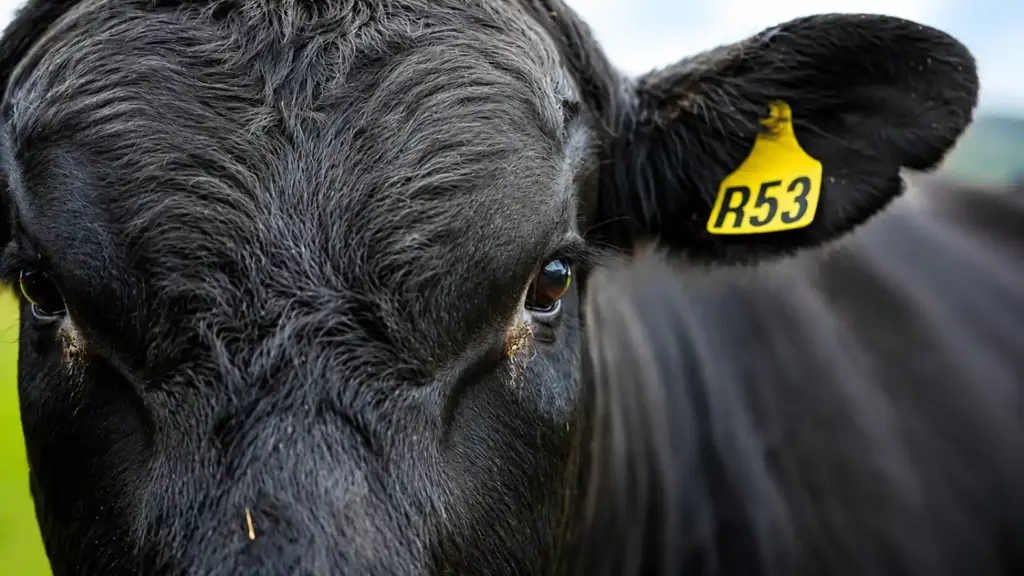
The EUDR does not require companies to use a specific technology.
Electronic tags, individual identification systems, artificial intelligence, satellite imagery, geospatial platforms and blockchain can support the organization and verification of information, but are not, in themselves, requirements established by the regulation. What the EUDR requires is the ability to:
- identify the product’s origin;
- provide the location of relevant establishments;
- assess the risks of non-compliance;
- adopt mitigation measures when necessary;
- preserve verifiable evidence;
- prevent mixing with products of unknown or non-compliant origin.
Compliance, therefore, should not be confused with the acquisition of a particular technological solution. The central element is data governance and its integration into decision-making processes.
A challenge that can also accelerate solutions
The EUDR brings costs, complexity and new responsibilities. That is undeniable. But reducing the regulation to an environmental barrier means ignoring an important part of the transformation under way. Organizing origin information can generate benefits that go beyond compliance with a single regulation:
- faster responses to customers and audits;
- greater ability to anticipate risks;
- better organization of compliance evidence;
- greater security in purchasing decisions;
- stronger commercial relationships;
- more efficient targeting of support initiatives for producers.
These results are not automatic. Compliance with the EUDR does not guarantee higher prices, better contracts or reputational recognition. Value emerges when data is transformed into decisions, risk prevention and the effective advancement of the supply chain.
For Brazilian cattle farming, this transition is also an opportunity to show that production, technology and conservation do not have to occupy opposing sides of the conversation.
Brazil brings together technical expertise, public monitoring systems, productive capacity and companies operating in different international markets. There are significant challenges—particularly in gaining visibility into indirect suppliers and integrating information—but there is also experience and infrastructure to address them.
The most consistent path is not to deny the requirements or accept simplistic narratives about the sector. It is to improve existing tools, strengthen public policies, support producers and demonstrate the supply chain’s progress through verifiable data.
As the analysis published by Canal Rural points out: those who anticipate the organization of territorial and environmental data will not only avoid sanctions, but also secure better contracts and reputational premiums in a global market that is definitively becoming more restrictive.
In the new global food trade, trust is built with more than speeches. It is built by connecting origin, evidence and responsibility. In this movement, traceability and monitoring cease to be merely regulatory obligations. They become strategic assets for the competitiveness of Brazilian beef.
- 10 key things you STILL need to know about the new EU Deforestation Regulation
- Até 2032 todo rebanho bovino brasileiro deve estar rastreado individualmente
- Embrapa Territorial apresenta atribuição, ocupação e uso das das terras no Brasil na COP30
- EU Deforestation Regulation (EUDR) 2026 Update
- EUDR na prática: como o agro brasileiro pode liderar a nova era da rastreabilidade
- Falhas na rastreabilidade podem comprometer vendas de carne para a UE
- Georreferenciamento e rastreabilidade passam a definir acesso do agro brasileiro ao mercado europeu
- In Brazil, a new label gives more visibility to deforestation-free beef
- Lei antidesmatamento da UE
- More than 90% of deforestation in the Amazon is for pastures
- Regulation (EU) 2023/1115 on deforestation-free products — European Commission
- União Europeia: georreferenciamento, rastreabilidade e comprovações definem acesso ao bloco
- What Is the EU Deforestation Regulation (EUDR)? — World Resources Institute