
Share


Anyone who runs for less than an hour can do without gels, sports drinks and energy bars. That is what the recommendations of the American College of Sports Medicine (ACSM) indicate, pointing to little evidence that, over this period, beverages containing carbohydrates and electrolytes provide physiological or performance benefits compared with water. It is when exercise lasts longer that the strategy begins to change.
For activities lasting more than 60 minutes, different sports medicine and sports nutrition organizations recommend consuming carbohydrates during exercise. The International Society of Sports Nutrition (ISSN), for example, sets a range of 30 to 60 grams per hour for intense, prolonged exercise.
The guideline published by the Brazilian Association of Sports Nutrition reaches a similar conclusion: for exercises lasting more than 60 to 75 minutes, the recommendation is to consume 30 to 60 grams of carbohydrates per hour of activity. When the activity exceeds 2.5 hours, the amount may reach 90 grams per hour, preferably through a combination of different sources, such as glucose and fructose.
However, it is worth noting that the recommendations establish how much of the nutrient should be consumed, not which product should be used to obtain it.
Food or sports supplement?
Classified by the International Olympic Committee (IOC) as sports foods, gels, sports drinks and energy bars are products developed to provide nutrients that are available in conventional foods, but in a more practical form and one that is better tolerated by the body during physical exertion.
A gel, for example, is a concentrated source of carbohydrates. One sachet usually provides around 25 grams, as well as caffeine or electrolytes in some versions. Its main advantage is practicality: during a long race, when a runner needs to consume 30 to 60 grams of carbohydrates per hour, a few sachets make it possible to reach the recommendation without consuming a large volume of food.
That does not mean the carbohydrates have to come from a gel. A study by Appalachian State University in the United States compared bananas and a sports drink containing 6% carbohydrates during 75-kilometer rides completed by 14 trained cyclists. With equivalent amounts of the nutrient, there was no significant difference in performance. The banana, however, caused a greater sensation of stomach fullness and bloating.
The possibility of substitution also appears in a scientific review published in the journal Nutrients. When analyzing the use of foods as carbohydrate sources during endurance exercise, the researchers compiled studies that found similar performance results with bananas, raisins and honey compared with sports drinks, gels and chews.
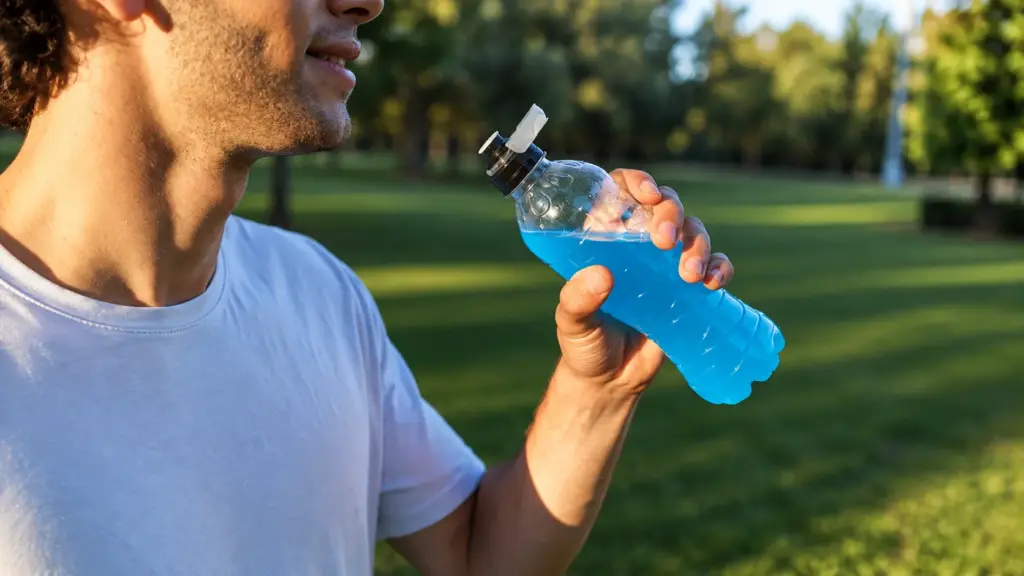
Sports drinks serve more than one function: they provide fluids, carbohydrates and electrolytes, mainly sodium and potassium. For this reason, they may be useful during prolonged activities, when hydration and energy delivery need to occur simultaneously.
The components, however, do not need to be consumed together. Water can meet hydration needs, while food or other sources provide carbohydrates and sodium. The advantage of a sports drink is that it combines these functions in a single beverage, a combination that becomes more relevant as the duration and intensity of exercise, the temperature and sweat loss increase.
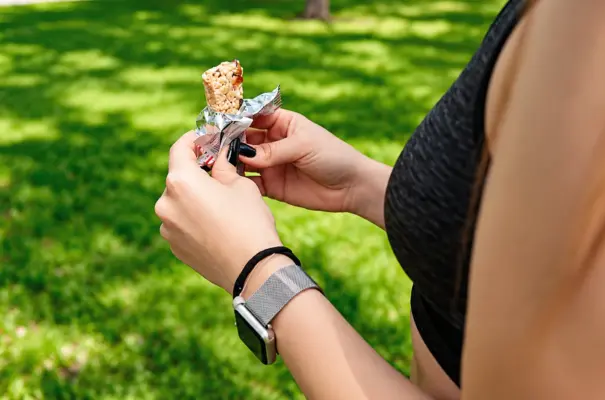
An energy bar, meanwhile, provides carbohydrates in solid form and, depending on its composition, may also contain more fiber, fat and protein. This difference can affect digestion during exercise.
A study by Massey University in New Zealand specifically assessed the effect of format. Twelve trained cyclists consumed the same amount of carbohydrates—80 grams per hour—in the form of a drink, gel, energy bar or a combination of the three. The energy bar caused more nausea, a sensation of stomach fullness and cramps, and was associated with worse performance compared with the gel.
The result helps explain why substitution depends on more than just the amount of carbohydrates. Foods rich in fat, fiber or protein may digest more slowly and cause discomfort during a run. Therefore, the strategy planned for long races should be tested beforehand during training.
Read also: Does creatine help with running? Understand the role of meat and supplementation
Fluid loss through sweating: is supplementation necessary?
Sweat carries away more than water. Sodium, potassium, chloride and magnesium are among the electrolytes lost during exercise, with sodium predominating. The amount lost varies according to the duration and intensity of the activity, environmental conditions and individual characteristics.
During prolonged activities, especially in hot conditions and with substantial losses, replacing sodium may become important. The mineral, however, is present in foods and beverages and does not necessarily need to be obtained through supplements.
Salt capsules, on the other hand, have a more specific indication. They contain concentrated sodium and are used to replace high losses, but there is no universal recommendation for the amount runners should take. The guideline of the Brazilian Association of Sports Nutrition states that the evidence on sodium consumption before exercise, often done through these capsules, remains inconclusive.
The IOC’s consensus recommendation on exercising in the heat is to replace sodium mainly in athletes with high sweat losses and a high sodium concentration in their sweat, particularly during prolonged activities.
Frequently used in an attempt to prevent cramps, salt capsules are no guarantee against the problem. An evidence-based review published in the Journal of Athletic Training concluded that exercise-associated cramps have multifactorial causes and cannot be explained solely by the loss of water or electrolytes. Among the studies analyzed were works that found no differences in sodium intake or electrolyte concentration between athletes who experienced cramps and those who did not.
How much should you replace?

Recommendations based on exercise duration serve as a reference, but hydration and electrolyte needs vary among runners. One way to estimate them is to calculate sweat rate—that is, how much fluid a person loses per hour of exercise.
The U.S. National Athletic Trainers’ Association (NATA) recommends comparing body weight before and after exercise, also taking into account fluid consumed and any urine production. Since the loss of 1 kilogram of body weight corresponds to approximately 1 liter of fluid, the calculation makes it possible to estimate the loss per hour of activity.
This rate may change according to temperature, humidity, exercise intensity and heat acclimatization, so the measurement should be taken under conditions similar to those expected during long training sessions or races. It also does not reveal how much sodium was lost: the concentration of the mineral in sweat varies among individuals and can only be determined more accurately through specific tests.
White salt marks on clothing or skin may indicate high sodium losses, but they do not make it possible to quantify them. For runners undertaking prolonged exercise, intense heat or experiencing substantial sweat losses, understanding these characteristics can help individualize their hydration and electrolyte replacement strategy.
More is not better
Fear of dehydration can lead to the opposite problem. Drinking more fluid than the body can eliminate increases the risk of exercise-associated hyponatremia, a condition characterized by a reduction in blood sodium concentration during or up to 24 hours after physical activity. This can occur even with sports drinks: the sodium in their composition does not necessarily offset an excessive volume of fluid.
Thus, drinking according to thirst is one reference point for avoiding excess. The guidance comes from the Wilderness Medical Society (WMS), which also recommends estimating individual needs in advance based on hourly weight loss during training.
It is worth noting that excess carbohydrates can also cause nausea, abdominal distension, cramps and diarrhea when intake exceeds the runner’s capacity for absorption and tolerance. Therefore, strategies involving high intake should be tested progressively during training and with professional guidance.
The same logic applies to sodium. Capsules and other replacement products should address an individual need, rather than being used indiscriminately to compensate for any sweat loss.
- ACSM — exercise, hydration, carbohydrates and electrolytes
- Appalachian State University — banana vs. sports drink in 75 km of cycling
- IOC — sports foods, gels, sports drinks, energy bars and electrolytes
- IOC — exercise in the heat, hydration and sodium replacement
- Brazilian Association of Sports Nutrition guideline — carbohydrates, hydration and sodium
- ISSN — carbohydrate recommendations for prolonged exercise
- Journal of Athletic Training — review of exercise-associated cramps
- Massey University — drink vs. gel vs. energy bar vs. product combination
- NATA — calculating sweat rate and individual hydration
- 2023 review — common foods vs. sports products as carbohydrate sources
- WMS — hyponatremia, excess fluid intake and drinking according to thirst