
Share


When it comes to greenhouse gas (GHG) emissions from the beef supply chain, the main source lies even before the industrial stage. It is on the farm, during animal production and the management of productive areas, that most of the activity’s emissions are concentrated. “In cattle farming, most emissions occur on the farm. In our case, around 98% of emissions come from this stage,” explains Gracie Verde Selva, Minerva Foods’ Executive Manager of Climate and Nature.
This figure helps explain why many initiatives aimed at reducing cattle farming’s carbon footprint focus their efforts directly on production. It is also at this stage that evidence is emerging that environmental improvements and productivity gains can move in the same direction.
On farms monitored by the Renove Program, producers who achieve emissions intensity at least 20% below the average established by the independent certification methodology also show significant results in zootechnical indicators.The production cycle can reduce slaughter age, eliminating months of methane emissions per head, while ensuring greater animal weight at a younger age. More than a coincidence, the data reflect changes in the production system itself.
According to Embrapa, practices such as restoring degraded pastures and properly managing soil and pastureland increase the productivity of production areas, improve soil fertility and expand the amount of carbon stored in the system. The Food and Agriculture Organization, meanwhile, highlights that increasing production efficiency — through better use of soil, pastures and available resources — is among the main strategies for reducing the intensity of greenhouse gas emissions from cattle farming.
It is precisely this logic that guides initiatives focused on so-called low-emission cattle farming: increasing the efficiency of the production system while simultaneously reducing its carbon intensity.
Acting where emissions occur
Launched in 2021, the Renove Program was structured to act precisely at the main point of emissions in the cattle supply chain: production on farms. The program brings together different stages of technical monitoring, including an initial farm assessment, a greenhouse gas emissions inventory, improvement recommendations, ongoing technical assistance and certification conducted by an independent third party, at no cost to the producer.
At the end of the process, producers learn the emissions from each source of cattle farming on their own property, and those who achieve emissions intensity at least 20% below the average established by the certification methodology may receive recognition within the program. “Renove is now present in Brazil, Paraguay and Uruguay. And we are now taking the program to Argentina precisely to expand this model to other production systems,” Gracie says.
The proposal is based on a simple principle: if most emissions in the supply chain are concentrated on the farm, that is where the greatest potential for transformation lies.
This approach is also aligned with the concept of Scope 3, a category of the Greenhouse Gas Protocol that encompasses indirect emissions generated throughout a company’s value chain. In the beef sector, most of these emissions occur in agricultural production, even before industrial processing. Therefore, initiatives focused on supplier farms have the potential to generate the greatest impact in reducing the supply chain’s carbon footprint.
More than simply measuring emissions, the goal is to identify concrete opportunities for improvement within the production system itself, allowing producers to track their progress based on technical indicators and standardized metrics.
Find out more: How does Brazil reduce GHG emissions per kilogram of beef?
Production efficiency and emissions intensity go hand in hand
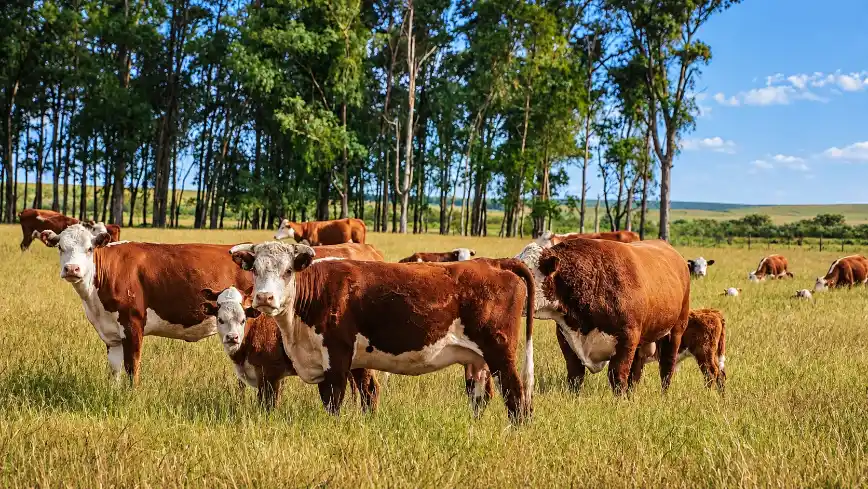
The results observed on the monitored farms indicate that reducing emissions intensity does not depend on a single technology or a radical change in the production system. Above all, it is associated with improving farm management.
In practice, this means restoring degraded areas, improving soil fertility, properly managing pastures and adjusting the production system so that animals better express their weight-gain potential. “When you capture carbon in the soil, you improve soil quality. And better soil produces more pasture. With more pasture, the animal gains more weight, fattens more quickly and is slaughtered earlier,” Gracie Verde Selva summarizes.
This reasoning helps explain why production and environmental indicators tend to evolve together. According to data from the study conducted by the Renove Program on monitored farms in Brazil, cited by Gracie in an interview, certified systems had an average slaughter age of 25 months, compared with 34 months in the average used as a reference by the program’s methodology. Average slaughter weight was also higher, rising from 489 kg to 608 kg.
The figures show that animals from more efficient systems spend less time on the farm and reach slaughter at a higher weight. As a result, greenhouse gas emissions per kilogram of beef produced tend to decline.
In other words, emissions reductions occur through intensity — that is, through the amount of carbon equivalent emitted to produce each unit of beef, rather than necessarily through the complete elimination of emissions inherent to cattle farming.
This distinction is important because enteric fermentation in ruminants remains a natural source of methane. The challenge, then, is to produce more food while making better use of available resources and reducing the intensity of these emissions throughout the production cycle.
In Gracie’s assessment, the data obtained from the monitored farms reinforce precisely this relationship. “It is also a more efficient system from a production standpoint. Sustainability is directly linked to efficiency.”
Soil as the starting point

Much of this progress begins below the surface. Restoring the soil improves its ability to store water, increases the availability of nutrients to plants and supports pasture development. With a greater supply of quality forage throughout the year, animals have better nutritional conditions, gain weight more quickly and spend less time in the system.
This process also expands the soil’s potential to store carbon, a phenomenon known as carbon sequestration. Gracie explains that this process can be monitored through different methodologies. “The carbon capture aspect is somewhat more complex. Technologies exist today that help with this, but the safest method remains soil sampling.”
She points out that comparing samples collected before and after the restoration of the areas makes it possible to verify the increase in organic carbon stored in the soil, demonstrating the effects of improved management practices.
In addition to field analyses, new tools based on remote sensing, satellite imagery and modeling are expanding the ability to monitor these changes on a larger scale.
The conclusion is also aligned with assessments by the Intergovernmental Panel on Climate Change (IPCC). In the report Climate Change 2022: Mitigation of Climate Change, the panel identifies practices such as restoring degraded areas, sustainably managing pastures, increasing soil carbon and improving the productivity of agricultural systems among the main strategies for reducing sector emissions, particularly in tropical regions.
This perspective also helps explain why sustainability, in this context, should not be viewed solely as an environmental agenda. “We talk a lot about sustainability, but what does that mean in practice? Efficiency. It is the same conversation,” Gracie says.
The statement summarizes one of the main lessons observed on the monitored farms: more efficient systems make better use of natural resources, increase productivity and, at the same time, reduce emissions intensity.
Greater efficiency depends on expanding access to best practices
The results observed on the monitored farms point to a consistent pattern: reducing emissions intensity mainly involves improving how the production system functions. Healthier soil, more productive pastures and more efficient management make it possible to produce more while making better use of available resources.
However, expanding this model to a larger number of farms still depends on overcoming obstacles that go beyond the adoption of technologies.
For Gracie Verde Selva, the main challenge is to democratize access to technical assistance and financing, especially among small and medium-sized producers. “I think the biggest challenge is bringing everyone to the same level. Brazil has many small and medium-sized producers who need more technical assistance and do not have access to the financing required to implement these changes.”
The adoption of practices such as restoring degraded pastures, integrated crop-livestock-forestry systems (ICLF) and improved management is considered one of the main strategies for increasing productivity and reducing emissions intensity in Brazilian agriculture and livestock farming. According to the ABC+ Plan of the Ministry of Agriculture and Livestock, expanding these technologies depends on a combination of technical assistance, training and financing instruments capable of supporting the investments required to transition production systems.
During the interview, Gracie notes that many of these changes generate economic returns over time, but require planning and investment at the initial stage. “The first step is to assess the farm and understand where it is possible to act at the lowest cost and with the greatest benefit. You cannot do everything at once. Often, you start with a smaller area, it begins to produce more, and that gain finances the next stage.” This logic reinforces that the transition to more efficient systems usually occurs gradually, following the reality of each farm and, above all, that environmental sustainability can also mean financial sustainability.
- Embrapa — Como a recuperação de pastagens pode ajudar o meio ambiente
- FAO — Food and Agriculture Organization
- Greenhouse Gas Protocol — Corporate Value Chain (Scope 3) Standard
- IPCC — Climate Change 2022: Mitigation of Climate Change — Chapter 7
- Minerva Foods — Programa Renove
- Ministério da Agricultura e Pecuária — Plano ABC+