
Share


Food labeling does not have a single language worldwide. Each jurisdiction builds its rules from distinct regulatory priorities, such as sanitary safety, consumer transparency and the facilitation of international trade. In the case of meats, this means that the label on a beef cut sold in Europe follows a different logic than the same product marketed in the United States or Brazil.
All, however, share a common objective: labels that answer less the question “what is in this meat?” and more the question “where does it come from and under what conditions was it produced?” In practice, this means treating the label as an identity document for the product, capable of tracing it along the production chain. This is what modern regulations already require, at least in part. In the European Union, that traceability is legally mandatory; in Brazil, the Ministry of Agriculture and Livestock follows a similar logic for products intended for international trade. The challenge lies in the distance between “requiring” and “guaranteeing.” It is in that gap that the debate on meat labeling is installed.

Understanding these differences is useful both for those operating in the export market and for those who want to understand where the choices that shaped Brazilian legislation came from.
The starting point: the Codex Alimentarius
Before looking at each bloc, it is worth placing the global frame of reference. The Codex Alimentarius is the body established in 1963 by the Food and Agriculture Organization (FAO) and the World Health Organization (WHO) to develop international food standards and guidelines that protect human health and ensure fair practices in food trade.
The Codex Alimentarius is an international reference for resolving trade disputes concerning food safety and consumer protection, being adopted as a reference point in bilateral and multilateral trade agreements. This means that, although its standards are not directly binding, they function as the technical basis from which national legislations are built.
For prepackaged foods in general, including meats, the central document is the General Standard for the Labeling of Prepackaged Foods (CXS 1-1985), which establishes the minimum elements expected on any label: product name, list of ingredients, net weight, country of origin, expiration date and identification of the manufacturer. Specifically for meats, the Code of Hygienic Practice for Meat (CXC 58-2005) offers guidelines on hygienic control throughout the production chain.
European Union: traceability as a central principle
European food labeling regulation is consolidated in Regulation (EU) No 1169/2011, which entered into force in December 2014. It is directly applicable to all Member States, without the need for transposition into national laws.
For meats, the European regulation has a clear emphasis: origin is mandatory information. Origin labeling must be presented for fresh, chilled or frozen meat from animals of the porcine, ovine, caprine species and laying poultry, which are genetic lines specialized in the intensive production of eggs for human consumption
For beef, the requirements are even more detailed and have a historical origin linked to the “mad cow disease” crisis in the 1990s. Labels on all beef sold in the EU must include a reference code that allows identification of its origin, an indication of the place where the animal was slaughtered and processed. Since 1 January 2002, labels must also indicate the Member State or non-EU country in which the animal was born, reared and slaughtered. This requirement is consolidated in Regulation (EC) No 1760/2000, which created the Community regime for bovine traceability.
Another item that composes labeling is nutritional information. In this case, unprocessed or matured products composed of a single ingredient (which, in practice, covers fresh cuts of meat in natura) are exempt from this obligation. For processed products, the nutritional declaration is mandatory, and must include energy value, fats, saturated fatty acids, carbohydrates, sugars, proteins and salt.
Another relevant point brought by Regulation 1169/2011: products that appear to be made from a single whole piece of meat or fish, but actually consist of different pieces combined using other ingredients, such as some types of “nuggets”, must be mandatorily labeled with the expression “carne formada” (formed meat).
United States: federal inspection and safe handling instructions
In the U.S., meat regulation is the responsibility of the USDA Food Safety and Inspection Service (FSIS), which operates under the Federal Meat Inspection Act, and has some notable specificities compared to the European model.
Every label of a product regulated by the USDA must include mandatory components positioned according to precise regulatory standards. Missing or poorly formatted information triggers a compliance assessment by the FSIS.
The mandatory elements for packaged meat products in the U.S. include, among others: product name, official inspection stamp with establishment number, net weight, ingredients (when applicable), name and address of the manufacturer and safe handling instructions for raw products, an aspect that differentiates the American model. In this case, the label will have safe handling instructions (raw product) or a preservation statement (processed product), as appropriate.
For individual cuts of raw meat, nutritional labeling at the point of sale is required differently than in Brazil or Europe: in March 2013, nutritional labeling of major cuts of single-ingredient raw meat products became mandatory, as well as for ground or minced meat and poultry products, seasoned or unseasoned. In practice, this information can be presented on panels or leaflets at the point of sale, and not necessarily on the package label.
Regarding origin, the U.S. has rules for voluntary statements such as “Product of USA,” which may be used when products are derived from animals born, raised, slaughtered and processed in the United States.
What changes for processed products
Both in Europe and in the U.S., the logic changes significantly when the product ceases to be in natura and becomes a formulated product, such as sausages, industrial hamburgers, bologna and wieners.
In these cases, the nutritional declaration becomes mandatory in all jurisdictions, and the list of ingredients becomes a central element of the label. In the European Union, Regulation 1169/2011 also requires mandatory declaration of allergens emphasized in the ingredient list, a practice that influenced updates in Brazilian legislation.
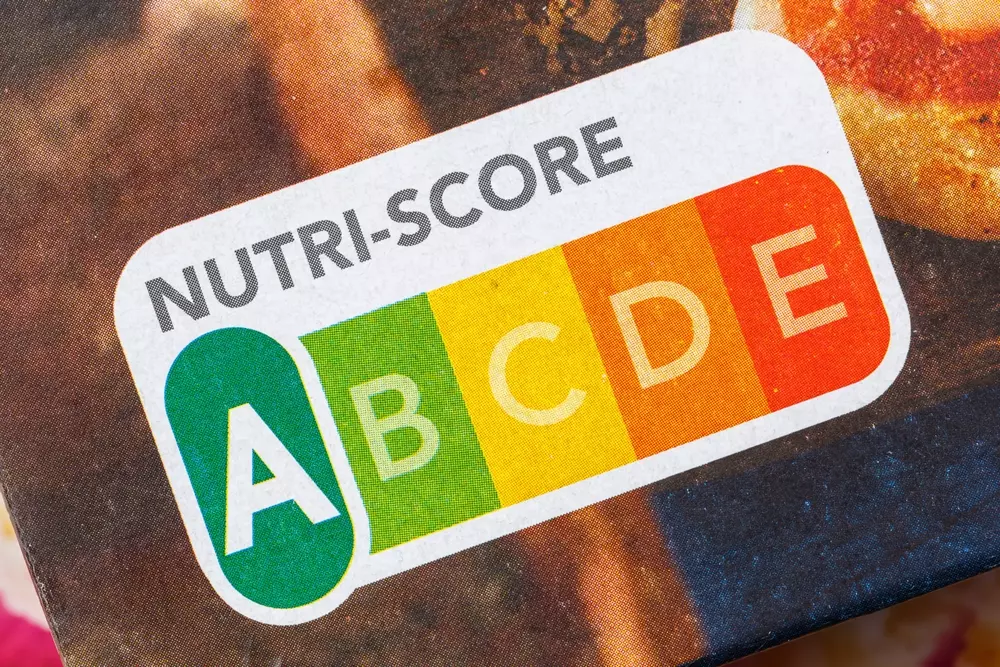
In Europe, some countries voluntarily adopt complementary front-of-pack labeling systems, such as NutriScore, created in France in 2017, which classifies foods from A to E on a color scale, with “A” being the food with the best nutritional profile and “E” the one with the worst nutritional profile. This model is widely discussed within the bloc as a possible standard, but it is not yet mandatory at the community level.
Common logic, different paths
When comparing the three systems—Codex, the European Union and the United States—a convergence becomes clear: for in natura meat, the regulatory focus is on traceability and sanitary control, not on nutritional composition. The nutritional table, front-of-pack warnings and the ingredient list are instruments designed for formulated foods.
What varies between jurisdictions is how that traceability is operationalized: Europe requires the explicit declaration of the countries of birth, rearing and slaughter, the U.S. created a pre-approval system for labels by the FSIS, and Brazil organizes this control around the sanitary inspection stamp and the data of the registered establishment.
As important as the existence of these labeling systems is the consumer’s ability to understand and use them correctly. With knowledge, labels become true tools for safer, more informed and more conscious purchasing decisions.
Learn more: Meat labeling: what Brazilian legislation says
Reference links:
- Codex Alimentarius – Anvisa (overview)
- General Standard for the Labeling of Prepackaged Foods – Codex Alimentarius CXS 1-1985
- Regulation (EU) No 1169/2011 – Consumer information
- Regulation (EC) No 1760/2000 – Beef labeling
- Regulation (EU) No 1337/2013 – Origin of pork, ovine, caprine and poultry meats
- USDA FSIS – Meat and Poultry Labeling Guide
- USDA FSIS – Nutritional Labeling of Individual Raw Cuts