

Share


Turning 50 is an important milestone in life. It should also be a time to pay special attention to muscle health. When we think about healthy aging, we usually remember heart health, weight control and disease prevention. But there is an essential component of longevity that deserves increasing attention: muscle mass.
After 50, taking care of your muscles is just as important as taking care of your heart. That is because our muscles are not only used for movement or physical appearance. They play a role in metabolism, help control blood sugar, contribute to joint protection and are essential for maintaining our independence.
As we age, the loss of muscle mass and strength can become more significant. When this process meets certain clinical criteria, it is known as sarcopenia, a condition associated with an increased risk of falls, physical limitations and loss of independence.
What changes in the muscles after 50?
After 50, the body undergoes changes that can make it harder to maintain muscle mass. These include hormonal, metabolic and neuromuscular changes which, when combined with reduced physical activity, contribute to the progressive decline in strength and muscle tissue.
In addition, as we age, the body may respond less efficiently to protein intake. This phenomenon is known as anabolic resistance. Anabolic resistance is the gradual loss of the muscle’s ability to respond to the stimuli that make it grow and repair itself: dietary protein and physical effort. Muscle is not static tissue. It is constantly being broken down and rebuilt. When building exceeds breakdown, it is maintained or increases; when the opposite prevails for months or years, it shrinks. In young people, a meal containing 20 to 25 grams of high-quality protein is usually enough to maximally activate muscle protein synthesis. With age, the same stimulus produces a weaker response. Studies show that older people need approximately 0.40 grams of protein per kilogram of body weight in a single meal—the equivalent of 30 to 40 grams for most people—to achieve a similar maximum response to that of younger adults. The muscle has not lost its ability to grow; it has simply become less sensitive and now requires a stronger signal.
This loss of sensitivity begins silently and accelerates with inactivity, excess body fat and age itself. Even just a few days without moving can reduce the muscle’s response to protein. Insulin resistance and low-grade inflammation, which are common with aging and visceral fat, make the situation even worse. The practical result is that the muscle responds less and less to food and exercise, making a decisive contribution to sarcopenia—the loss of muscle mass and strength that compromises independence in later life.
However, we can always change the course of the story. In this case, that means taking certain steps that are essential to reduce this loss and even recover some muscle mass, including at more advanced ages. Two strategies are fundamental for this: engaging in regular strength training and consuming adequate amounts of high-quality protein.
Strength training: the main stimulus for preserving muscle
If there is one recommendation I consider essential for anyone over 50, it is to include resistance exercises in their routine. Weight training is one of the most effective strategies, but it is not the only one. If you do not like going to the gym, you can exercise with resistance bands, free weights or even your own body weight. The main thing is consistency. At least 2 sessions per week if you are working all muscle groups in a single full-body workout, or 4 sessions if you are splitting them up. A physical education professional can help you design a program that is safe and effective.
Strength training stimulates the body to preserve and build muscle tissue, improving strength, balance and functional capacity. And there is one particularly important point: even people who have never done weight training can start after 50, 60 or 70 and achieve significant results. Muscles continue to respond to stimuli throughout life, even if more slowly.
However, it is essential to understand that exercise and nutrition need to go hand in hand. Increasing protein intake is not enough if we do not provide the muscles with the stimulus they need to develop. Likewise, providing only the physical stimulus and failing to consume the necessary protein does not work. Exercise signals to the body that it needs to strengthen its muscles. Nutrition provides the nutrients required for that to happen.
Why can red meat be an important ally after 50?
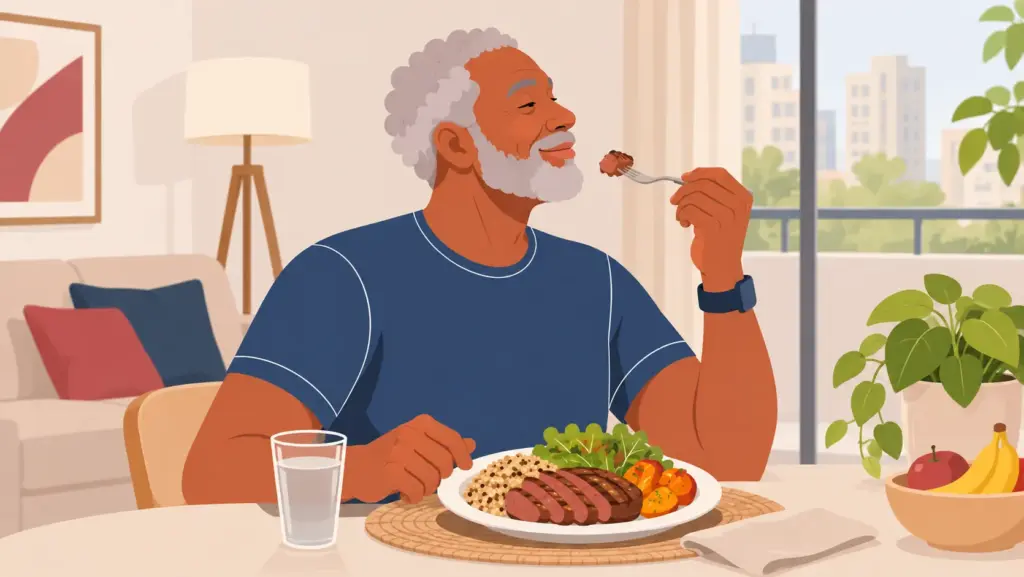
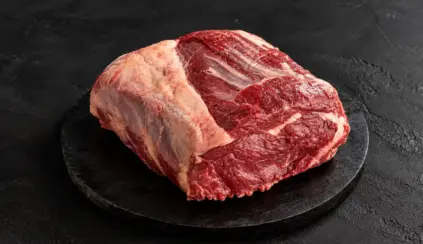
Beef provides high-biological-value protein containing all the essential amino acids needed for muscle maintenance and growth. Among them is leucine, an amino acid involved in activating the mechanisms responsible for muscle protein synthesis. This nutrient becomes more important with age, when the muscle’s response to food may be reduced.
A serving of approximately 100 grams of lean beef generally provides between 25 and 30 grams of protein, depending on the cut and cooking method. This amount makes a significant contribution to meeting the protein needs of people over 50. But red meat offers more than protein.
Nutrients in red meat that help maintain muscle health
Beef contains important nutrients for the body’s functioning, especially at a stage of life when preserving strength and functional capacity is essential.
Here are some of the nutrients you might not even imagine beef provides:
- Vitamin B12: supports the functioning of the nervous system and the formation of blood cells. A deficiency can cause anemia, fatigue and neurological changes that impair functional capacity.
- Iron: found in red meat in the heme form, which has good bioavailability, it is essential for oxygen transport and proper muscle function.
- Zinc: supports protein synthesis, tissue repair and various metabolic processes related to muscle maintenance.
- Creatine: naturally present in beef, it contributes to the rapid production of energy during intense efforts, such as strength training. Although the amount obtained through food is lower than that used in supplementation protocols, it is part of the set of nutrients found in this food.
Therefore, when consumed in moderation, beef can contribute to a nutritionally complete diet, helping provide important elements for overall health.
After 50, protein intake deserves attention
As I mentioned above, protein needs may be higher with age than the minimum amounts recommended for younger adults. Although the minimum recommendation for healthy adults is approximately 0.8 grams of protein per kilogram of body weight per day, studies suggest that older people may benefit from an intake of 1.0 to 1.2 grams per kilogram, or even more, depending on their level of physical activity and individual circumstances.
For a 70-kilogram person, for example, consuming 1.2 grams per kilogram means approximately 84 grams of protein per day. Ideally, this amount should be distributed among meals, combining different protein sources.
Beef can be part of this strategy alongside eggs, fish, milk, dairy products and plant sources such as beans and other legumes. It is important to prioritize lean cuts, healthy preparations and a varied diet rich in greens, vegetables, fruit and other natural foods.
Care should be taken with quantities in specific cases, such as people with kidney disease or other medical conditions.
Over 50? You can still gain muscle mass
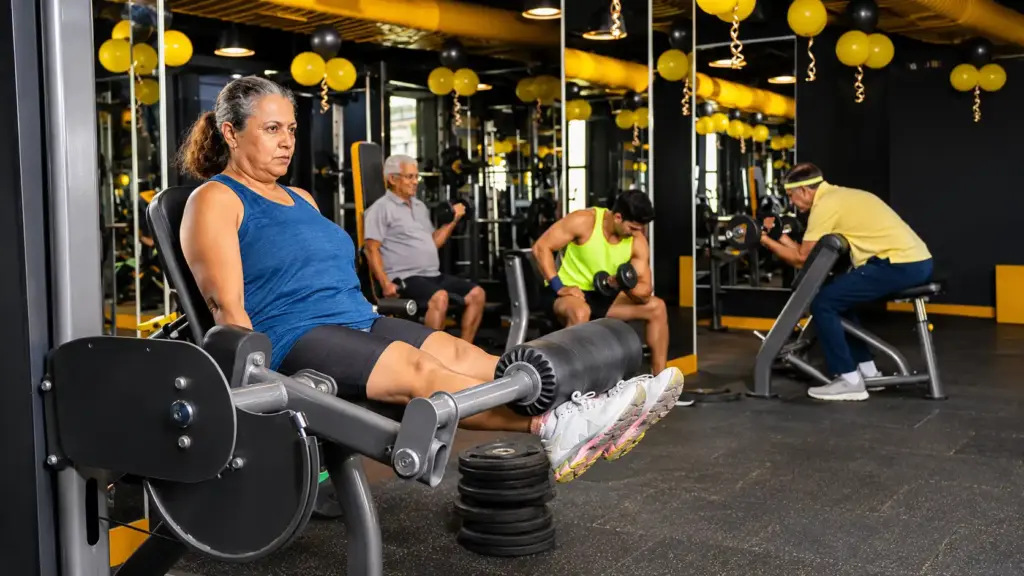
One of the biggest questions for people reaching 50 or 60 is whether it is still worth starting weight training. The answer is yes. Studies show that older people remain capable of increasing their strength and muscle mass when they perform resistance exercises regularly. Even individuals over 70 or 80 can experience significant improvements in functional capacity.
Even older muscle remains capable of growing. It simply needs a more intense stimulus. Strength training is the most powerful signal: contracting against resistance makes the muscle more sensitive to the protein in subsequent meals and produces gains in strength and mass even at advanced ages. At the same time, distributing protein more effectively throughout the day—reaching 30 or 40 grams per meal on at least three occasions—helps overcome the higher threshold required by aging muscle. Together, these two adjustments—more mechanical load and more protein per meal—are the most consistent way to reactivate a muscle that has begun to become “deaf” to anabolic stimuli.
Muscle loss does not have to be accepted as an inevitable consequence of aging. The sooner we start taking care of our muscles, the greater our chances of preserving our independence in the decades ahead. And for those already over 50, starting now can make a major difference in the future.
One of the best-known studies on this subject is the one by Fiatarone and colleagues, published in the New England Journal of Medicine. They trained 100 nursing home residents with an average age of 87 (ranging from 72 to 98). After 10 weeks of progressive strength training, muscle strength increased by an average of 113%. Thigh muscle area also increased in the training group, while it declined in the control group, and improvements were seen in walking and stair-climbing ability.
When a 70- or 80-year-old person can rise from a chair without assistance, climb stairs, walk safely or carry their groceries, there is something fundamental behind these achievements: muscle strength. That is why I like to emphasize that preserving muscle means preserving freedom.
After 50, the goal should not simply be to prevent muscle loss, but also to seek improvements in strength and physical capacity in order to live the coming decades with greater independence. After all, longevity is not just about living longer. It is about reaching 60, 70, 80 or more with the strength, energy and independence to enjoy life.
References
Burd, Gorissen & van Loon, 2013 (Exercise and Sport Sciences Reviews) – classic review on anabolic resistance in aging and the role of physical activity.
Fiatarone MA, O’Neill EF, Ryan ND, Clements KM, Solares GR, Nelson ME, Roberts SB, Kehayias JJ, Lipsitz LA, Evans WJ. Exercise training and nutritional supplementation for physical frailty in very elderly people. N Engl J Med. 1994