
Share


Here is the question this text poses to the reader: is it possible to put more meat on the table for a world that never stops growing without cutting down a single additional tree? The most common answer, heard in debates and on social media, is no—that food and forests compete for the same space and that one side always loses. The numbers from Brazilian livestock farming tell a different story. Today’s article addresses food security and sustainability, and how the two agendas move forward together when the key word is productivity.
Why will the world need more meat?
By 2050, the planet is expected to gain around 2 billion inhabitants, most of them in developing countries in Asia and Africa, according to Abiec’s Beef Report 2026. These are regions where incomes are rising, cities are expanding and diets are changing, with more animal protein on the plate. At the same time, hunger remains a reality: in 2025, around 673 million people were going hungry and 2.3 billion were living with some degree of food insecurity, also according to the Beef Report, based on data from the WHO (World Health Organization).
Hunger, incidentally, is much more a reflection of a lack of income than of a lack of food. But the demand is there. According to the FAO and the OECD, global beef consumption is expected to reach 84 million tonnes over the next decade, and Brazil could meet around 40% of this demand (Agricultural Outlook 2024–2034, cited by the Beef Report 2026). The question, then, is not whether we will produce more, but how.
How can we produce more without needing more land?
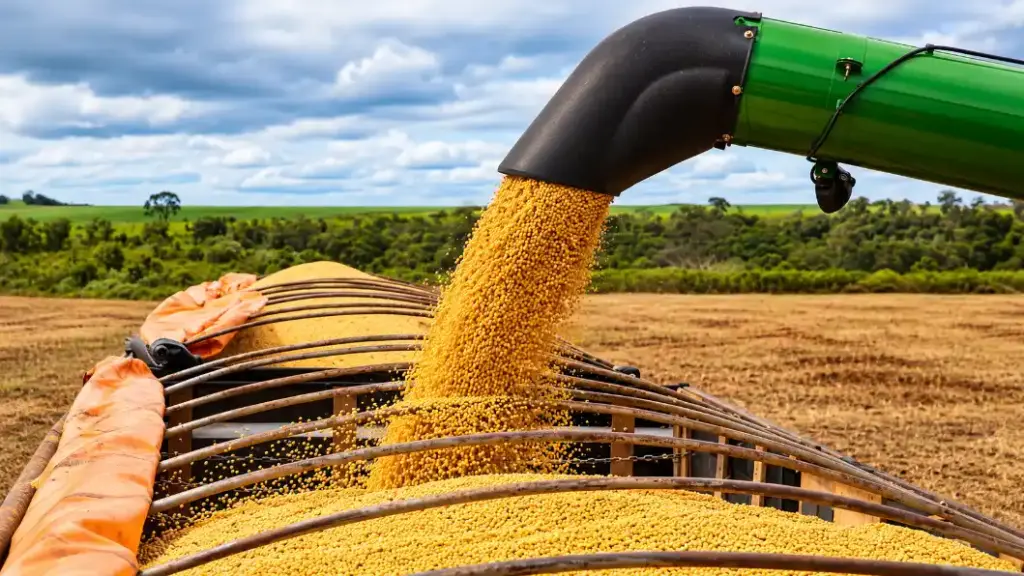
When I graduated from ESALQ-USP in 1991, Brazil was a food importer. Today, it is the world’s largest producer and exporter of beef, with 12.35 million tonnes of carcass weight produced in 2025 (Beef Report 2026, Abiec). The most remarkable part is understanding how we got there.
Over the past 30 years, the productivity of Brazilian livestock farming has increased by 183%, while pastureland has declined by 18%, to around 160 million hectares. The data come from Athenagro, as reported in the Beef Report 2026. If we were to produce today the same amount of meat using the technology of 30 years ago, an additional 286 million hectares would be needed—an area larger than all current pastureland combined. This is known as the land-sparing effect, a concept developed by Embrapa.
And the land that was freed up did not remain idle: around 27.9 million hectares of former pasture became grain, sugarcane and planted-forest areas. This movement is expected to continue. Our estimates indicate that, by 2035, the grain-growing area could expand by 20 million hectares over pastureland, with pasture shrinking from 160 million to around 146 million hectares and the total area used by agriculture remaining at 242 million hectares. In other words, more food, more meat and the same amount of land.
An important part of this leap comes from feedlots and intensive pasture-based finishing. In 2001, around 2.1 million cattle were finished in these systems, representing approximately 8% of slaughterings. In 2025, the figure was 11.2 million, or 23.5% of all animals slaughtered in the country—the highest volume in the series—with growth of 27.2% in just one year (Athenagro/Beef Report 2026). An animal that spends its final stage in a feedlot reaches slaughter weight sooner and frees up pasture for others, which means more meat per hectare.
And what about South America in this story?
Brazil is not alone. South America is now one of the planet’s major “protein breadbaskets.” In 2025, Brazil, Argentina, Uruguay and Paraguay together exported around 6.3 million tonnes of carcass weight, approximately 35% of all beef traded worldwide. The data come from the USDA (United States Department of Agriculture).
Our neighbors are proportionally even more focused on foreign markets. Uruguay and Paraguay export around three-quarters of what they produce. Argentina exports 25%. These are countries with extensive pastures, a livestock-farming tradition and recognized animal-health standards, occupying a place at the global table that other producers, with shrinking herds and scarce land, can no longer reach. For the world, this means an entire region capable of producing protein predictably. For the region, it means income and development.
And what about deforestation?
It would be naive to discuss the sustainability of meat without addressing this issue. Deforestation exists and must end. But it is important to understand where it is occurring. In the Amazon, around 75% of deforestation in 2022 occurred in public areas, and only 25% in private areas, according to PPCDAm (the Action Plan for the Prevention and Control of Deforestation in the Legal Amazon). A study published in the journal Science in 2020 showed that just 2% of properties account for 62% of potentially illegal deforestation in the Amazon and the Cerrado. The challenge, therefore, is to combat illegality—not livestock farming as a whole.
On the supply-chain side, we have seen progress: (1) in monitoring. Since 2009, slaughterhouses have made commitments to the Federal Public Prosecutor’s Office not to purchase from areas affected by illegal deforestation, embargoes, overlap with Indigenous lands or labor analogous to slavery. The Federal Public Prosecutor’s Office announced that this monitoring would be expanded to indirect suppliers starting in 2028, the most difficult link to control;
(2) in traceability. The National Plan for the Individual Identification of Cattle and Buffaloes provides for all animals to be identified by 2032. Santa Catarina already has 100% of its herd traced (MAPA); (3) and in public targets. The country has committed to eliminating illegal deforestation by 2030.
Can livestock farming emit less?
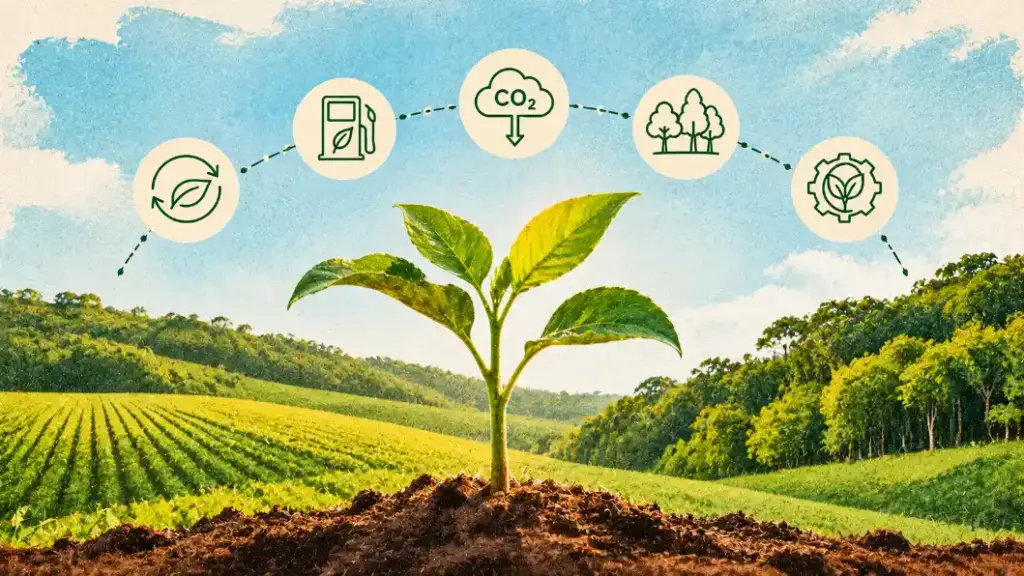
It can, and it is already emitting less per kilogram of meat. I often present what I call the Brazilian agricultural sector’s “hand of sustainability”—five points that set us apart:
(1) an energy mix with around 50% renewable sources, compared with 18% worldwide (Irena/EPE); (2) extensive use of biofuels; (3) low per-capita emissions; (4) limited land use and large preserved areas, with a strict Forest Code; and (5) clean technologies in the field.
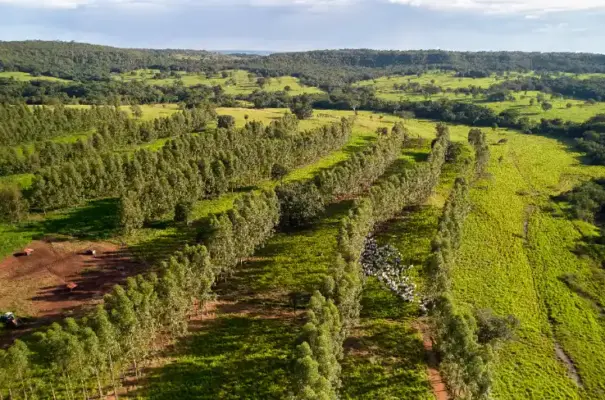
In livestock farming, this fifth finger translates into tangible results. The ABC Plan had a target of recovering 15 million hectares of degraded pasture between 2010 and 2020; 26.8 million hectares were recovered, or 178% of the target, and the goal through 2030 is to reach an additional 30 million. Crop-livestock-forestry integration reached 5.8 million hectares between 2010 and 2020, or 146% of the ABC Plan’s target, and the goal now is to reach 10 million hectares by 2030 (Beef Report 2026). And the expansion of feedlots, which now finish nearly one in every four cattle slaughtered, shortens the time to slaughter and reduces emissions per kilogram produced.
A 2025 study by Abiec and the Getulio Vargas Foundation shows the scale of the potential: ending deforestation would reduce net emissions from beef cattle farming projected for 2050 by 27.8%; if pasture recovery and integrated systems are added to this, the reduction reaches 55.4%.
What is still needed to get there?
The greatest asset of Brazilian livestock farming is also its greatest challenge: the gap between the best producers and the average. Average productivity is 77.3 kilograms of carcass per hectare per year, and 76% of pastureland is still below this level (Athenagro). If all this land had the technology used by top producers, Brazil alone could supply around 68% of global beef demand. There are also around 17.9 million hectares of pastureland in need of recovery and 4.9 million hectares at an advanced stage of degradation.
Returning to the question at the beginning: yes, it is possible to feed more people without opening up new areas. Brazil has already proven this over three decades, producing more meat on less pasture and freeing up land for other crops, in a territory that is two-thirds preserved. What is at stake now is extending this standard to all producers and showing it to the world with transparency and traceability. This is how the country consolidates its position as a sustainable global supplier of food, bioenergy and other agricultural products, helping put food on tables around the planet without giving up its forests.