
Share


Grocery shopping among consumers who use so-called weight-loss injections is changing in ways that go beyond the amount of food purchased: less soda and fewer snacks, along with greater interest in protein and fresh foods. That is according to a survey by consulting firm McKinsey conducted in the United States and Canada.
The study identified differences in the consumption habits of households using medications such as semaglutide and tirzepatide, which mimic the action of the intestinal hormone GLP-1—and, in some cases, GIP as well—increasing satiety and improving glycemic control.
The trend draws attention to possible shifts in demand for different food categories, in a context in which obesity treatment may be associated with broader changes in eating habits. For the food industry and retailers, tracking this behavior helps clarify how consumer needs and preferences may evolve.
Study identifies changes in grocery shopping
Published in June 2026, the report The State of Grocery North America 2026 brings together a survey of 4,989 consumers in the United States and Canada, conducted in March of the same year. Among those surveyed, 16% said that they or someone in their household were using GLP-1 medications at the time. Another 7% reported previous use within the household.
Among respondents who reported current use, four changes stood out in their shopping habits:
- more protein-rich products;
- more fresh foods;
- fewer snacks, sweets and desserts; and
- fewer sugary drinks;
The report also points to a preference for smaller portions.
Protein becomes more important in food choices
Greater demand for protein-rich products, alongside a preference for fresh foods, has a nutritional dimension. Because these medications can reduce appetite and food intake, it is important to ensure that meals continue to provide the necessary nutrients, especially during obesity treatment.
A joint document issued by four scientific organizations, published in 2025 in the American Journal of Clinical Nutrition, highlights the importance of nutritional monitoring to prevent nutrient deficiencies and preserve muscle mass and bone health during treatment.
Recommendations include a nutritionally balanced diet, adequate protein intake and strength training. These measures are important for preserving muscle mass during weight loss.
The document also addresses the need to manage possible gastrointestinal side effects of the medications and adapt the diet to each patient’s individual conditions and needs.
Read also: Weight-loss injections and muscle mass: how to eat to lose fat and preserve muscle
Snacks and soda lose ground

In addition to the changes reported by consumers, purchasing records make it possible to measure how the use of weight-loss injections is associated with lower spending in certain food categories.
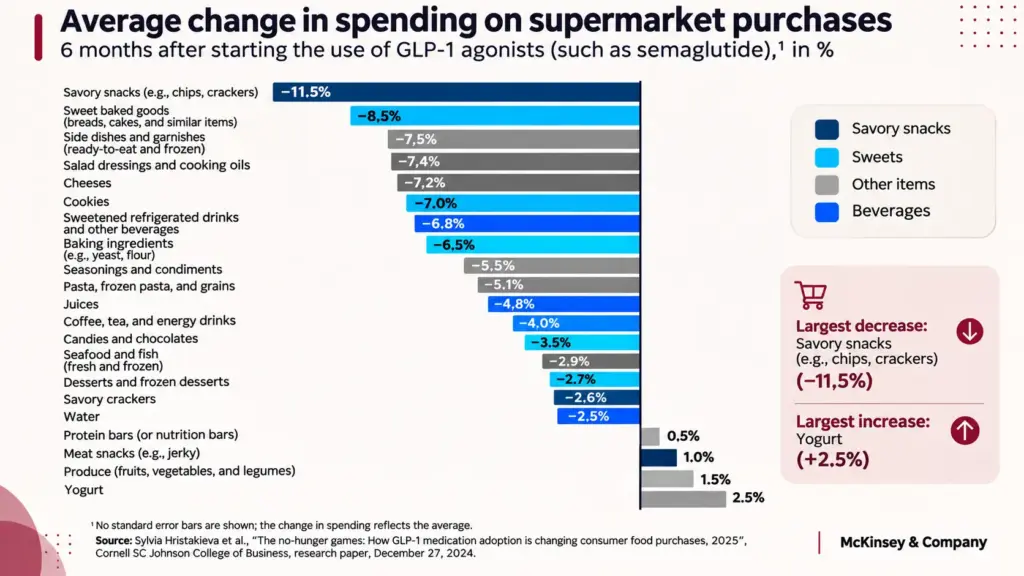
The analysis GLP-1s bite into snack and drink sales, published by McKinsey in June 2026, presents data from a Cornell University study that tracked changes in grocery spending after people began using these medications.
The study shows an average 11.5% reduction in spending on snacks and other savory treats, an 8.5% reduction in spending on sweet bakery products, and a 6.8% reduction in spending on soda during the six months following the start of treatment. By contrast, purchases of yogurt rose by 2.5%, while purchases of fresh fruit and vegetables increased by 1.5%.
Food industry tracks changes in consumption
Changes in the food choices of consumers who use weight-loss injections are beginning to influence industry and retail strategies. Greater interest in protein and fresh foods is adding to a broader trend toward valuing nutritional attributes.
According to McKinsey’s State of Food and Beverage report, 57% of consumers surveyed rank healthy eating among their top three purchasing criteria.
Retailers are already signaling efforts to meet this demand. According to The State of Grocery North America 2026 report, nearly 90% of the supermarket operators surveyed intend to expand the shelf space devoted to protein-rich products over the next two to three years.
For the food industry, this scenario reinforces the importance of monitoring new consumer preferences and assessing opportunities for product development, portion adjustments and communication of nutritional attributes.
In the meat sector, the availability of high-biological-value protein is a relevant attribute, particularly given the focus on preserving muscle mass during obesity treatment.
Although it is still too early to measure the long-term effects of GLP-1 medications on the food market, research has already identified changes in shopping habits. For industry and retailers, understanding this behavior may help them develop products that are better aligned with emerging demands. For consumers, the trend reinforces the importance of looking not only at the amount of food consumed, but also at its nutritional quality, favoring choices that contribute to health and well-being.