Share


Brazil’s continental size and wide variety of climates and biomes produced a livestock system where multiple cattle origins coexist. Over the last century, Brazilian beef production relied on combinations of taurine, zebuine, locally adapted and composite breeds selected to match genetics, environment and management.
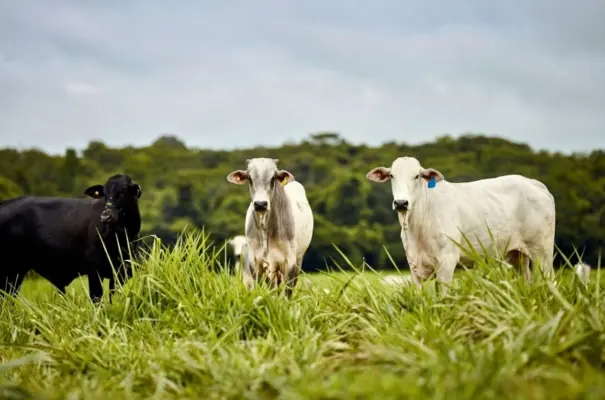
Modern cattle derive from two major lineages: European taurine (Bos taurus taurus) and Indian zebu (Bos taurus indicus). Taurine breeds, formed in temperate climates, tend to show earlier sexual maturity and recognized meat quality. Zebu breeds evolved under heat, higher parasite pressure and variable feed supply, giving them hardiness, heat tolerance and disease resilience.
In Brazil the distribution of breeds followed a territorial logic. The South, with milder climate and lower parasite pressure, favors taurine and British or continental breeds that emphasize precocity and carcass quality. The Center-West, North and Northeast, with hotter, more humid and challenging sanitary conditions, favor zebuine genetics able to maintain productivity in tropical environments.
Locally adapted and composite breeds are a direct response to environmental diversity. In semi-arid and Cerrado regions, locally adapted types such as Curraleiro variants persist because they combine efficiency and survival under adverse conditions. In transitional climates, composite or crossbred populations (for example crosses combining Angus traits with zebu adaptation) seek to combine meat quality with tropical resilience through heterosis and genetic complementarity.
Angus has expanded in Brazil largely through crossbreeding strategies. When used appropriately in systems that include adapted genetics, Angus contributes desirable carcass and eating quality traits while crossbreeding helps maintain adaptation to heat and parasites. Certification and breed standards provide technical criteria to preserve quality and traceability where these programs are applied.
The result is a national herd shaped by continuous adaptation rather than a single genetic choice. By combining taurine, zebuine, locally adapted and composite breeds, Brazil built a resilient and flexible production system able to respond to climatic, sanitary and market challenges. Breed diversity thus remains a strategic asset of Brazilian beef, linking territory, science and productive strategy for long term competitiveness and sustainability.